Investment Casting for EV-New Energy Vehicles-1

How Does Investment Casting for EV Accelerate Automotive Component Manufacturing?

執筆者 | 5月 24, 2026 | 知識

ホーム 9 知識 9 How Does Investment Casting for EV Accelerate Automotive Component Manufacturing?

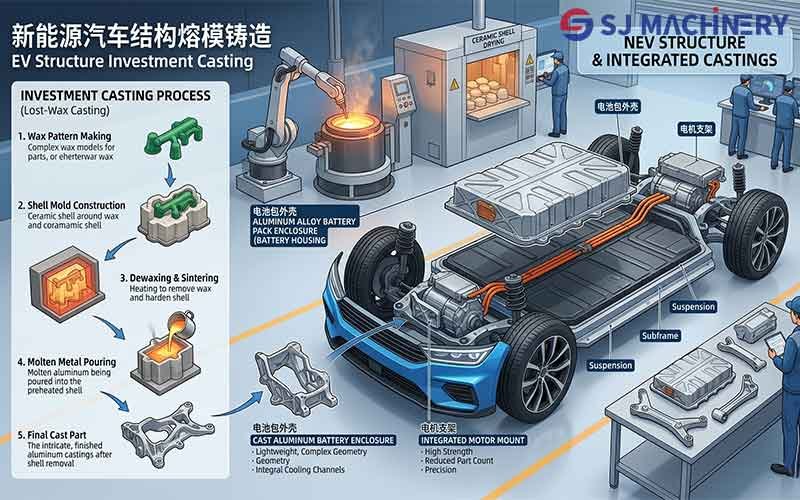
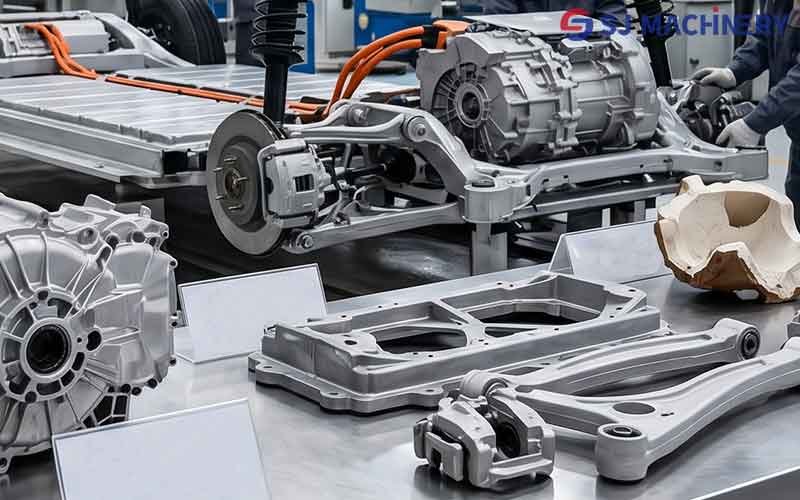
The Direction of Investment Casting for EV. Compared to traditional fuel-powered vehicles, manufacturers of new energy vehicles (NEVs) face a distinct set of challenges regarding R&D and supply chains—specific pain points that investment casting is uniquely positioned to address. Engineers are constantly balancing complex geometries, strict weight reductions, and tight production timelines.

Here is where investment casting (lost-wax casting) steps in as a game-changer, solving critical supply chain and engineering pain points for EV designers and tier-one suppliers.

[Challenge 1: Overcoming the Lightweighting Challenge]

Pain Point: EV batteries are heavy, causing “range anxiety.” Every ounce saved in structural components translates to increased driving range.

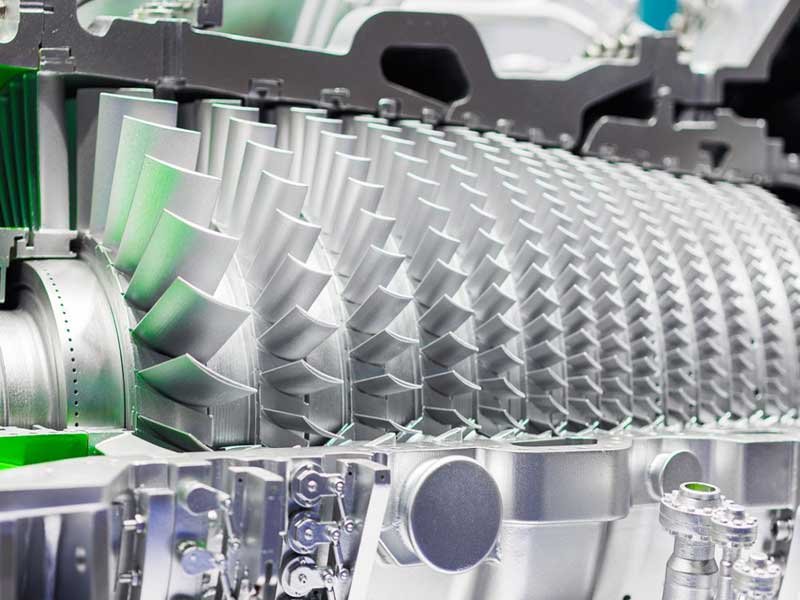
The Solution: Investment casting allows for the production of highly optimized, thin-walled components without compromising mechanical strength. Whether it’s specialized stainless steel brackets, aluminum housings, or custom structural nodes, the process removes redundant material that other casting methods cannot avoid, achieving ultimate lightweighting.

[Challenge 2: Simplifying Complex Thermal & Electrical Geometries]

Pain Point: EV motor housings, liquid-cooling jackets, and high-voltage sensor mounts require intricate internal cavities and complex shapes that are incredibly difficult or expensive to machine from solid blocks.

The Solution: Investment casting excels at “near-net-shape” manufacturing. It allows engineers to combine multi-part assemblies into a single, seamless cast component. This eliminates secondary welding, reduces potential failure points, and ensures superior thermal management performance for sensitive battery and motor environments.

[Challenge 3: Agile Manufacturing for Fast Iterations]

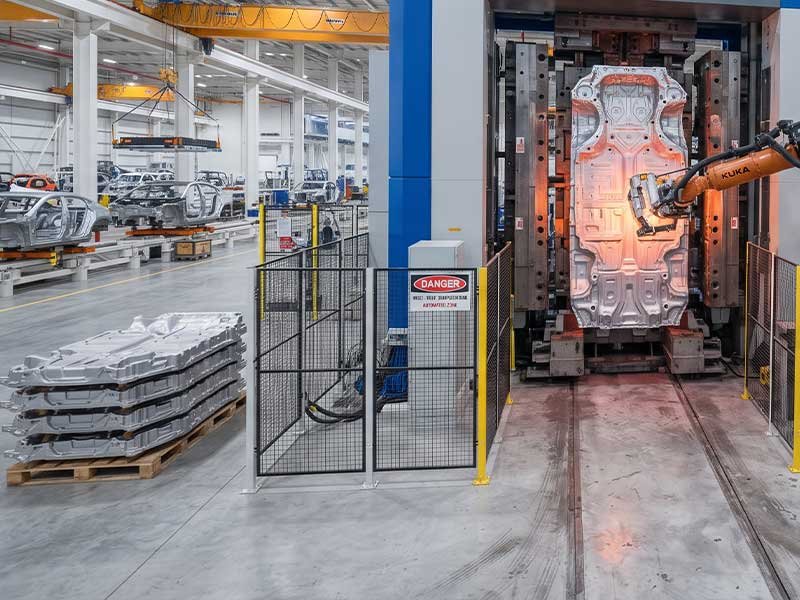
Pain Point: The EV market is evolving at an unprecedented pace. Component designs change rapidly, making the high tooling costs and long lead times of high-pressure die casting (HPDC) financially risky for early production runs.

The Solution: Investment casting tooling is significantly more cost-effective and faster to produce. This flexibility empowers automakers to prototype rapidly, validate designs, and seamlessly transition from small-batch pre-production to scalable, high-volume manufacturing.

[Challenge 4: Reducing Post-Machining Bottlenecks]

Pain Point: Extensive CNC machining drives up total component costs and extends time-to-market.

The Solution: Known for its exceptional dimensional accuracy and high surface finish (typically Ra 1.6 – 3.2 µm), investment casting drastically reduces the need for extensive secondary machining. EV manufacturers receive parts that are practically assembly-ready, cutting down both cost and lead times.

Investment Casting for EV-New Energy Vehicles-1

Investment Casting Solutions for New Energy Vehicle (EV/NEV) Industry Challenges

Serial No. Core Challenge Faced by NEV Industry Investment Casting Solution
1 Extreme Lightweight Demand Driven by “Range Anxiety”: Heavy battery packs require significant weight reduction of body and chassis structural parts, as well as motor housings Enables production of ultra-thin wall, high-strength complex parts, effectively reducing redundant material usage
2 Complex Heat Dissipation and Electrical Geometric Structures: Extremely complex shapes of motor water jackets, battery pack heat dissipation brackets, high-voltage copper connectors and other core components Achieves near-net-shape manufacturing and complex internal cavity structures, integrating components that previously required welding and assembly of multiple parts into a single formed piece
3 Rapid Iteration and High Mold Cost Requirements: Extremely fast update and iteration cycle of new energy vehicles; High Pressure ダイカスト (HPDC) has extremely expensive mold costs and long development cycles Features lower mold cost and shorter development cycle, making it highly suitable for early trial production and high-frequency iteration of small and medium batch production
4 High Secondary machining Cost: Traditional manufacturing processes require extensive post-CNC machining, leading to high comprehensive manufacturing costs Delivers high surface finish and excellent dimensional accuracy, greatly reducing post-CNC machining time and directly lowering the Total Cost of Ownership (TCO) per part

[About Suijin Casting]

As the global EV market scales, finding a manufacturing partner capable of delivering precision, flexibility, and cost-efficiency is crucial.

As a premier investment casting facility based in China, Suijing Casting bridges the gap between world-class engineering requirements and scalable supply chain economics. From rapid tooling development to strict quality control, we are equipped to manufacture the complex components that power the next generation of mobility.

Ready to optimize your EV components? Contact our engineering team today to discuss your next project, or send us your CAD files for a comprehensive manufacturability review.

お問い合わせ

7 + 1 =

お問い合わせ

7 + 4 =