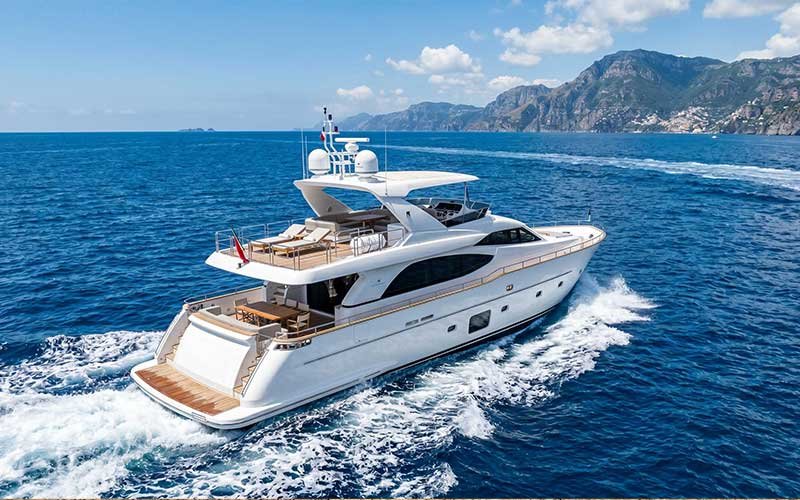
Deck Hardware Suijin-Premium-Investment-Casting-Machining-for-Yacht-Fittings-&-Marine-Hardware

Comprehensive Guide to Yacht Investment Castings: Market Trends, Manufacturing, Procurement, and Maintenance

執筆者 | 6月 14, 2026 | 産業, 知識

ホーム 9 産業 9 Comprehensive Guide to Yacht Investment Castings: Market Trends, Manufacturing, Procurement, and Maintenance

1. Yacht Investment Casting Global Market Sales Trends

Yacht investment casting, also known as lost-wax casting, is a high-precision metal forming technology tailored for marine high-end components. It features tight dimensional tolerance, smooth surface finish, and excellent integrity of complex structures, which perfectly matches the lightweight, corrosion-resistant and high-strength requirements of luxury yachts, cruising yachts and professional sailing yachts.

According to the analysis of global marine casting industry data, marine castings occupy 58% of the total marine casting and forging market share, among which yacht-specific precision investment castings are the fastest-growing segmented track. From 2022 to 2025, the global annual sales volume of yacht investment castings increased at a compound annual growth rate (CAGR) of 6.2%.

The market growth is mainly driven by two core factors: first, the continuous expansion of global luxury yacht customization demand, which raises the requirements for component precision and appearance; second, the gradual replacement of traditional sand castings and die castings by investment castings in yacht core parts due to their superior performance advantages.

Future industry trends present three obvious characteristics.

  1. Firstly, high-performance alloy customization has become the mainstream, and high-strength ステンレス鋼, aluminum-magnesium alloy and copper-nickel alloy castings are increasingly used to adapt to marine salt spray corrosion environment.
  2. Secondly, intelligent and integrated manufacturing is popularized, with digital tooling and automated shell-making processes improving production efficiency and product consistency.
  3. Thirdly, lightweight and integrated structural parts replace scattered welded parts, reducing yacht body weight and improving navigation stability. In addition, the aftermarket replacement demand for yacht castings is rising year by year, becoming an important growth pole of the market.

Suijin Custom Yacht investment casting Fittings & Marine Hardware Capabilities

2. Main Types of Yacht Investment Castings

Yacht investment castings are classified according to application scenarios, material characteristics and functional attributes, covering almost all key precision metal parts of yachts. The mainstream product types in the market are divided into four categories, with clear functional positioning and application differences:

  • – Marine Power System Castings: Including yacht propellers, stern frames, rudder brackets, engine valve bodies, pump housings and turbocharger structural parts. These parts bear high load and alternating impact force during navigation, requiring high strength, fatigue resistance and hydrodynamic performance, and are mostly made of 316L ステンレス鋼 and high-strength copper alloy.
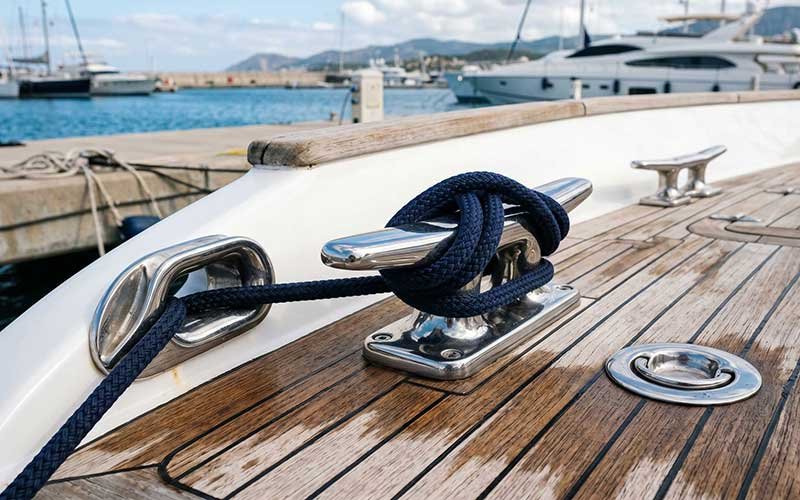
  • – Deck Hardware Castings: Including bollards, cleats, handrail bases, hinge parts, lock catches, winch accessories and deck fixed brackets. Such products have high requirements for surface finish and corrosion resistance, focusing on appearance beauty and installation accuracy, and are the most widely customized yacht castings.
  • – Hydraulic and Pipeline Fittings: Including precision valve bodies, pipe joints, sealing bases and hydraulic system connecting parts. They require ultra-high dimensional tolerance and air tightness to avoid liquid leakage and system failure during yacht navigation.
  • – Customized Structural Castings: Special-shaped decorative structural parts, customized connecting brackets and lightweight integrated parts for high-end customized yachts, featuring complex geometric shapes and personalized size requirements, which can only be realized by インベストメント鋳造 technology.

3. Standard Manufacturing Process of Yacht Investment Castings

Yacht investment casting follows strict lost-wax casting procedures. Combined with marine product precision standards, the whole process is divided into 8 core steps. Compared with ordinary industrial castings, it adds multiple anti-corrosion treatment and precision detection processes to adapt to harsh marine working conditions. The detailed process flow is shown in the table below:

Process Step
Detailed Operation & Technical Requirements
Core Purpose
Wax Pattern Design & Fabrication
Design precision wax molds according to yacht part drawings, use high-precision injection molding equipment to produce wax patterns, control pattern dimensional error within ±0.05mm, and assemble multiple patterns into a wax tree
Ensure the original precision and complex structure replication of parts
Ceramic Shell Building
Dip the wax tree into high-temperature resistant ceramic slurry and refractory fine sand layer by layer, repeat 6-8 times to form a thick and compact ceramic shell, and cure at constant temperature
Form a high-strength, high-temperature resistant hollow mold
Dewaxing Treatment
Put the cured shell into an autoclave for high-pressure steam dewaxing, completely melt and discharge the internal wax body, and clean the residual wax dirt
Obtain a complete hollow ceramic mold cavity
Shell Roasting
Roast the ceramic shell at 1000-1200℃ to remove residual moisture and impurities, and improve the mold’s high-temperature strength and air permeability
Prevent casting porosity, slag inclusion and other defects
Molten Metal Pouring
Melt high-purity marine alloy materials, pour molten metal into the mold cavity by gravity or vacuum pouring process, control pouring temperature and speed stably
Ensure dense metal structure and uniform material composition
Cooling & Shell Removal
Cool the castings naturally and evenly, then use mechanical vibration and hydraulic cleaning to remove the outer ceramic shell
Obtain primary finished casting parts
Precision Finishing
Remove sprue and burrs, carry out CNC finishing, thread processing and surface polishing, control surface roughness Ra≤1.6μm for high-end parts
Meet assembly precision and appearance standards
Anti-corrosion Treatment & Inspection
Passivate, electroplate or polish the surface of stainless steel castings; conduct flaw detection, dimensional inspection and salt spray test for all finished products
Guarantee marine corrosion resistance and product qualification rate

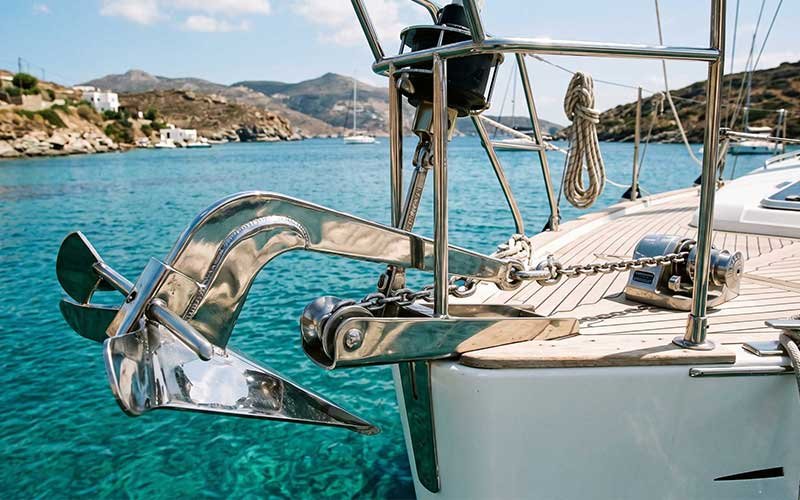
Anchoring & Mooring Premium-Investment-Casting-Solution-for-Yacht-Fittings-&-Marine-Hardware

4. Industry Challenges & Optimized Solutions

Although yacht investment casting technology is mature, the industry still faces prominent problems in production, quality and application. Combined with marine environmental characteristics and market demand pain points, the core problems and targeted solutions are summarized as follows:

4.1 Main Industry Problems

  • – High Defect Rate of Complex Parts: Yacht customized castings have complex thin-wall and special-shaped structures, which are prone to porosity, shrinkage cavity, slag inclusion and deformation during pouring, resulting in low product qualification rate.
  • – Poor Marine Corrosion Resistance: Ordinary castings have uneven material density and unqualified surface treatment, which are easy to rust and oxidize in salt spray, high humidity and alternating dry-wear marine environment, shortening service life.
  • – High Customization Cost & Long Cycle: Small-batch personalized customization leads to repeated mold opening and low production efficiency, resulting in high unit cost and long delivery cycle, which cannot meet the rapid delivery demand of yacht manufacturers.
  • – Inconsistent Product Precision: Traditional manual shell-making and pouring processes are greatly affected by human factors, resulting in inconsistent dimensional accuracy of batch products and poor assembly compatibility.

4.2 Targeted Solutions

  • – Intelligent Process Optimization: Adopt digital simulation software to pre-analyze pouring flow and solidification process, optimize gating system design; popularize automated shell-making and constant-temperature pouring equipment to reduce manual errors and improve batch consistency.
  • – High-performance Alloy & Surface Enhancement: Uniformly adopt marine special alloys such as 316L stainless steel and Cu-Ni alloy; add vacuum heat treatment process to refine metal grain structure, and adopt passivation and mirror polishing processes to improve salt spray corrosion resistance.
  • – Modular Mold Design: Design universal modular wax molds for conventional yacht castings, realize rapid switching of small-batch customization; optimize production scheduling process to shorten delivery cycle by 20%-30%.
  • – Full-process Quality Detection: Establish a complete detection system including X-ray flaw detection, dimensional three-dimensional detection and salt spray aging test, eliminate defective products before delivery, and ensure 100% qualification of core parts.

5. Professional Procurement Suggestions for Yacht Investment Castings

Yacht castings are related to navigation safety and service life, so procurement needs to comprehensively consider quality, cost, customization capability and after-sales service. The following targeted procurement suggestions are provided for purchasers, wholesalers and custom merchants:

5.1 Supplier Selection Criteria

Priority should be given to manufacturers with marine product certification and complete production qualification. Focus on verifying the supplier’s alloy material inspection report, salt spray test data and batch production capacity. Avoid small factories with incomplete detection equipment, which are prone to unqualified corrosion resistance and dimensional deviation. For high-end customized yacht parts, select manufacturers with independent mold development and CNC precision processing capabilities.

5.2 Product & Customization Selection

Match product types according to usage scenarios: power system parts must choose high-strength anti-fatigue alloy castings; deck hardware focuses on surface finish and anti-corrosion performance; pipeline fittings prioritize dimensional precision and air tightness. For customized parts, provide detailed 3D drawings and tolerance requirements, and confirm process feasibility and sample confirmation cycle in advance to avoid rework delays.

5.3 Cost & Delivery Control

For bulk standard castings, adopt batch procurement to reduce unit cost; for small-batch customized products, negotiate modular mold cooperation to save mold opening costs. Clarify delivery cycle, quality inspection standards and after-sales replacement clauses in the contract, and reserve a reasonable production cycle to avoid rush order quality problems.

5.4 Quality Acceptance Key Points

After receiving the goods, focus on checking four core indicators: no surface pores, cracks and burrs; dimensional tolerance meets drawing requirements; smooth and uniform anti-corrosion surface treatment; material composition conforms to marine alloy standards. For core safety parts such as propellers and rudder brackets, require suppliers to provide professional flaw detection reports.

Deck Hardware Suijin-Premium-Investment-Casting-Machining-for-Yacht-Fittings-&-Marine-Hardware

6. Daily Maintenance & Maintenance Specifications

Scientific daily maintenance can effectively extend the service life of yacht investment castings, reduce corrosion damage and failure risks, and ensure the stable operation of yacht equipment. The standardized maintenance cycle and operation specifications are sorted out in the table below:

Component Type
Daily Maintenance (Every 1-2 Weeks)
Quarterly Maintenance
Annual Maintenance
Prohibited Operations
Deck Hardware & Decorative Castings
Flush surface with fresh water to remove salt spray and seawater residue; wipe dry with soft cloth to avoid salt crystallization corrosion
Check for surface oxidation and rust spots; polish slight rust and apply anti-corrosion wax
Overall mirror polishing and secondary anti-corrosion passivation treatment; check fastening tightness
Avoid hard tool scraping, strong acid and alkali cleaning agent corrosion
Power System Castings
Clean surface attachments, check for obvious cracks and deformation; confirm no abnormal vibration during operation
Detect component wear and assembly gap; lubricate movable connecting parts
Professional flaw detection; replace severely worn and fatigued parts
Avoid overload operation and long-term high-load impact
Pipeline & Hydraulic Fittings
Check for liquid leakage at joints; keep surface dry and clean
Test sealing performance; clean internal pipeline impurities
Replace aging sealing accessories; calibrate dimensional precision of connecting parts
Avoid violent disassembly and excessive extrusion deformation

In addition, seasonal maintenance should be done well: after sailing in sea water every time, thoroughly clean all cast parts with fresh water; during long-term docking and storage, coat the surface with professional marine anti-corrosion oil, cover with dust-proof and moisture-proof materials, and regularly check for damp corrosion. For castings used for more than 5 years, regular fatigue detection is required to eliminate potential safety hazards.

7. Common Problems for Purchasers, Wholesalers & Custom Merchants

In the actual transaction and cooperation process of yacht investment castings, purchasers, wholesalers and customized merchants often encounter homogeneous industry problems. The detailed analysis and solutions are as follows:

7.1 Purchasers’ Common Problems

  • – Problem 1: Difficult to distinguish material authenticity – Many suppliers shoddy ordinary stainless steel for marine 316L alloy, leading to poor anti-corrosion performance of castings. Solution: Require suppliers to provide material component test reports, and conduct random sampling inspection by third-party institutions for bulk procurement.
  • – Problem 2: Unstable batch quality – The first sample is qualified, but batch products have dimensional deviation and surface defects. Solution: Sign batch quality guarantee clauses in the contract, confirm process standardization with suppliers, and conduct sampling inspection for each batch of goods.
  • – Problem 3: Long after-sales response cycle – Defective products cannot be replaced and repaired in time, affecting yacht construction and maintenance progress. Solution: Cooperate with manufacturers with perfect after-sales system, and clarify after-sales response time and compensation mechanism in advance.

7.2 Wholesalers’ Common Problems

  • – Problem 1: Slow inventory turnover – Diversified yacht casting specifications lead to difficult inventory control and easy overstock of slow-moving products. Solution: Focus on stocking standard universal deck hardware and pipeline fittings, and adopt customized order-based supply for special-shaped parts to reduce inventory pressure.
  • – Problem 2: Serious product homogenization & low profit – Low-end standard castings have fierce market competition and transparent profits. Solution: Cooperate with manufacturers to develop high-precision anti-corrosion upgraded products, and differentiate from low-end ordinary castings to improve profit space.

7.3 Custom Merchants’ Common Problems

  • – Problem 1: High mold opening cost for small-batch customization – Personalized small-order customization leads to high single mold cost and low cost performance. Solution: Adopt shared modular molds, negotiate mold cost sharing with manufacturers, and optimize design to reduce mold development difficulty.
  • – Problem 2: Customized products fail to meet installation matching requirements – Drawing communication deviation leads to inconsistent product size and on-site assembly gap. Solution: Provide on-site measurement data, confirm 3D simulation assembly effect with suppliers before production, and arrange sample trial assembly in advance.
  • – Problem 3: Long customization delivery cycle – Complex process leads to delayed delivery of customized parts, affecting yacht construction progress. Solution: Optimize design scheme to simplify complex processes, reserve sufficient production cycle, and establish priority production mechanism for urgent orders.

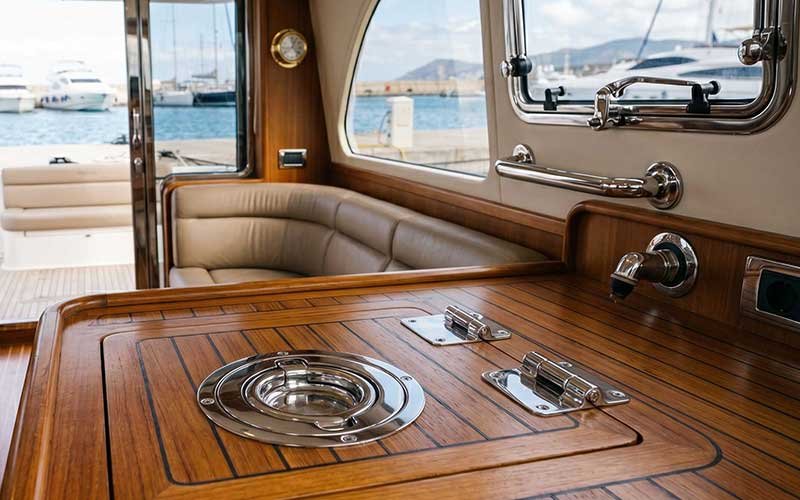
Cabin & Auxiliary Hardware-Supply-Premium-Investment-Casting-for-Yacht-Fittings-&-Marine-Hardware-1

8. Conclusion

Yacht investment casting is a core supporting technology for high-end yacht manufacturing, with irreplaceable advantages in precision, performance and appearance. With the continuous upgrading of global yacht customization demand and marine manufacturing technology, the industry will develop towards intelligence, high performance and environmental protection. For upstream and downstream practitioners, grasping market trends, standardizing procurement and maintenance standards, and solving common industry pain points can effectively control costs, improve product quality, and gain competitive advantages in the high-end yacht supporting market.

At SJ機械, we are a trusted manufacturing partner supplying high-performance investment casting and precision machining components to industry leaders in the marine sector. We specialize in producing custom yacht fittings characterized by flawless mirror polishing and robust structural integrity. Know More Yacht Investment Casting….

お問い合わせ

1 + 1 =

お問い合わせ

9 + 15 =