Solution de moulage professionnelle pour les aubes de turbine en superalliage à base de nickel (fonderie chinoise)
Résumé : La coulée d'aubes de turbine en superalliage à base de nickel constitue la technologie de fabrication de précision essentielle pour les moteurs aérospatiaux, les turbines à gaz industrielles et les équipements de production d'électricité.
En tant qu'usine chinoise de moulage de premier plan, forte de plusieurs décennies d'expérience dans le moulage de précision, nous nous attachons à résoudre les problèmes courants liés à la fabrication d'aubes de turbine et de pièces en superalliages, notamment les écarts dimensionnels, l'instabilité des performances à haute température, les défauts de surface et la porosité interne.
Cet article présente de manière systématique notre solution optimisée de moulage couvrant l'ensemble du processus de fabrication d'aubes de turbine en superalliage à base de nickel. Il aborde notamment le choix des matériaux, les procédés de moulage de noyaux, le contrôle qualité, l'optimisation des défauts et les avantages techniques, afin de fournir des services de moulage sur mesure hautement fiables à nos clients internationaux des secteurs industriel et aérospatial.
1. Introduction
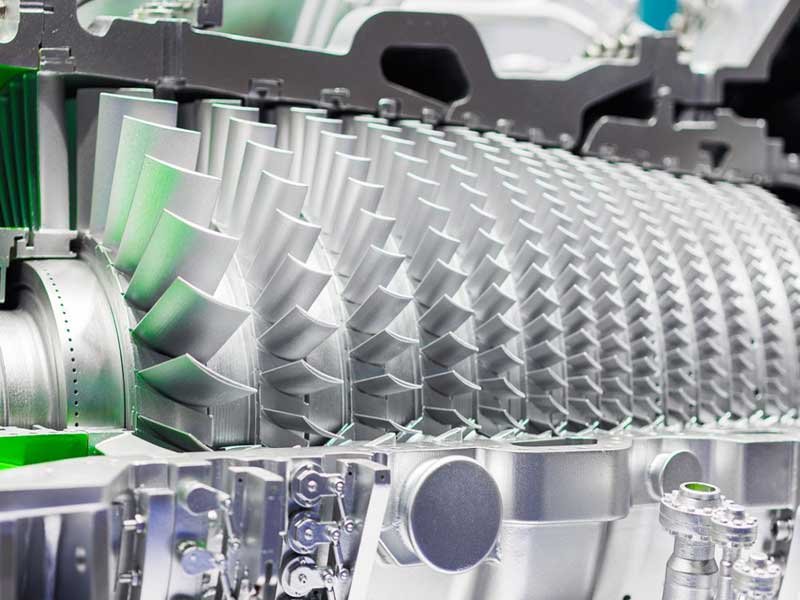
Les aubes de turbine constituent les composants clés de la partie chaude des turbines à gaz et des moteurs aéronautiques ; elles fonctionnent pendant de longues périodes dans des conditions extrêmes caractérisées par des températures élevées (800–1 600 °C), une pression élevée et une fatigue thermique cyclique. Les superalliages à base de nickel sont désormais le matériau exclusif utilisé pour la fabrication par moulage des aubes de turbine haut de gamme, en raison de leur excellente résistance au fluage à haute température, à l’oxydation et à la fatigue thermique, ainsi que de leur stabilité structurelle.
Cependant, les superalliages à base de nickel se caractérisent par un point de fusion élevé, une faible fluidité, un retrait de solidification important et des exigences strictes en matière de microstructure, ce qui fait du moulage des aubes de turbine l'un des procédés de moulage de précision les plus difficiles du secteur.
La plupart des fonderies traditionnelles sont confrontées à des problèmes tels que la présence de grains égarés, la microporosité, les inclusions d'oxyde et le non-respect des tolérances dimensionnelles dans la fabrication de pales en superalliage. En s'appuyant sur une R&D indépendante en matière de procédés et sur une technologie éprouvée moulage de précision Grâce à ses lignes de production, notre fonderie chinoise a optimisé l'ensemble du processus de moulage pour la fabrication d'aubes de turbine en superalliages à base de nickel, qu'elles soient à cristaux équiaxes, à solidification dirigée ou monocristallines. Nous respectons scrupuleusement les normes de fabrication aérospatiales et industrielles applicables aux turbines, et fournissons à nos clients du monde entier des aubes moulées alliant haute précision, grande stabilité et longue durée de vie.
2. Matériaux concernés et produits couverts
Nous assurons la production sur mesure de pièces moulées à partir des superalliages à base de nickel les plus courants destinés aux aubes de turbine, notamment pour les turbines à gaz industrielles civiles, les groupes auxiliaires de puissance aéronautiques et les composants de turbines destinés à la production d'énergie industrielle. Les matériaux concernés comprennent les alliages à cristaux équiaxes courants (IN713LC, IN718, K418, K403), les alliages à solidification dirigée (DZ404, DZ125) et les alliages monocristallins (CMSX-4, CMSX-10). Toutes les matières premières proviennent d’alliages-maîtres de haute pureté dont la composition est rigoureusement contrôlée afin d’éviter toute dégradation des performances due à la présence d’impuretés dépassant les limites normatives.
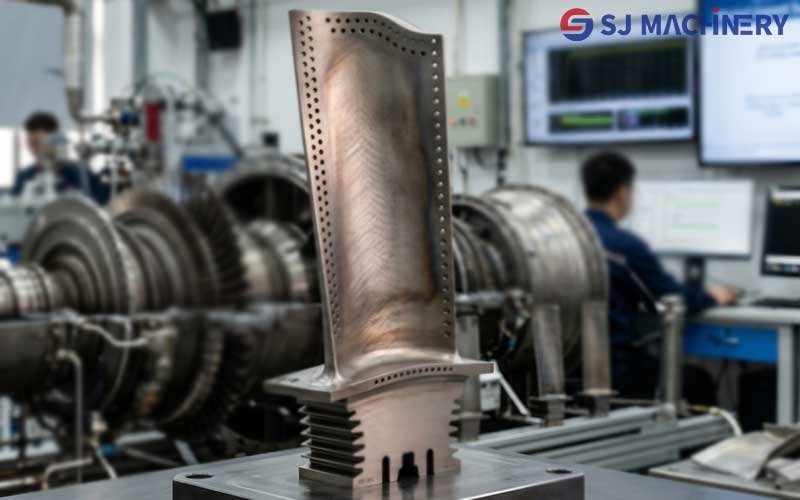
Notre gamme de pièces moulées pour aubes de turbine comprend des aubes et des aubes directrices de taille réelle destinées aux turbines à gaz de petite, moyenne et grande taille. Les tolérances dimensionnelles sont maîtrisées à ±0,05 mm et la rugosité de surface peut atteindre Ra 1,6 μm après traitement de finition, ce qui répond pleinement aux exigences d'assemblage et de fonctionnement à haute température des équipements de turbine haut de gamme.
3. Solution de procédé de moulage optimisé pour les noyaux
Afin de répondre aux exigences techniques liées à la fabrication des superalliages à base de nickel, notre fonderie a mis en place un procédé sous vide couvrant l'ensemble du cycle de production. moulage à la cire perdue + Procédé de solidification contrôlée. Nous optimisons chaque étape clé, depuis la fabrication du modèle en cire, la préparation de l'enveloppe céramique, la fusion et la coulée sous vide, la solidification directionnelle ou monocristalline, jusqu'au traitement post-coulée, ce qui permet de résoudre de manière fondamentale les défauts de coulée courants des aubes de turbine en superalliage.
| Étape du processus | Défauts et problèmes liés à la fonderie traditionnelle | Notre solution technique optimisée pour la fonderie | Paramètres du procédé et avantages |
| Fabrication de modèles en cire | Dimensions instables du moule en cire, déformation due au retrait, détails peu nets concernant le profil aérodynamique complexe et les canaux de refroidissement, entraînant par la suite des écarts dimensionnels au niveau des aubes | Adopter une technologie de moulage par injection de cire de haute précision à haute pression, utiliser un matériau de cire spécial à faible retrait pour le moulage de superalliages et concevoir sur mesure des moules intégrés adaptés aux structures complexes des aubes ; procéder à un calibrage secondaire des dimensions des modèles en cire | Pression d'injection de la cire : 8–12 MPa ; retrait dimensionnel maîtrisé à 0,3% près ; contrôle complet des dimensions et de l'aspect du modèle en cire à 100% afin d'éliminer les défauts de déformation précoces |
| Préparation de la coque en céramique | Coque peu résistante, sujette aux fissures et à l'adhérence du sable ; faible résistance aux hautes températures, ce qui entraîne la formation d'inclusions à la surface de la lame et une surface rugueuse | Adopter un procédé de fabrication de coques en céramique composite multicouche (8 à 10 couches), en utilisant des matériaux réfractaires à base d'alumine et de silice de haute pureté ; mettre en œuvre un procédé intégré de déparaffinage à la vapeur et de cuisson à haute température des coques | Température de déparaffinage : 150 °C ; température de cuisson de la coque : 1 000 °C ; résistance à haute température de la coque améliorée grâce au 40% ; permet d'éviter efficacement les inclusions de sable et la rupture de la coque lors du moulage des aubes de turbine |
| Fusion et coulée sous vide | Teneur élevée en gaz dans l'alliage fondu, inclusions d'oxyde, composition chimique instable, affectant les propriétés mécaniques à haute température | Procédé de fusion par induction sous vide ultra-élevé (VIM) : fusion et coulée entièrement réalisées sous vide ; contrôle rigoureux de la température de fusion et du degré de vide, et filtration de l'acier fondu à l'aide de filtres en céramique | Degré de vide ≤ 0,01 Pa ; température de fusion : 1 450–1 500 °C ; réduction efficace de la teneur en oxygène et en hydrogène, garantie de l'uniformité de la composition de l'alliage et d'une grande pureté |
| Solidification contrôlée | Croissance désordonnée des grains, augmentation du nombre de joints de grains transversaux, présence de grains isolés et de microporosité, faible résistance au fluage à haute température | Adopter la technologie de solidification directionnelle et de croissance de monocristaux par ensemencement ; contrôler avec précision le gradient de température du four et la vitesse de retrait du moule afin d'obtenir la structure granulaire souhaitée | Gradient thermique : 20–30 °C/cm ; vitesse de retrait : 3–6 °C/mm ; éliminer les joints de grains transversaux nuisibles, réduire le taux de porosité à moins de 0,5% |
| Traitement après le moulage | Contraintes résiduelles de coulée, microporosité interne, microstructure irrégulière, comportement à la fatigue instable | Procédé intégré comprenant le décapage, le meulage de précision, le pressage isostatique à chaud (HIP) et un traitement thermique de vieillissement en solution en plusieurs étapes | Pression HIP : 150–180 MPa ; température de traitement thermique adaptée aux différents alliages ; élimination des micro-défauts internes et optimisation de la répartition de la microstructure |
4. Système clé de contrôle qualité pour la coulée des aubes de turbine
En tant que spécialiste chinois de la précision fabricant de pièces moulées, nous avons mis en place un système de contrôle qualité couvrant l'ensemble du cycle de fabrication des aubes de turbine moulées en superalliage à base de nickel, allant du contrôle à la réception des matières premières au suivi en cours de fabrication, en passant par l'inspection complète des produits finis, afin de garantir que chaque lot d'aubes soit conforme aux normes internationales en vigueur dans les secteurs industriel et aérospatial.
- Tout d'abord, le contrôle des matières premières : Tous les lingots de superalliages à base de nickel sont soumis à une analyse spectrale de leurs composants avant leur mise en stock afin de contrôler rigoureusement la teneur en impuretés telles que le soufre, le phosphore et l’oxygène, et de garantir la précision des éléments de renforcement du noyau tels que le rhénium, le tantale, le chrome et le cobalt, évitant ainsi les écarts de performances dus à des variations dans la composition.
- Deuxièmement, la surveillance des processus : Dans l'ensemble, procédé de moulage, nous utilisons des équipements de surveillance en temps réel de la température et du vide afin d'enregistrer tous les paramètres des processus de fusion, de coulée et de solidification. Pour les aubes de turbine directionnelles et monocristallines, nous surveillons en temps réel l'évolution de la croissance des grains afin d'éviter l'apparition de grains parasites et de structures cristallines défectueuses.
- Troisièmement, les essais sur les produits finis : les aubes finies sont soumises à des contrôles de précision dimensionnelle, à une inspection des défauts de surface, à des essais non destructifs (END) par rayons X, à des essais par ultrasons et à des essais de performances mécaniques à haute température. Nous détectons de manière exhaustive la porosité interne, les inclusions, les fissures et les défauts cachés, et nous effectuons des contrôles par échantillonnage des propriétés de traction, de fluage et de fatigue à haute température afin de garantir un fonctionnement stable des aubes dans des environnements à très haute température.
5. Solutions aux défauts courants de moulage
Dans la production réelle d'aubes de turbine moulées, les superalliages à base de nickel sont sujets à des défauts de moulage spécifiques en raison de leurs caractéristiques physiques et chimiques. Notre usine a mis au point des solutions ciblées grâce à ses nombreuses années d'expérience en matière de production :
5.1 Défauts liés à la porosité et aux cavités de retrait :
Ce phénomène est dû à un important retrait de solidification et à un refroidissement déséquilibré des superalliages. Nous optimisons la conception du système de canaux de coulée et de masselottes, ajustons la séquence de solidification afin d’obtenir une solidification séquentielle allant de la pointe de l’aube vers le canal de coulée, et combinons ces mesures avec un post-traitement HIP pour éliminer complètement la microporosité et les cavités de retrait, améliorant ainsi la compacité de la structure de la pièce moulée.
5.2 Défauts d'inclusion d'oxyde :
Ce phénomène résulte de l'oxydation de l'alliage en fusion et de la desquamation des particules de la coque. Nous recourons à une fusion sous vide ultra-poussé pour empêcher l'oxydation par l'air, mettons en œuvre des procédés hautement efficaces d'élimination des scories et de filtration, et optimisons le processus de cuisson de la coque afin de réduire la formation de particules réfractaires libres, ce qui permet de limiter efficacement les défauts d'inclusion.
5.3 Déformation dimensionnelle et rugosité de surface :
Ce phénomène est dû au retrait de la cire du moule ainsi qu'à un chauffage et un refroidissement inégaux de la coque. Nous utilisons des matériaux en cire à faible retrait et une technologie de calibrage précis des moules, nous optimisons le processus de revêtement par couches de la coque et nous combinons des processus professionnels de meulage et de finition CNC afin de garantir la précision dimensionnelle de la pale et la régularité de la surface du profil aérodynamique.
5.4 Défauts de structure cristalline :
Y compris les grains épars et les grains mixtes qui nuisent aux performances à haute température. Nous contrôlons rigoureusement le gradient de température et la vitesse de retrait du moule pendant la phase de solidification, nous utilisons une technologie de positionnement des germes cristallins pour les aubes monocristallines et nous garantissons une croissance uniforme et ordonnée des grains dans les pièces moulées.
6. Les principaux atouts de notre usine dans le domaine de la fonderie de superalliages
En tant qu'usine de moulage chinoise fiable, spécialisée dans le moulage haut de gamme d'aubes de turbine, nous disposons d'avantages techniques et de production évidents par rapport aux fonderies classiques :
Tout d'abord, une technologie de base propre. Nous avons surmonté les obstacles techniques liés à la solidification dirigée et à la coulée de superalliages monocristallins, maîtrisé les techniques de contrôle précis de la structure granulaire et des performances à haute température, et sommes désormais en mesure de produire de manière autonome des aubes de turbine hautement performantes destinées à des conditions de fonctionnement à haute température et haute pression.
Deuxièmement, un parc complet d'équipements de production et d'essais. Nous disposons de fours de fusion sous vide entièrement automatiques, de fours de solidification directionnelle, d'équipements HIP, de fours de traitement thermique professionnels, ainsi que d'une gamme complète d'instruments de contrôle non destructif et d'essais de performance, ce qui nous permet d'assurer une production intégrée, depuis le moulage jusqu'au contrôle du produit fini.
Troisièmement, des services sur mesure d'un bon rapport qualité-prix. En s'appuyant sur le réseau parfait de la Chine moulage de précision industriel Tout en garantissant une qualité conforme aux normes internationales, nous optimisons nos processus de production et maîtrisons nos coûts de fabrication, afin d'offrir à nos clients du monde entier des services de personnalisation, de production d'essai en petites séries et de production en série de pièces moulées pour aubes de turbine en superalliage à base de nickel, alliant haute qualité et rentabilité.
Quatrièmement, une solide expérience en ingénierie. Nous disposons d’une longue expérience en matière d’accompagnement dans les secteurs de l’aérospatiale, des turbines à gaz industrielles, de la production d’électricité et des équipements énergétiques, et sommes en mesure d’élaborer des solutions ciblées procédé de moulage des solutions adaptées aux paramètres de conditions de travail des clients, à la taille des produits et aux exigences de performance, permettant ainsi de résoudre les difficultés de production spécifiques à chaque client.
7. Suijin Casting Conclusion
Le moulage d'aubes de turbine en superalliage à base de nickel est une technologie de moulage de précision à barrière élevée, qui impose des exigences extrêmement strictes en matière de précision des procédés, de contrôle de la microstructure et de stabilité de la qualité. S'appuyant sur une technologie de vide éprouvée moulage à la cire perdue Grâce à une technologie de pointe, à un processus de solidification optimisé et à un système rigoureux de contrôle qualité couvrant l'ensemble du processus, notre usine de moulage chinoise résout efficacement divers problèmes complexes liés au moulage d'aubes en superalliages. Nous sommes en mesure de fournir de manière constante des pièces moulées pour aubes de turbine de haute précision, résistantes aux hautes températures et d’une grande fiabilité, et nous proposons des solutions sur mesure ainsi que la production en série de divers modèles en superalliages. À l’avenir, nous continuerons à optimiser le procédé de moulage, moderniser les technologies de fabrication et proposer des solutions de moulage de précision plus professionnelles et plus efficaces aux clients du monde entier spécialisés dans la fabrication d'équipements pour turbines.