Precision Casting Technology and Procurement Selection Guide for 4KG Municipal Sound and Light Alarm Components
1. Product Overview of 4KG Municipal Sound and Light Alarm Precision Casting Parts
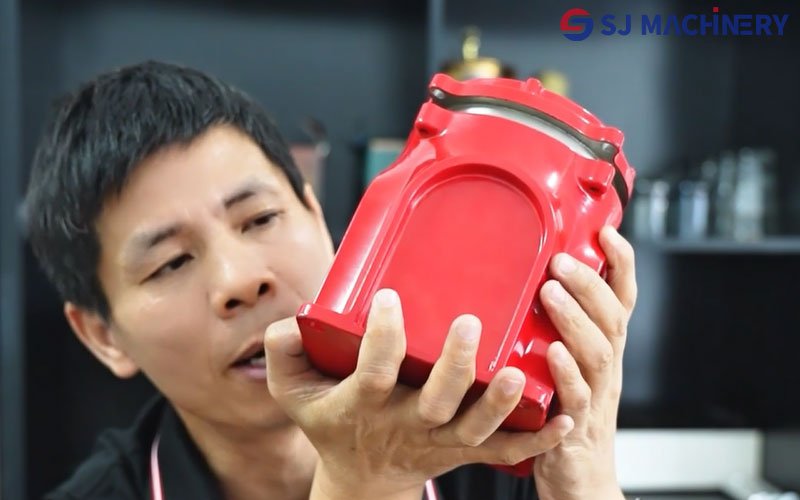
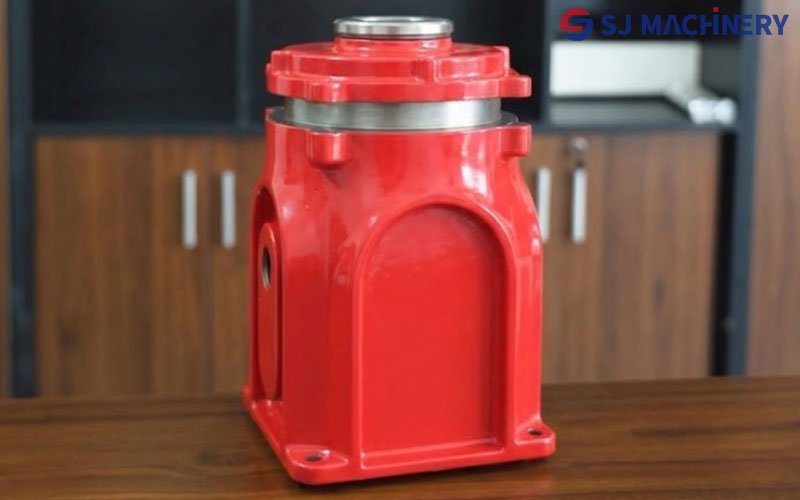
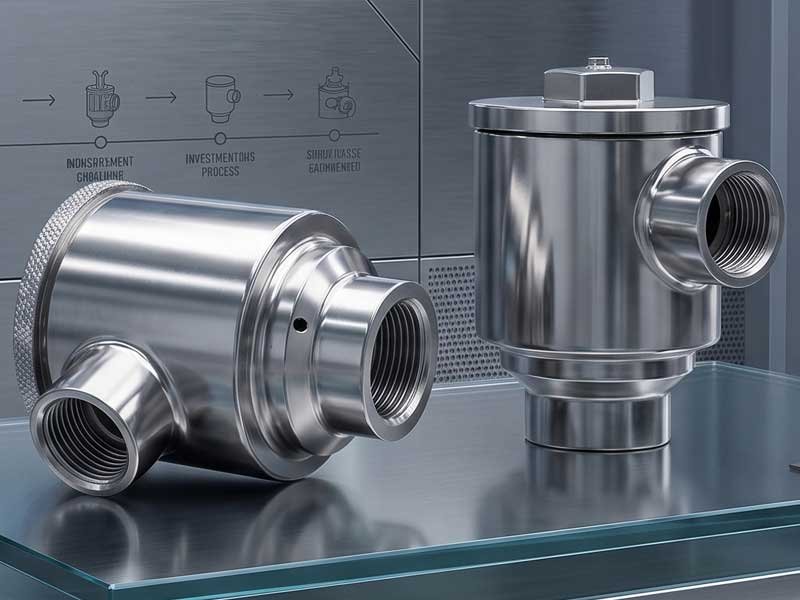
The 4KG municipal engineering sound and light alarm is a core safety warning device widely applied in road construction, municipal maintenance, traffic emergency, and urban public safety scenarios. Its metal structural parts are manufactured via precision investment casting technology, featuring ultra-high dimensional accuracy, standardized thread structure, and precise positioning benchmarks to adapt to harsh outdoor municipal working environments.
This product strictly complies with national 3C certification standards for security and alarm equipment, with zero tolerance for dimensional deviation, thread fit accuracy, and assembly position consistency.
Different from ordinary cast parts, this municipal alarm component adopts 316 stainless steel material with large trapezoidal table structure. The optimized large trapezoidal table design effectively disperses external pressure and structural stress, while 316 stainless steel with excellent anti-corrosion, anti-rust, and anti-oxidation properties greatly enhances the service life of the alarm in humid, rainy, saline-alkali, and high-temperature outdoor environments.
The overall 4KG weight design realizes stable equipment installation and avoids displacement caused by wind vibration or external impact, meeting the high stability and durability requirements of municipal engineering facilities.
2. Common Types of Sound and Light Alarm Metal Casting Parts
Sound and light alarm equipment for municipal, industrial, and civil scenarios is composed of multiple precision metal casting components with differentiated functions. Beyond the core 4KG main structural shell, the mainstream casting parts in the market cover the following categories, varying in structure, material requirements, and precision standards:
- – Alarm Base Castings: Heavy-duty load-bearing structural parts, mostly 3–5KG, requiring high flatness and mounting hole position accuracy, mainly used for fixed installation of the whole alarm device, adopting anti-corrosion stainless steel materials.
- – Light Chamber Frame Castings: Protective brackets for alarm light source components, with complex hollow structures and strict dimensional tolerance requirements, ensuring the stability of light transmission angle and light source assembly.
- – Sound Cavity Shell Castings: Vibration and noise reduction structural parts for alarm sound components, with precise internal thread and positioning groove sizes, directly affecting sound transmission effect and equipment assembly tightness.
- – Integrated Mounting Bracket Castings: Auxiliary connecting parts for wall-mounted and rod-mounted alarms, requiring high structural strength and thread matching accuracy, suitable for diversified municipal installation scenarios.
- – Sealing Press Castings: Auxiliary parts for equipment waterproof and dustproof sealing, with ultra-high precision requirements for fitting dimensions to ensure the IP protection level of municipal alarms.
3. Mainstream Casting Processes for Alarm Components and Performance Comparison
The manufacturing quality of sound and light alarm casting parts directly determines equipment stability, certification qualification, and service life. At present, four mainstream casting processes are widely used in alarm component production, with obvious differences in precision, surface finish, material adaptability, and production cost. The core parameter comparison is shown in Table 1.
|
캐스팅 프로세스
|
Dimensional Tolerance Level
|
Surface Finish
|
재료의 적응성
|
Production Cost
|
Applicable Alarm Parts
|
|---|---|---|---|---|---|
|
정밀도 투자 캐스팅
|
High (±0.05mm)
|
Smooth, no secondary polishing required
|
316 stainless steel, 304 stainless steel, alloy steel
|
Medium-High
|
4KG main shell, precision thread parts, sealing structural parts
|
|
Low (±0.5mm~±1mm)
|
Rough surface, more burrs
|
Carbon steel, ordinary alloy steel
|
Low
|
Ordinary low-precision mounting brackets, non-core auxiliary parts
|
|
|
다이 캐스팅
|
Medium (±0.1mm~±0.3mm)
|
Smooth surface, good consistency
|
Aluminum alloy, zinc alloy
|
Medium (suitable for mass production)
|
Lightweight alarm shell, non-corrosive internal supports
|
|
영구 금형 주조
|
Medium-High (±0.08mm)
|
Uniform texture, stable finish
|
Stainless steel, aluminum alloy
|
Medium
|
Medium-precision alarm base and frame parts
|
As shown in Table 1, precision investment casting is the optimal process for 3C-certified municipal sound and light alarm parts. It meets the strict requirements of dimensional accuracy, thread uniformity, and position benchmarking of high-standard municipal equipment, and is perfectly compatible with 316 stainless steel materials. Although the cost is slightly higher than other processes, it effectively avoids subsequent processing errors and quality risks, and fully meets the long-term outdoor anti-corrosion and stable operation requirements of municipal engineering.
4. Scientific Process Selection Criteria for Purchasers
For municipal engineering procurement enterprises, the selection of casting processes for sound and light alarm parts needs to comprehensively consider certification requirements, application scenarios, precision standards, and production batches, to balance product quality, qualification compliance, and procurement cost. The core selection principles are summarized as follows:
4.1 Based on Certification and Quality Standards
Municipal sound and light alarm equipment must pass national 3C compulsory certification. Core load-bearing and sealing parts involving equipment safety and qualification verification must adopt precision 투자 캐스팅. Only this process can ensure consistent dimensional tolerance, standard thread fit, and accurate assembly position, eliminating quality defects that cause certification failure. For non-core auxiliary parts without precision and certification requirements, sand casting or permanent mold casting can be selected to control costs.
4.2 Based on Application Environment and Material Requirements
Outdoor municipal alarms face complex environments such as rainwater erosion, ultraviolet aging, and saline-alkali corrosion. When adopting 316 stainless steel anti-corrosion materials, precision 투자 캐스팅 is the only process that can retain the material’s excellent corrosion resistance while realizing complex trapezoidal table structural design. Die casting is only suitable for indoor or sheltered municipal auxiliary alarm equipment with low corrosion resistance requirements.
4.3 Based on Precision and Structural Requirements
For parts with strict requirements on dimension, thread, and positioning (such as 4KG main shell), 투자 캐스팅 is prioritized due to its ultra-high precision and zero assembly deviation advantage. For simple structural parts with low tolerance requirements, permanent mold casting and die casting are more cost-effective.
4.4 Based on Production Batch and Delivery Cycle
For small-batch, high-precision customized municipal alarm projects, precision investment casting has strong flexibility and low mold opening cost. For large-batch standardized alarm production, die casting can be matched for auxiliary parts to improve production efficiency and shorten delivery cycles.
5. Key Indicators for Purchasers to Select Qualified Casting Manufacturers
The process advantage of alarm casting parts depends on the professional capability of casting manufacturers. To ensure product qualification, 3C certification pass rate, and long-term stable supply, purchasers need to screen manufacturers from multiple core dimensions. The detailed evaluation indicators are shown in Table 2.
|
Evaluation Dimension
|
Core Inspection Indicators
|
Qualified Manufacturer Standards
|
|---|---|---|
|
Qualification Certification
|
Production qualification, quality system certification, 3C supporting certification experience
|
Possess ISO9001 quality management system certification, have mature experience in casting parts supporting 3C-certified alarm equipment
|
|
Process Capability
|
Precision casting equipment, dimensional detection accuracy, thread processing standardization
|
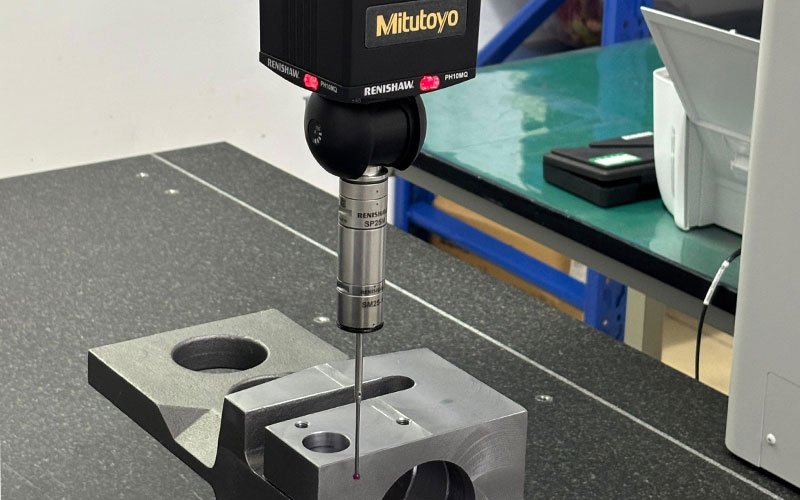
Equipped with professional investment casting production lines and high-precision detection instruments, capable of controlling tolerance within ±0.05mm, standard thread forming
|
|
Material Control
|
316 stainless steel material purity, anti-corrosion treatment process
|
Guarantee 100% genuine 316 stainless steel raw materials, complete heat treatment and anti-corrosion finishing processes
|
|
Product Consistency
|
Batch dimensional deviation, structural position consistency
|
Stable batch production quality, no thread slipping, dimensional deformation or position deviation
|
|
After-sales & Customization
|
Structural customization capability, after-sales quality guarantee
|
Support trapezoidal table structure optimization and precision size customization, provide long-term quality after-sales service
|
6. Conclusion
The 4KG municipal sound and light alarm precision casting parts with 3C certification requirements have high thresholds in process technology, dimensional precision, and material performance. Precision investment casting, matched with 316 stainless steel large trapezoidal table structure, is the optimal manufacturing solution for high-standard municipal alarm equipment, which comprehensively improves equipment stability, corrosion resistance, and environmental adaptability.
In actual procurement work, purchasers should select targeted casting processes according to part functions, certification requirements and application scenarios, and strictly screen professional casting manufacturers with standardized processes, complete qualifications and stable quality.
Scientific matching of process and suppliers can effectively ensure that municipal sound and light alarm equipment meets engineering safety standards, 3C certification specifications and long-term outdoor operation requirements, and reduce subsequent maintenance and replacement costs.