1. Introduction
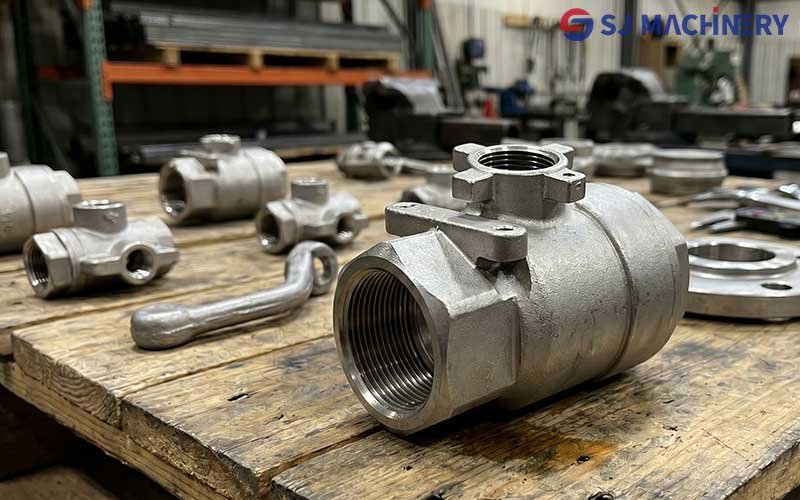
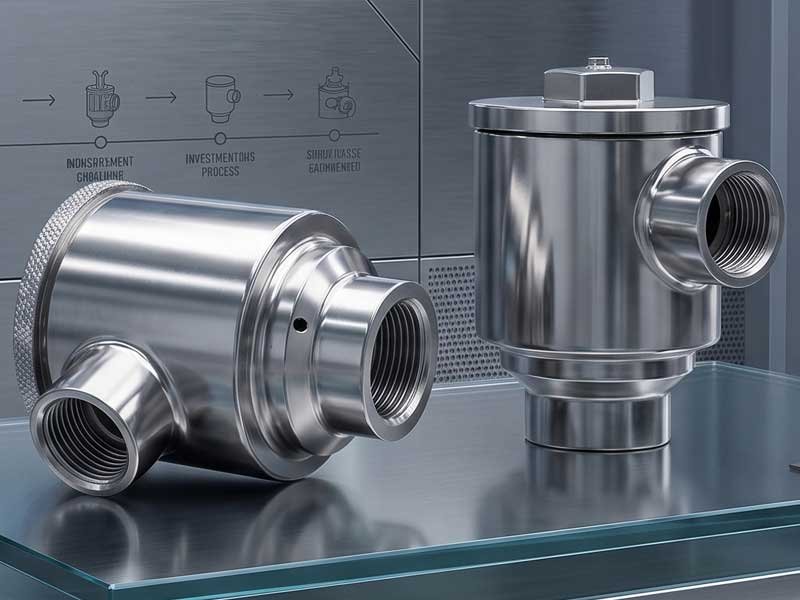
Un corps de vanne moulé en acier inoxydable 316 haute performance constitue le cœur des systèmes modernes de contrôle des fluides industriels. Dans des conditions d’exploitation difficiles, notamment dans les secteurs de la transformation chimique, de l’exploitation pétrolière et gazière, de l’ingénierie navale, ainsi que de l’industrie agroalimentaire et pharmaceutique, les corps de vanne sont continuellement soumis à des températures extrêmement élevées, à des pressions élevées et à des milieux corrosifs agressifs. Les matériaux de vanne courants et les procédés de fabrication traditionnels sont souvent sujets à une usure rapide, à des fuites et à une durée de vie réduite, ce qui entraîne des arrêts fréquents des équipements, des coûts de maintenance élevés et des risques potentiels pour la sécurité de la production industrielle.
Pour les acheteurs du segment B et les fournisseurs de solutions sur mesure en matière de contrôle des fluides, trouver le juste équilibre entre les performances durables des produits, une qualité de fabrication stable et des coûts de personnalisation maîtrisables a toujours constitué un défi majeur en matière d’approvisionnement. L’association de l’acier inoxydable 316 et d’une technologie professionnelle de moulage de précision est devenue la solution la plus pratique et la plus rentable pour la fabrication de corps de vannes industrielles haut de gamme.
Cet article analyse en détail les avantages spécifiques du corps de vanne moulé en acier inoxydable 316 en termes de propriétés des matériaux et de savoir-faire de fabrication ; il passe en revue les processus de personnalisation normalisés et les principaux indicateurs de contrôle qualité, et fournit des normes de référence essentielles pour choisir un fabricant de pièces moulées fiable dans le cadre de projets de contrôle des fluides.
2. Pourquoi l'acier inoxydable 316 est-il le matériau de prédilection pour les corps de vannes industrielles ?
Performances des matériaux détermine directement la durée de vie, la stabilité et le champ d'application des vannes de régulation des fluides. Par rapport à l'acier au carbone ordinaire et à l'acier 304 acier inoxydable : l'acier inoxydable 316 s'impose dans le secteur industriel haut de gamme scénarios grâce à sa composition optimisée et à ses propriétés mécaniques et chimiques complètes, qui lui permettent de s'adapter parfaitement aux conditions de fonctionnement difficiles des systèmes de fluides industriels.
2.1 Résistance supérieure à la corrosion
Le principal avantage du 316 acier inoxydable C'est l'ajout de molybdène (Mo) dans la composition de son alliage. Ce composant unique améliore considérablement sa résistance à la corrosion par piqûres, à la corrosion interstitielle et à l'érosion chimique, des performances que l'acier inoxydable 304 ne peut égaler. Il fonctionne de manière stable pendant longtemps dans des environnements marins à forte salinité, des milieux chimiques acides, des solutions alcalines et des atmosphères industrielles humides, évitant ainsi efficacement la rouille du corps de vanne, la perforation et les fuites de fluide causées par la corrosion.
2.2 Propriétés mécaniques stables à des températures extrêmes
Les équipements industriels de régulation des fluides doivent souvent fonctionner dans des environnements où la température varie. L'acier inoxydable 316 conserve une excellente résistance à la traction, une grande ténacité structurelle et une grande stabilité dimensionnelle, tant dans des conditions de fonctionnement à haute température que dans des environnements froids à très basse température. Il ne subit ni déformation structurelle, ni rupture fragile, ni baisse de performances due à des variations extrêmes de température, garantissant ainsi le fonctionnement stable à long terme du corps de vanne sous des pressions de service variables.
2.3 Respect rigoureux des normes du secteur
Les matériaux en acier inoxydable 316 répondent aux normes de certification strictes de nombreux secteurs d'activité haut de gamme. Ils sont conformes aux exigences d'hygiène de la FDA applicables aux équipements destinés à la transformation des produits alimentaires et pharmaceutiques, garantissant ainsi l'absence de contamination du fluide lors de son acheminement. Par ailleurs, il est conforme aux spécifications industrielles de la NACE relatives aux équipements utilisés dans les champs pétroliers et gaziers, répondant ainsi pleinement aux exigences de production normalisées des systèmes industriels de contrôle des fluides de haut niveau et facilitant l'accès au marché mondial des vannes.
3. Principaux avantages du moulage de précision pour les corps de vannes en acier inoxydable 316
La supériorité des matériaux doit se traduire par des procédés de fabrication précis. En tant que technologie de formage des métaux de haute précision, la fonderie à la cire perdue résout complètement les problèmes de performances et de coûts liés aux méthodes traditionnelles procédés de moulage au sable et de forgeage dans la fabrication de corps de vannes. Il s'agit du meilleur procédé de fabrication pour les corps de vannes moulés sur mesure en acier inoxydable 316, permettant aux acheteurs en aval d'améliorer la qualité tout en réduisant leurs coûts.
|
Dimension d'évaluation
|
Moulage à la cire perdue
|
Traitement par forgeage
|
|
|---|---|---|---|
|
Rugosité de surface
|
Rugueux (Ra 12,5-25 μm)
|
Excellent (Ra 3,2-6,3 μm)
|
Nécessite un usinage secondaire important
|
|
Précision dimensionnelle
|
Faible tolérance, écart dimensionnel important
|
Haute précision (classes CT5 à CT7)
|
Haute précision réservée aux structures simples uniquement
|
|
Adaptabilité structurelle
|
Seules des structures simples de corps de vanne sont disponibles
|
Permet la réalisation de cavités internes complexes et de structures de canaux d'écoulement optimisées
|
Impossible de réaliser des conceptions complexes de circuits de fluide
|
|
Gaspillage de matériaux et coûts
|
Gros gaspillage de matériaux, coût global modéré
|
Usinage « near-net », très faible gaspillage de matière
|
Coûts de matériaux et de fabrication extrêmement élevés
|
3.1 Réduction considérable des coûts d'usinage secondaires
La technique de moulage de précision, qui permet d’obtenir une forme proche de la forme finale, permet de fabriquer le corps de vanne moulé en acier inoxydable 316 avec des dimensions et des surfaces extrêmement proches de celles du produit fini, en une seule opération de moulage. Par rapport aux produits issus du moulage au sable, qui nécessitent d'importants travaux d'usinage CNC et de polissage, le moulage à la cire perdue réduit considérablement les cycles d'usinage ultérieurs, diminue les pertes d'outils et les coûts de main-d'œuvre, et abaisse efficacement le coût global d'approvisionnement des corps de vannes sur mesure pour les commandes en grande série.
3.2 Une liberté de conception exceptionnelle pour l'optimisation des fluides
Les performances en matière de contrôle des fluides dépendent fortement de la structure interne des canaux d'écoulement du corps de la vanne. Le moulage à la cire perdue dépasse les limites structurelles des procédés traditionnels, permettant ainsi aux concepteurs de personnaliser des cavités internes complexes, des canaux d’écoulement courbes et des structures à parois minces en fonction des exigences de la dynamique des fluides. Cette conception structurelle optimisée réduit la résistance à l’écoulement, évite la turbulence et l’accumulation de résidus dans le fluide, et améliore considérablement la précision de régulation et le rendement de transmission du système fluidique.
4. Processus standard de personnalisation du corps de vanne moulé en acier inoxydable 316
La fabrication professionnelle de corps de vanne sur mesure nécessite un contrôle des processus standardisé et rigoureux. Un fabricant de pièces moulées fiable suivra un ensemble complet de procédures opérationnelles standard (SOP), de l'optimisation de la conception à la livraison du produit fini, garantissant ainsi que chaque corps de vanne moulé en acier inoxydable 316 sur mesure réponde aux exigences spécifiques de l'application du client et aux normes de qualité requises.
|
Étape de personnalisation
|
Travaux essentiels et points de contrôle clés
|
Valeur fondamentale pour les acheteurs
|
|---|---|---|
|
1. Évaluation des plans et optimisation de la conception pour la fabrication (DFM)
|
Des ingénieurs professionnels procèdent à la vérification des dessins CAO en 3D et à l'analyse par simulation de l'écoulement dans le moule, optimisent la conception structurelle et éliminent à l'avance les défauts potentiels tels que les cavités de retrait, les pores et les défauts de moulage.
|
Éviter les retouches et les rebuts dus à une conception inadaptée, raccourcir le cycle de vie du projet
|
|
2. Conception de moules et fabrication de modèles en cire
|
Concevoir des moules sur mesure de haute précision, fabriquer des modèles en cire standard et contrôler rigoureusement l'uniformité dimensionnelle et la finesse de surface de ces modèles
|
Garantir une précision constante des lots de corps de vannes et jeter les bases d'un formage de haute qualité en aval
|
|
3. Fabrication de coques et coulée de précision
|
Réalisation intégrale des coques dans un atelier à température et humidité constantes, mise en place d'une analyse spectrale en temps réel des matières premières en acier inoxydable 316, et mise en œuvre d'un contrôle du processus de coulée à température constante
|
Garantir la pureté de la composition des matériaux et la stabilité de la structure interne des pièces moulées
|
|
4. Usinage CNC & Traitement de surface
|
Usinage de précision des filetages, des brides et des surfaces d'ajustement des clavettes ; traitements optionnels, notamment le grenaillage, la passivation acide et le polissage électrolytique
|
Respecter les normes de précision d'assemblage et les normes d'hygiène anticorrosion en vigueur dans le secteur
|
5. Tests essentiels d'assurance qualité (AQ) et de contrôle qualité (CQ) pour l'assurance qualité des achats
Le contrôle qualité est un maillon essentiel pour éliminer les produits défectueux et garantir le fonctionnement stable à long terme des corps de vanne moulés en acier inoxydable 316 dans les systèmes de fluides industriels. Pour les acheteurs en aval, la vérification de l’exhaustivité des procédures d’essai et des documents de qualification est essentielle pour éviter les risques liés à l’approvisionnement et garantir la cohérence des produits.
5.1 Vérification rigoureuse de la composition des matériaux
La qualité des matières premières est la condition préalable aux performances du corps de vanne. Les fonderies professionnelles effectuent une analyse spectrale OES avant et après la coulée en four afin de déterminer en temps réel la composition élémentaire de l'acier inoxydable 316, garantissant ainsi que la teneur en molybdène, en chrome et en autres composants clés respecte les exigences normatives. Des rapports complets de certification des matériaux conformes aux normes MTR et EN 10204 3.1 sont fournis avec chaque lot de produits afin d'assurer la traçabilité des matériaux.
5.2 Contrôles non destructifs (CND) complets
Afin d'éliminer les défauts internes et superficiels cachés des pièces moulées, deux méthodes principales de contrôle non destructif sont utilisées. Le contrôle radiographique (RT) est utilisé pour détecter les cavités de retrait internes, la porosité et les inclusions à l’intérieur du corps de vanne. Le contrôle par ressuage (PT) est utilisé pour inspecter les minuscules fissures superficielles et les micro-défauts qui affectent les performances d’étanchéité, garantissant ainsi l’absence de risques cachés pour la qualité dans la structure de la pièce moulée.
5.3 Essais fonctionnels d'étanchéité réalisés par des professionnels
En tant qu’élément central du contrôle des fluides, l’étanchéité du corps de vanne est déterminante pour la sécurité du système. Tous les produits finis sont soumis à des essais rigoureux de fuite sous pression d’eau et d’air, dans des conditions simulant la pression de service, afin de vérifier la résistance à la pression et la stabilité de l’étanchéité du corps de vanne, garantissant ainsi une étanchéité parfaite dans les conditions de fonctionnement nominales.
6. Critères essentiels pour choisir un fabricant de pièces moulées fiable
Les avantages en termes de performances du corps de vanne moulé en acier inoxydable 316 ne peuvent être pleinement exploités qu’avec un fabricant de pièces moulées professionnel et fiable. Lors de la sélection des fournisseurs, les acheteurs du segment B doivent se concentrer sur l’ensemble des atouts de ces derniers, notamment les certifications de qualification, la capacité à offrir un service complet et la flexibilité dans le traitement des commandes, afin de réduire les risques liés à la chaîne d’approvisionnement et de garantir une qualité constante des produits.
|
Dimension de sélection
|
Critères d'évaluation clés
|
Avantages liés aux achats
|
|---|---|---|
|
Certificat officiel de qualification
|
Disposer d'un système de gestion de la qualité conforme à la norme ISO 9001, d'une certification « Équipements sous pression » (PED) 2014/68/UE et d'une certification IATF 16949 pour la fabrication industrielle
|
Garantir une production normalisée et la conformité des produits aux exigences du marché mondial
|
|
Capacité de service sur l'ensemble de la chaîne
|
Services intégrés comprenant le moulage, l'usinage de précision, le traitement de surface, l'assemblage des produits et les essais de performance
|
Réduire le nombre de maillons intermédiaires dans la chaîne d'approvisionnement et diminuer les risques liés à celle-ci
|
|
Réactivité dans le traitement des commandes et flexibilité de livraison
|
Capacité de développement rapide de moules, réactivité adaptée aux commandes personnalisées de grande diversité et en petites séries, cycle de livraison stable
|
S'adapter aux exigences variées des projets et réduire les délais de réalisation
|
7. Conclusion
La modernisation des systèmes haut de gamme de contrôle des fluides industriels va de pair avec l'utilisation de corps de vanne moulés en acier inoxydable 316 de haute qualité. Les doubles avantages de l’acier inoxydable 316, à la fois résistant à la corrosion et aux températures élevées, associés à un procédé de moulage de précision à faible coût, en font le choix incontournable pour la fabrication de corps de vanne haut de gamme dans les secteurs de la chimie, de la marine, de l’agroalimentaire, ainsi que du pétrole et du gaz. Des processus de personnalisation standardisés et des systèmes de contrôle qualité rigoureux constituent des garanties essentielles pour assurer la stabilité des performances des produits. Choisir un professionnel qualifié fabricant de pièces moulées est la clé pour garantir la qualité du projet et la stabilité opérationnelle à long terme.
Vous recherchez un service fiable ? fabricant sur mesure pour votre projet de corps de vanne de régulation de fluides industriels ? Téléchargez dès maintenant vos plans en 3D : notre équipe d'ingénieurs professionnels vous fournira gratuitement une analyse DFM et un devis précis dans les 24 heures, et personnalisera des solutions exclusives de corps de vanne moulés en acier inoxydable 316 de haute précision, adaptées à vos conditions d'utilisation.