La fonderie de vannes constitue la technologie de fabrication essentielle pour la production de corps de vannes, de chapeaux de vannes et de composants de régulation du débit de haute précision et résistants à la haute pression, largement utilisés dans les secteurs du pétrole, de la chimie, du traitement de l'eau et de l'énergie. En tant que segment essentiel de la fabrication de moulages de précision et de moulages industriels, les fonderies OEM professionnelles et les usines de moulage qualifiées s'appuient sur des principes de moulage éprouvés et des processus standardisés pour fournir des pièces moulées pour vannes durables et aux cotes précises.
Parmi les méthodes de fabrication courantes, le moulage à la cire perdue et le moulage de précision se distinguent par leur qualité de surface supérieure et leur contrôle rigoureux des tolérances, ce qui en fait les procédés privilégiés pour la production d'accessoires haut de gamme destinés aux vannes et aux pompes.
1. Principe de fonctionnement de la moulage de vannes
Le principe fondamental de la fonderie de vannes consiste à transformer des matériaux métalliques fondus conformes aux normes (notamment l'acier inoxydable, l'acier au carbone, l'acier allié et la fonte ductile) en composants structurels monoblocs de vannes, par le biais du remplissage du moule, de la solidification dirigée et du formage par refroidissement. Contrairement à l'usinage mécanique classique, le moulage de vannes permet de réaliser d'un seul tenant des canaux d'écoulement internes complexes, des brides et des structures d'étanchéité difficiles à usiner.
Le principe de fonctionnement repose sur trois étapes clés : premièrement, la fabrication d’un moule de haute précision ou d’un modèle en cire conforme aux spécifications du dessin de la valve fourni par le client ; deuxièmement, la fusion du métal à une température strictement constante afin de garantir une fluidité et une pureté uniformes ; troisièmement, couler le métal en fusion dans la cavité du moule, procéder à une solidification séquentielle à température et vitesse contrôlées, et enfin former des ébauches de vannes intactes. L’ensemble du processus vise à contrôler le retrait de solidification et l’uniformité de la structure interne afin de garantir que la pièce moulée finie réponde aux exigences de résistance à la pression, d’étanchéité et de résistance à la corrosion requises pour le contrôle des fluides industriels.
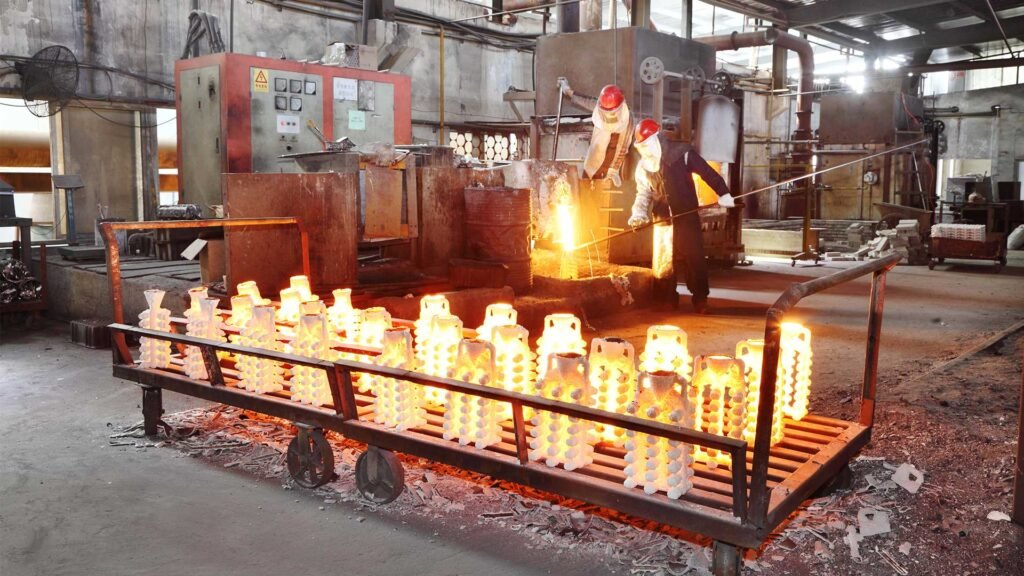
2. Principaux procédés de fabrication des pièces moulées pour vannes
L'usine de moulage moderne utilise deux procédés éprouvés et largement répandus pour la fabrication de vannes : moulage à la cire perdue (moulage à la cire perdue) et le moulage de précision au sable. Associés à une finition mécanique professionnelle, ils constituent un système de production complet pour les accessoires de vannes et de pompes. Chaque procédé présente des avantages spécifiques et des cas d'application particuliers, qui sont choisis en fonction des exigences des plans fournis par le client, des normes de précision des produits et des environnements d'utilisation.
|
Déroulement du processus
|
Principaux atouts
|
Produits de vannes concernés
|
|
|---|---|---|---|
|
Réalisation du modèle en cire → moulage en coquille céramique → déparaffinage et cuisson à haute température → coulée du métal en fusion → refroidissement et démoulage → nettoyage de la coquille → traitement thermique → usinage de précision
|
Précision dimensionnelle extrêmement élevée, finition de surface lisse, absence de bavures, surépaisseur d'usinage minimale, capacité à former des structures complexes de canaux d'écoulement internes, excellente stabilité mécanique
|
Vannes industrielles de haute précision, corps de vannes en acier inoxydable de petite et moyenne taille, accessoires de précision pour pompes, pièces d'étanchéité pour vannes haute pression
|
|
|
Moulage au sable de précision
|
Fabrication de moules en sable de précision → assemblage des noyaux → fusion du métal → coulée à faible vitesse → refroidissement naturel → nettoyage du sable → détection des défauts → finition
|
Faible coût de production, grande adaptabilité aux pièces de grande taille, personnalisation flexible des moules, adapté à la production en série de pièces moulées de taille moyenne et grande destinées aux vannes
|
Vannes pour conduites de grand diamètre, corps de vannes industrielles à usage intensif, pièces moulées pour vannes conventionnelles à basse pression, accessoires pour corps de pompes de grande taille
|
En tant que typique moulage de précision Sur le plan technique, la fonderie de précision élimine les défauts propres à la fonderie traditionnelle, tels que les épaisseurs de paroi inégales et la structure interne peu compacte. Elle améliore considérablement le taux de conformité des pièces moulées destinées aux vannes et est largement utilisée dans les équipements industriels de contrôle des fluides répondant à des normes élevées. Tous les processus peuvent être personnalisés en respectant scrupuleusement les plans fournis par le client, dans le cadre d’une production en sous-traitance (OEM).
3. Difficultés courantes rencontrées dans la production de pièces moulées pour vannes
Dans la production en série de pièces moulées pour vannes, le contrôle de précision et la stabilité de la qualité constituent toujours les principales difficultés auxquelles sont confrontés les fabricants de pièces moulées. En raison des caractéristiques des matériaux, des paramètres de processus et des normes d'exploitation, les produits présentent souvent les défauts et problèmes de production typiques suivants :
3.1 Écart par rapport aux tolérances dimensionnelles
Les pièces moulées destinées aux vannes présentent des structures complexes comprenant des brides, des trous filetés et des canaux d'écoulement irréguliers. Une légère déformation lors de la solidification du métal entraîne des erreurs dimensionnelles qui ne permettent pas de respecter les tolérances d'assemblage requises pour les vannes finies, ce qui se traduit par une mauvaise étanchéité.
3.2 Défauts de qualité internes
Parmi les défauts internes courants, on peut citer les cavités de retrait, la porosité et les inclusions de scories, causées par une vitesse de coulée et un contrôle de la température inadaptés. Ces défauts cachés réduisent la résistance à la pression et à la corrosion des pièces moulées de vannes, ce qui peut facilement entraîner des fuites et des défaillances dans des environnements de travail à haute pression.
3.3 Mauvaise finition de surface
Les procédés de moulage traditionnels sont sujets à la formation de bavures, à l'adhérence du sable et à l'apparition de piqûres superficielles, ce qui accroît la difficulté et le coût des opérations d'usinage ultérieures, et nuit à l'aspect et à la précision d'assemblage des vannes.
3.4 Qualité irrégulière des lots
Le manque d'uniformité des paramètres de processus et les variations liées au fonctionnement manuel entraînent des propriétés mécaniques et une précision dimensionnelle inégales pour les produits fabriqués en série, qui ne peuvent donc pas répondre aux normes de qualité uniformes requises pour les commandes sur mesure des équipementiers.
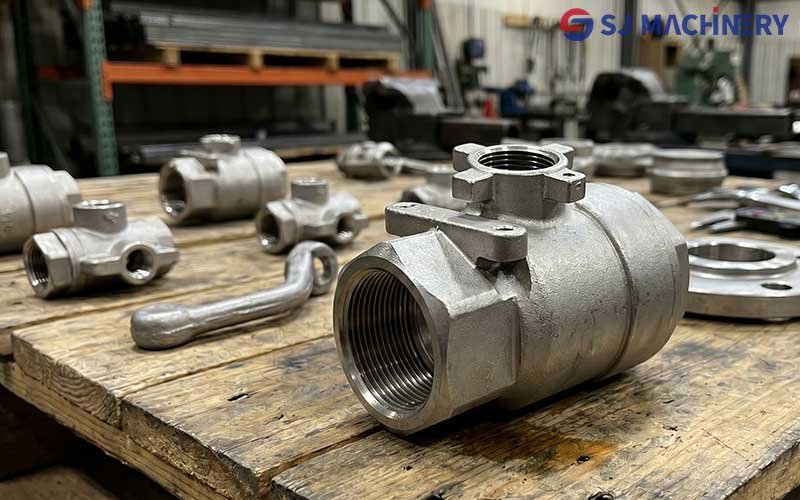
4. Solutions professionnelles aux problèmes liés au moulage des vannes
En s'appuyant sur une technologie éprouvée moulage de précision Grâce aux technologies de moulage de précision et de moulage par investment, notre fonderie OEM spécialisée met en œuvre une optimisation standardisée des processus et des systèmes rigoureux de contrôle qualité afin de résoudre un à un les problèmes de production mentionnés ci-dessus, garantissant ainsi la livraison de pièces moulées sur mesure de haute qualité pour les vannes :
4.1 Optimisation de la conception du moule et de la solidification
Conformément aux plans des produits fournis par nos clients, nous optimisons la structure du moule et mettons en place des masselottes, des fers froids et des canaux de coulée adaptés afin de guider la solidification directionnelle du métal en fusion, d'éliminer efficacement les cavités de retrait et les défauts de porosité, et de garantir une épaisseur de paroi uniforme des pièces moulées de vannes.
4.2 Contrôle précis des paramètres de processus
Mettre en place un suivi numérique de l'ensemble du processus, notamment de la température de fusion, de la vitesse de coulée et du temps de refroidissement. Contrôler rigoureusement la fusion à température constante des alliages et la coulée régulière à faible vitesse afin d'éviter les inclusions de scories et l'oxydation du métal, et d'améliorer la compacité interne des pièces moulées.
4.3 Post-traitement et polissage fin
Recourir à des procédés de grenaillage, de rectification de précision et de finition CNC afin d'éliminer les bavures de surface et les résidus de sable, d'améliorer l'état de surface et de garantir que la précision dimensionnelle des pièces clés, telles que les surfaces d'étanchéité des vannes et les alésages des brides, soit pleinement conforme aux spécifications des plans.
4.4 Système rigoureux de contrôle qualité par lot
Disposer d'équipements de contrôle professionnels, notamment un système de mesure par coordonnées (CMM) pour le contrôle dimensionnel, des essais non destructifs (END) par rayons X et des essais de résistance à la pression. Réaliser une inspection complète des lots de produits afin de garantir une qualité constante et de respecter les normes strictes de personnalisation des équipementiers (OEM).
5. Recommandation concernant les services professionnels de moulage et d'usinage pour les équipementiers (OEM)
Ningbo Suijin Machinery Technology Co. Ltd. est un fabricant professionnel intégré spécialisé dans le moulage de précision, moulage à la cire perdue, ainsi que le traitement mécanique. Nous disposons d'une fonderie moderne et standardisée, forte d'une grande expérience dans la fabrication de pièces moulées pour vannes et d'accessoires industriels. Notre gamme de produits comprend divers types de vannes standard et sur mesure, des corps de pompe et des accessoires mécaniques de précision. Nous fournissons aux fabricants mondiaux d'équipements industriels des services de moulage OEM de haute qualité.
Suijin Casting Nous nous spécialisons dans la production sur mesure pour les fonderies OEM, en respectant scrupuleusement les plans détaillés, les paramètres dimensionnels, les normes de matériaux et les exigences de performance de nos clients, afin d'assurer une fabrication sur mesure tout au long du processus. Du développement des moules à la formation des pièces moulées, en passant par la précision Usinage CNC, le traitement de surface et les contrôles qualité, nous mettons en œuvre un contrôle qualité à toutes les étapes afin de garantir que chaque pièce moulée et chaque accessoire de vanne sur mesure réponde aux normes d'application de nos clients.
Que vous ayez besoin d'un moulage de prototypes de précision en petites séries ou d'une production en série à grande échelle de pièces moulées pour vannes industrielles, nous sommes en mesure de vous proposer des solutions complètes, rentables et d'une grande fiabilité. N'hésitez pas à nous envoyer les plans détaillés de vos produits ainsi que vos spécifications techniques ; notre équipe technique spécialisée vous fournira dans les plus brefs délais un devis précis et un plan de production.
Si vous avez des questions concernant les procédés de moulage, la personnalisation des produits, les délais de livraison ou les normes de qualité, n’hésitez pas à nous contacter à tout moment. Nous espérons sincèrement établir des relations de coopération stables et durables avec nos clients du monde entier et créer davantage de valeur pour votre entreprise grâce à nos services fiables de moulage de vannes et de moulage de précision OEM.