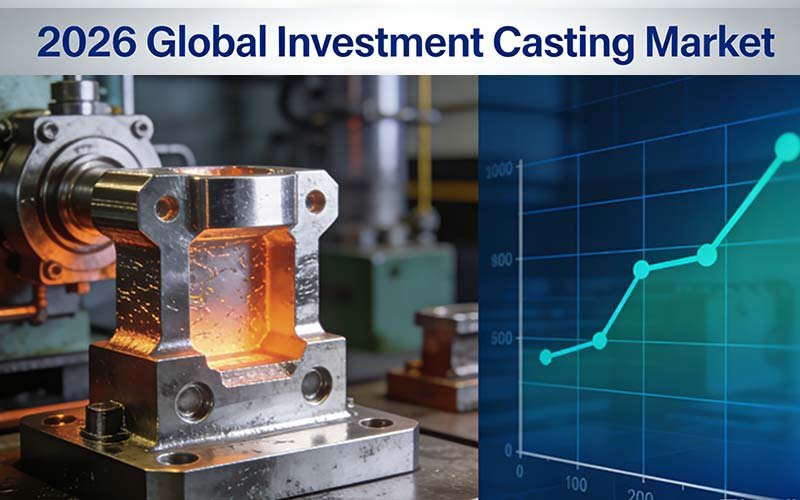
The Future of Precision: Global Investment Casting Market Outlook (2026)
In the high-stakes world of modern manufacturing, few processes offer the marriage of ancient artistry and space-age science quite like Investment Casting (Lost-Wax Casting). As we move through 2026, the industry is witnessing a massive tectonic shift driven by aerospace recovery, the electric vehicle (EV) revolution, and a surge in high-performance titanium applications.
1. Market Momentum: Breaking the $20 Billion Ceiling
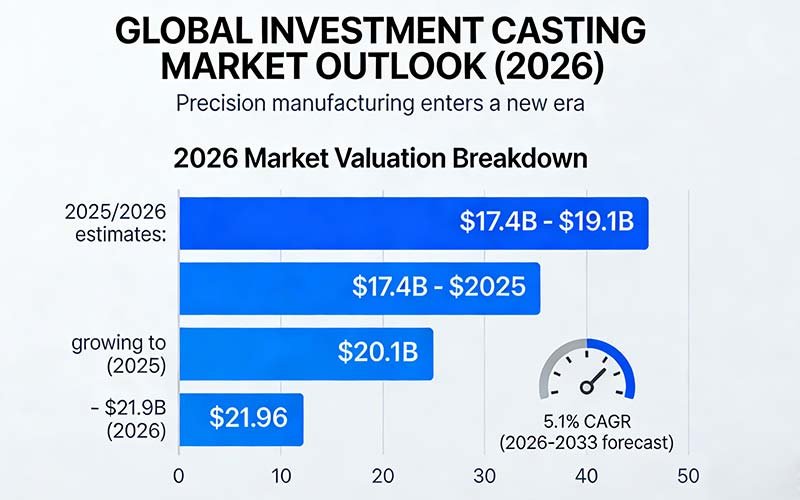
The global investment casting market has shown remarkable resilience. According to the latest data from Grand View Research and Mordor Intelligence, the market is projected to reach a valuation of $20.1 billion to $21.9 billion by the end of 2026.
With a steady CAGR of approximately 5.1%, the industry is no longer just “recovering” from early-2020s supply chain shocks; it is expanding into new frontiers.
Key Regional Powerhouses:
-
Asia-Pacific: Remaining the “Global Factory,” China and India command nearly 41% of the total market share. China, in particular, has transitioned from low-cost hardware to high-value aerospace components.
-
North America: Lead by the U.S. defense and commercial aviation sectors, this region remains the hub for technical innovation, expected to grow at a 5.36% CAGR through 2030.
2. The “Titanium Titan”: A Deep Dive into High-Growth Segments
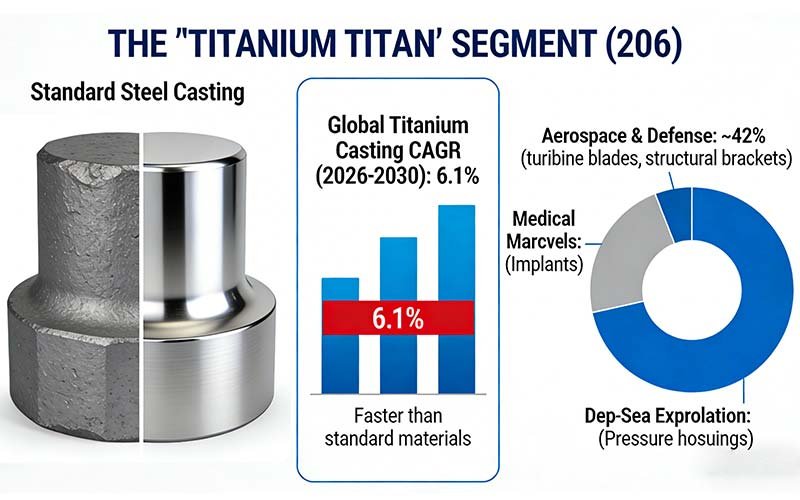
While stainless steel and aluminum remain staples, Titanium Alloys are the undisputed stars of 2026. The titanium casting segment is growing at an accelerated rate of 6.1%, significantly outpacing traditional materials.
Why Titanium? Why Now?
The push for “Net-Zero” in aviation and increased range in EVs has made weight reduction a non-negotiable priority.
-
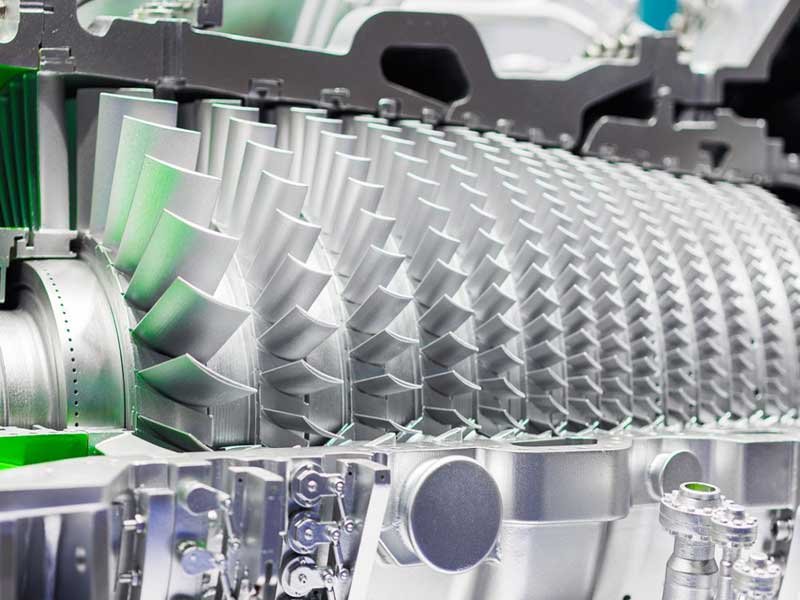
Aerospace & Defense (42% of use): The ramp-up of the Boeing 787, Airbus A350, and China’s C919 has created a massive backlog for titanium turbine blades and structural brackets.
-
Medical Marvels: Titanium’s biocompatibility makes it the gold standard for orthopedic implants.
-
Deep-Sea Exploration: As offshore energy moves into deeper waters, titanium’s corrosion resistance is vital for pressure housings.
3. China’s Strategic Shift: From Volume to Value
China’s investment casting landscape is undergoing a “Quality Revolution.” The market size within China is expected to exceed ¥54 billion (RMB) in 2026.
| Focus Area | Leading Players | Trend |
| High-End Aerospace | Avic-CAPT, CISRI-GAONA | Localization of engine single-crystal blades. |
| Global Export | Impro Precision | Diversifying manufacturing bases to SE Asia and Mexico. |
| Automotive EV | Innovaw | Casting complex, lightweight motor housings for EVs. |
4. Digital Transformation: The 2026 Tech Stack
The “foundry of the future” looks more like a laboratory than a traditional workshop. Three technologies are defining the 2026 landscape:
-
3D Printing Integration: The use of 3D-printed wax patterns or ceramic cores has slashed lead times from months to days. This “Tool-less” casting allows for internal cooling channels in blades that were previously impossible to cast.
-
AI-Driven Simulation: Digital twin technology now predicts metal flow and solidification with 98% accuracy, reducing scrap rates by up to 15%.
-
Green Casting: With stricter ESG mandates, 2026 has seen a 25% increase in the adoption of closed-loop wax recycling and energy-efficient induction melting.
5. Conclusion: A Precision-Driven Future
The investment casting industry in 2026 is at a fascinating crossroads. While geopolitical tensions and raw material fluctuations (particularly Zircon sand and Cobalt) remain challenges, the demand for complex, lightweight, and durable parts has never been higher.
For manufacturers, the path forward is clear: Invest in titanium capabilities, embrace additive manufacturing, and digitize the quality control process.
Data Sources & References:
Grand View Research (2026 Industry Report)
China Foundry Association (CFA) 2025 White Paper
Statista: Investment Casting Revenue Forecasts (2026)
Frost & Sullivan: Aerospace Material Trends