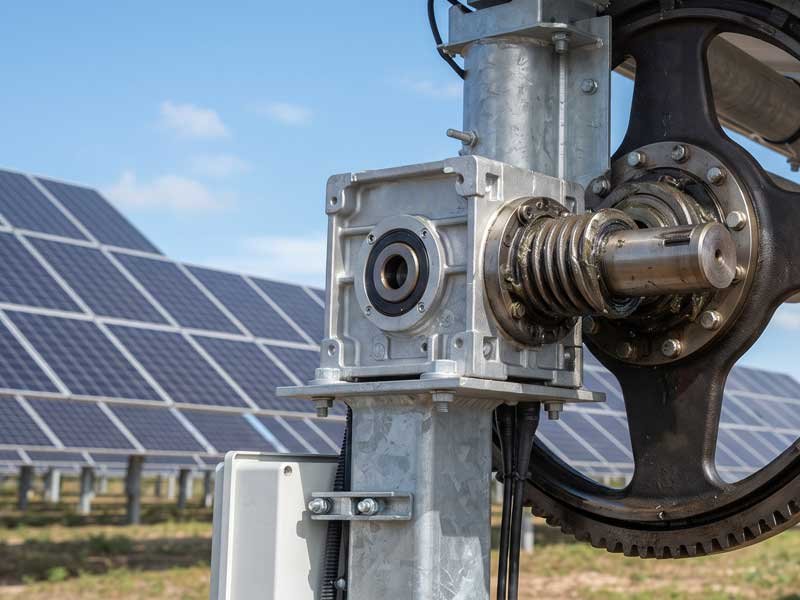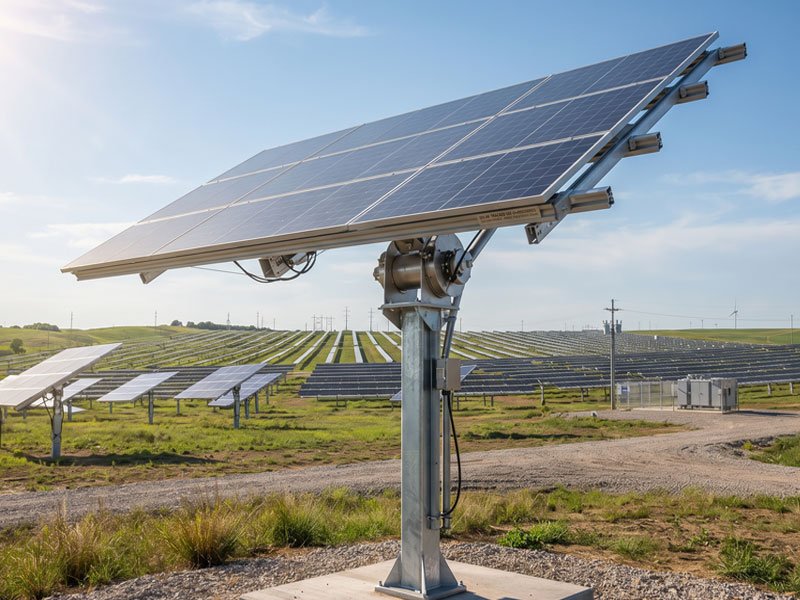
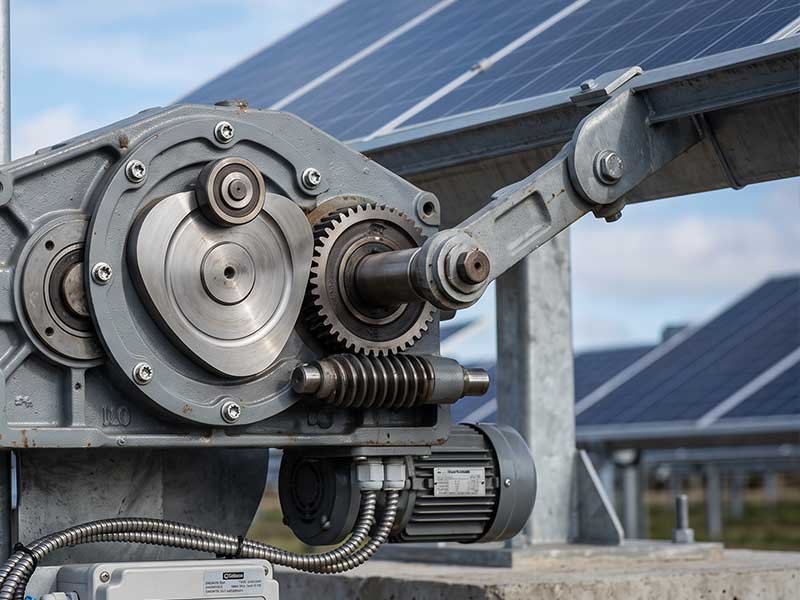
In utility-scale and commercial photovoltaic (PV) projects, solar tracker cam casting serves as the core mechanical component that ensures precise, long-term angular adjustment of solar tracking systems. Unlike ordinary industrial castings, custom solar tracker cam casting requires extreme dimensional accuracy, superior mechanical fatigue resistance, and reliable environmental corrosion resistance to support the 25+ year service life of solar power plants.
For B2B procurement teams and custom casting manufacturers, non-standard solar tracker cam casting customization often faces pain points such as unstable casting quality, substandard finishing precision, and mismatched material performance.
To help global buyers standardize RFQ evaluation, supplier auditing, and production process verification, Suijin Machinery systematically summarizes the core standards, material selection, CNC finishing parameters, and factory qualification requirements for high-quality solar tracker cam casting customization.
1. Critical Material Selection for Solar Tracker Cam Casting
Material selection directly determines the load-bearing capacity, anti-corrosion performance, and service life of solar tracker cam casting.
Different application scenarios (coastal salt fog, high-temperature desert, low-temperature alpine regions) and functional requirements (sensor matching, high-torque load bearing) require targeted material customization. The following table lists the most widely used materials for custom solar tracker cam casting and their applicable working conditions.
|
Casting Material Grade
|
Core Performance Advantages
|
Applicable Solar Tracker Working Scenarios
|
Special Customization Requirements
|
|---|---|---|---|
|
316 SS Stainless Steel
|
Excellent chloride corrosion resistance, non-magnetic property, stable oxidation resistance under UV radiation
|
Coastal PV power stations, high-humidity and salt-fog environments, cams near magnetic positioning sensors
|
Non-magnetic treatment required, surface passivation for enhanced anti-corrosion
|
|
17-4 PH Stainless Steel
|
Ultra-high yield and tensile strength, outstanding wear resistance and fatigue resistance after heat treatment
|
High-torque tracking systems, space-limited transmission structures, high-wind-load power stations
|
Custom H900/H1025 heat treatment process to balance toughness and hardness
|
|
4140/8620 High-Strength Carbon Steel
|
High structural rigidity, low production cost, strong impact resistance
|
Inland conventional PV projects, main load-bearing cam structural parts
|
Mandatory hot-dip galvanizing with specified coating thickness to prevent rusting
|
For all custom solar tracker cam casting projects, Buyers must clarify material certification and performance test standards in the RFQ. Unqualified material selection will lead to cam deformation, corrosion failure, or sensor signal interference, causing frequent tracking system failures and huge maintenance costs for solar plants.
2. Precision Manufacturing & Machining Standards for Solar Tracker Cam Casting
As a core transmission component, solar tracker cam casting relies on investment casting (lost wax casting) to achieve near-net forming, which reduces material waste and ensures basic contour accuracy.
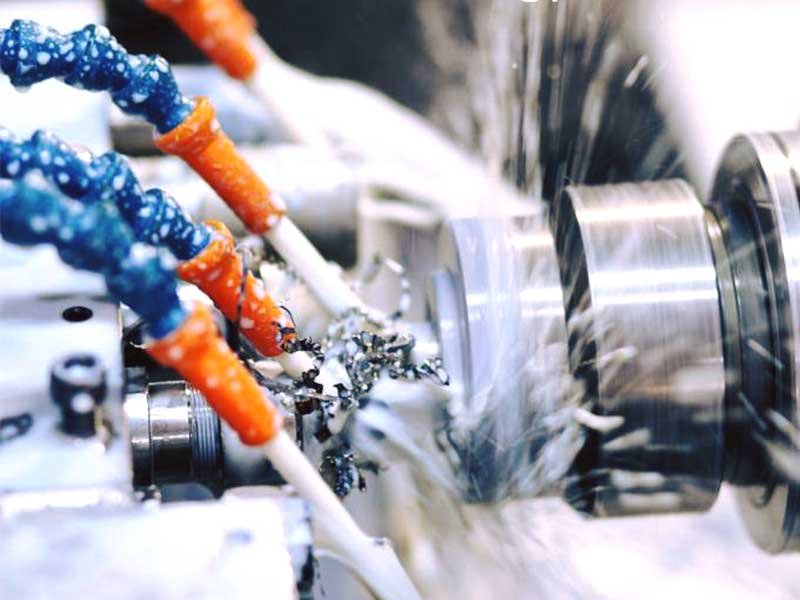
However, the original casting blank cannot meet the assembly and operation requirements, and high-precision CNC finishing is essential. The surface roughness of key working surfaces and inner holes must reach Ra1.6 to ensure low-friction operation and long-term tracking accuracy.
Stainless steel solar tracker cam casting has typical processing difficulties including work hardening, tool adhesion, and poor heat dissipation. Reasonable tool selection and cutting parameters are the core of stable mass production of high-precision products. The table below summarizes the standard CNC finishing process parameters for Ra1.6 high-precision processing of custom solar tracker cam casting.
|
Processing Parameter Item
|
316 SS Solar Tracker Cam Casting
|
17-4 PH Solar Tracker Cam Casting
|
Core Processing Standards
|
|---|---|---|---|
|
Cutting Line Speed (Vc)
|
100–120 m/min
|
120–150 m/min
|
Avoid built-up edge (BUE) to ensure surface finish stability
|
|
Feed Rate
|
0.08–0.12 mm/rev
|
0.10–0.15 mm/rev
|
Prevent excessive extrusion and work hardening of the casting surface
|
|
Finishing Allowance
|
0.1–0.3 mm
|
0.2–0.5 mm
|
Completely remove the hardened layer of the casting blank surface
|
|
Tool Configuration
|
Ultra-fine carbide tool + TiAlN PVD coating, 0.4/0.8mm nose radius
|
Ultra-fine carbide tool + AlTiN PVD coating, 0.8mm nose radius
|
Positive 15°–20° rake angle to reduce cutting resistance
|
|
Cooling Mode
|
70bar+ high-pressure internal cooling, 8%–10% emulsion concentration
|
70bar+ high-pressure internal cooling, 10%–12% emulsion concentration
|
Rapid heat dissipation and chip removal to avoid surface scratching
|
In addition to parameter control, all key forming surfaces of solar tracker cam casting must adopt climb milling processing to avoid friction and secondary hardening caused by conventional milling. Batch production must be equipped with SPC process monitoring and regular tool replacement mechanisms to ensure consistent Ra1.6 surface roughness and dimensional tolerance (±0.005 in/in) of each casting.
3. NDT Inspection & Supplier Qualification Requirements
Solar tracker cam casting operates under continuous low-speed and high-torque wind load stress for a long time. Internal casting defects such as shrinkage porosity, looseness, and micro-cracks will lead to fatigue fracture of the cam in the later stage of operation. Therefore, customized procurement must clarify strict non-destructive testing (NDT) standards in the contract.
Qualified suppliers of custom solar tracker cam casting need to provide X-ray (RT) or ultrasonic (UT) NDT reports for key stress parts, and complete heat treatment processes including quenching and tempering to match surface wear resistance and core toughness. At the same time, formal suppliers should have one-stop production capabilities including 3D printed wax mold rapid prototyping, investment casting, CNC finishing, heat treatment, and surface passivation, which can effectively reduce supply chain risks and shorten delivery cycles.
4. Procurement RFQ Suggestions for Custom Solar Tracker Cam Casting
To efficiently screen high-quality manufacturers and standardize the customization process of solar tracker cam casting, global buyers need to complete standardized information delivery in the RFQ stage:
- First, provide complete 2D/3D casting drawings and clarify dimensional tolerance and surface roughness standards;
- Second, specify material performance parameters, salt spray test hours, and environmental adaptation requirements;
- Finally, put forward clear PPAP production approval level and batch inspection standards.
Final Conclusion
High-quality solar tracker cam casting customization is a systematic project integrating material science, precision casting, CNC finishing, and quality detection. Only by standardizing material selection, strictly controlling processing parameters, and implementing full-process quality inspection can we produce castings that meet the 25-year long-term stable operation requirements of solar tracking systems.
For global PV engineering companies and procurement merchants, choosing a one-stop professional solar tracker cam casting manufacturer is the core guarantee to reduce project costs and improve system stability.