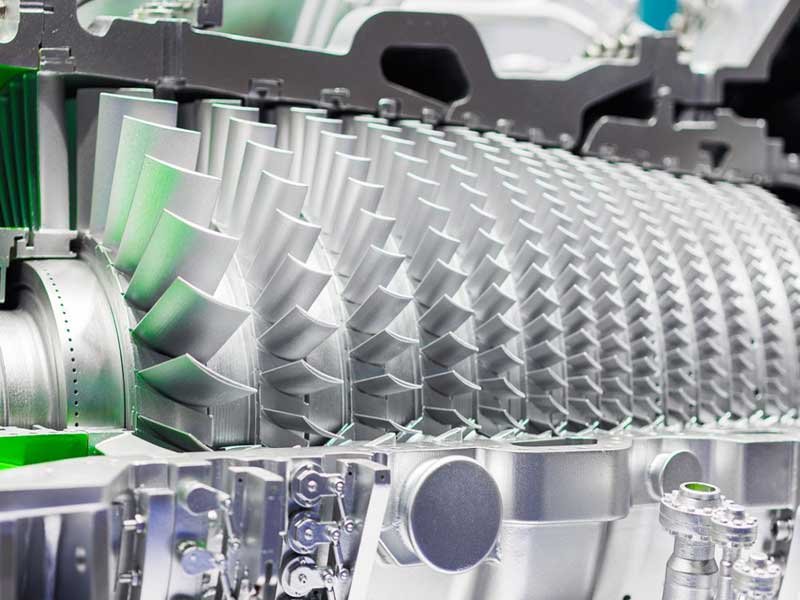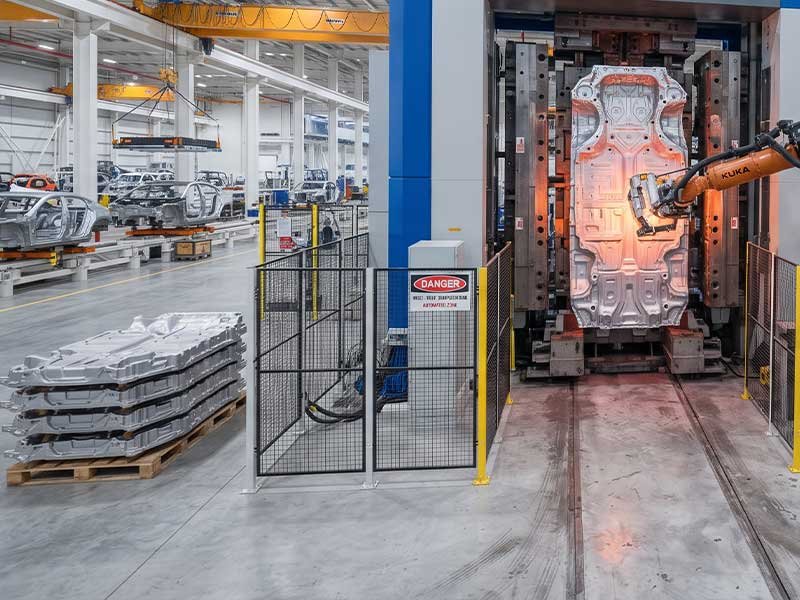
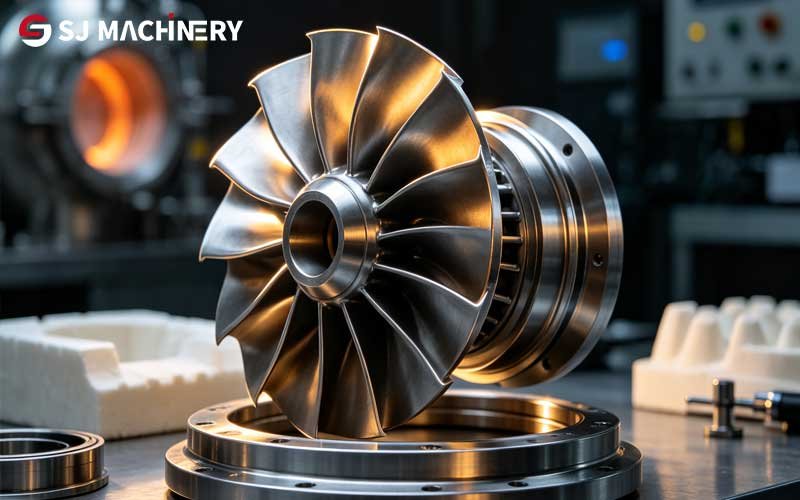
Turbine castings are the core kinetic energy conversion components of turbochargers, aero-engines, and industrial gas turbines. Operating sustainably under extreme working conditions including ultra-high temperature, high pressure, and super-high rotational speed, these components represent the top-tier technical barriers and material standards in the metal casting industry.
To maintain excellent yield strength and corrosion resistance in high-temperature exhaust gas, the production of high-performance turbine castings relies heavily on advanced superalloy formulations and ultra-stringent casting and processing environments.
Driven by the booming aerospace, new energy power generation, and high-performance automotive industries, the global turbine casting and superalloy market has achieved steady and rapid growth.
According to 2025 industrial market data, the global superalloy market reached a scale of USD 10.34 billion, with a projected compound annual growth rate (CAGR) of 7.2% from 2026 to 2034, expected to hit USD 19.53 billion by 2034.
The global casting superalloy ingot market was valued at USD 8.4 billion in 2025, growing at a CAGR of 6.3%. In terms of segmented tracks, the global high-temperature alloy precision casting market attained USD 1.68 billion in 2025, with the aerospace and defense sector accounting for 60.2% of the market share, dominating the industry.
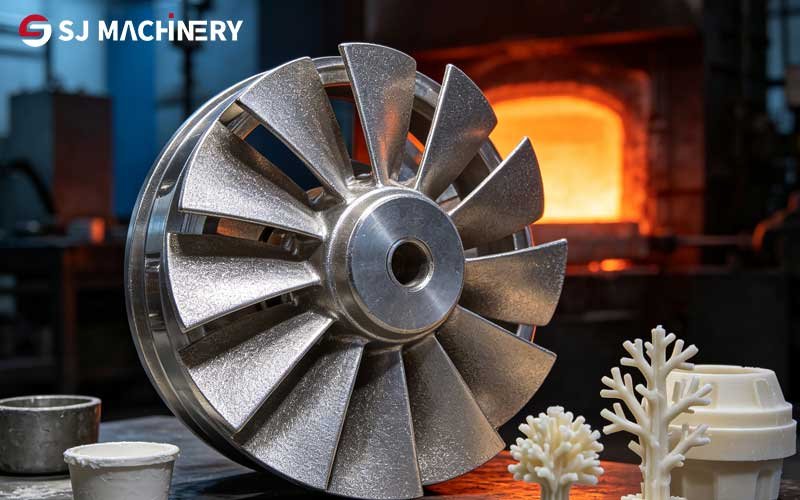
1. Core Manufacturing Process: Investment Casting + High-Precision CNC Machining
Nearly all high-performance turbine impellers and rotors adopt investment casting (lost-wax casting), a precision casting process that enables one-time forming of extremely complex aerodynamic blade structures with superior surface finish, greatly reducing subsequent machining workload and material loss.
Combined with high-precision CNC machining, it forms a closed-loop manufacturing system for high-quality turbine castings, covering blank forming to finished product precision processing.
1.1 Key Procedures of Investment Casting
The standardized production workflow of turbine castings includes 4 core links, each determining the final mechanical performance and yield of the product:
- Wax Injection and Tree Assembly: High-precision polished aluminum molds are used to produce dimensionally accurate wax patterns, with shrinkage margins reserved for metal cooling deformation. Multiple qualified wax patterns are assembled into a complete gating system (wax tree) to improve casting efficiency and consistency.
- Ceramic Shell Preparation: The wax tree is repeatedly dipped in ceramic slurry and coated with refractory sand layer by layer. After full drying and hardening, a high-strength, high-temperature-resistant ceramic shell is formed to withstand high-temperature molten metal impact.
- Dewaxing and Shell Roasting: High-temperature heating is applied to melt and discharge the internal wax patterns. The hollow ceramic shell is then roasted at over 1000°C to eliminate residual impurities, enhance shell strength, and prevent chemical reactions during molten metal pouring.
- Vacuum Casting (Core Process): High-performance turbine superalloys contain active elements such as titanium and aluminum, which are easily oxidized. All melting and pouring processes are completed in a vacuum induction furnace to effectively isolate air oxidation, ensure alloy purity, and stabilize the mechanical properties of castings.
1.2 High-Precision CNC Machining: Empowering Final Product Performance
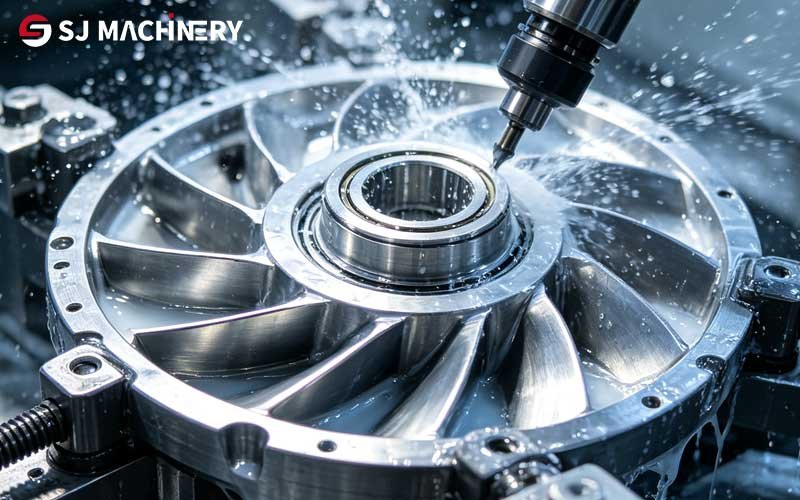
Precision casting provides qualified turbine blanks with complex structures, while 5-axis CNC precision machining realizes micron-level precision optimization for key parts. Turbines operate at a rotational speed of up to hundreds of thousands of revolutions per minute; tiny dimensional deviations or uneven weight distribution will trigger severe resonance and lead to component failure. CNC machining achieves ultra-tight tolerance control for assembly surfaces, bearing necks, and sealing grooves, ensuring perfect matching between turbines, compressors and housings, and improving the overall energy conversion efficiency of the equipment.
2. Mainstream Superalloy Materials and Performance Parameters
With the continuous increase of exhaust temperature of high-boost gasoline engines and industrial gas turbines, ordinary metal materials can no longer adapt to long-term service above 900°C. Superalloys have become the exclusive material for high-end turbine castings by virtue of excellent high-temperature strength, thermal fatigue resistance and creep resistance. Nickel-based superalloys dominate the market, accounting for 77.9% of the global industrial gas turbine superalloy market share in 2025. The following table summarizes the mainstream materials, temperature resistance and application scenarios of turbine castings:
|
Material Type
|
Typical Grade
|
Max Operating Temperature
|
Core Characteristics & Application Scenarios
|
|---|---|---|---|
|
Iron-Based Cast Superalloy
|
K13
|
700°C – 750°C
|
Low production cost, supports non-vacuum casting; mainly applied to early-stage and low-power diesel engine turbochargers with low high-temperature performance requirements
|
|
Conventional Nickel-Based Cast Superalloy
|
K418 / Inconel 718
|
750°C – 850°C
|
Mainstream material for automotive turbochargers; features excellent high-temperature toughness and thermal fatigue resistance, balancing performance and cost for mass industrial applications
|
|
High-Performance Nickel-Based Superalloy
|
K424 / Inconel 625
|
900°C – 1000°C
|
Requires strict vacuum casting and grain refinement processes; suitable for high-boost gasoline engines, racing vehicles and high-end commercial exhaust systems
|
|
Single-Crystal Superalloy
|
CMSX Series
|
Over 1000°C (Extreme High Temperature)
|
Eliminates internal grain boundaries of materials, greatly improving creep resistance and fatigue limit; exclusively used for high-end aero-engine hot-end components
|
3. Core Quality Evaluation Indicators and Industrial Standards
International downstream purchasers (aerospace manufacturers, industrial gas turbine enterprises, high-performance automobile factories) have formed a complete set of stringent evaluation standards for turbine castings. The core quality indicators determine the service life, safety and operational stability of turbine components, and are also the key basis for industrial product grading. The key quality assessment dimensions are sorted in the table below:
|
Core Quality Indicator
|
Testing & Control Method
|
Industrial Value & Significance
|
|---|---|---|
|
Creep & Thermal Fatigue Resistance
|
High-temperature long-term stress fatigue test, thermal cycle impact test
|
Prevents permanent deformation and micro-crack generation of castings under long-term high-temperature and high-load operation, directly determining the service life of turbine components
|
|
Internal Defect Detection (NDT)
|
X-ray inspection, fluorescent penetration detection, ultrasonic nondestructive testing
|
Eliminates internal defects such as pores, shrinkage porosity and inclusions, avoids sudden failure of components under ultra-high speed operation, and meets international aviation and industrial grade safety standards
|
|
Dynamic Balance Precision
|
High-speed dynamic balance calibration, micro-cutting trimming
|
Ensures uniform weight distribution of castings, suppresses resonance and vibration during high-speed operation, and improves the stability and safety of the whole machine system
|
|
Dimensional Tolerance Accuracy
|
CMM three-dimensional full-size detection, CNC precision trimming
|
Guarantees precise assembly of turbine and matching parts, optimizes sealing performance, and improves the overall energy conversion efficiency of turbochargers and engines
|
4. One-Stop Manufacturing Advantages & Industrial Value
In the traditional industrial chain, turbine casting blank production and CNC finishing are completed by different suppliers, which easily causes problems such as mismatched dimensional benchmarks, unclear quality responsibility, delayed delivery and increased comprehensive costs. Professional manufacturers adopt an integrated service model of precision investment casting + high-precision CNC machining, realizing full closed-loop control from product development (NPI stage) to mass production.
In terms of R&D collaboration, casting engineers and CNC programming experts cooperate in the early stage of product design, reserving optimal machining allowances and positioning benchmarks for blanks, eliminating subsequent processing difficulties. In terms of quality control, full-process QC management is implemented: raw material spectral analysis ensures alloy composition compliance, post-casting X-ray nondestructive testing eliminates internal defects, and post-processing CMM full-size detection ensures dimensional accuracy 100% meets international standards.
In terms of industrial benefits, the integrated production mode shortens the product delivery cycle by 15%-20%, reduces cross-process communication costs and logistics losses, and provides customers with cost-effective turnkey solutions. With the continuous advancement of domestic substitution of high-end equipment and the rapid development of the global new energy power industry, the market demand for high-precision, long-life turbine castings will continue to grow. It is estimated that the global turbine casting supporting market will maintain a growth rate of over 8% annually from 2026 to 2030.
5. Conclusion
Turbine casting technology is a comprehensive embodiment of material science, precision casting technology and digital machining technology, and is a core basic component restricting the performance improvement of aero-engines, industrial gas turbines and high-performance automotive power systems. With the continuous upgrading of downstream industrial standards and the expansion of high-end equipment demand, high-purity superalloy materials, vacuum precision casting technology and micron-level CNC finishing will become the core competitive barriers of the industry. The integrated manufacturing mode of casting and machining will further lead the industry development trend, providing reliable core component support for the global high-end power equipment manufacturing industry.