Automotive Exhaust Cones System
In modern automotive manufacturing, the design and material selection of exhaust systems directly determine the engine’s overall thermal efficiency, emission control performance, and acoustic characteristics.
As a critical transitional component connecting pipes of different diameters, including three-way catalytic converters, diesel particulate filters, and muffler main cylinders with front and rear exhaust pipes, the exhaust cone plays an irreplaceable role in optimizing exhaust gas flow. Its manufacturing process and material properties are core factors affecting the service life and comprehensive performance of the entire exhaust system.
According to automotive industry manufacturing data, high-precision cast exhaust cones can reduce engine exhaust backpressure by 8%–12%, improve combustion efficiency by 5%–7%, and cut exhaust system failure rates caused by airflow turbulence by over 15% compared with traditional stamped and welded parts.
This paper systematically elaborates on the functional mechanism, material selection logic, precision casting technology, and quality inspection standards of stainless steel exhaust cones, combined with industry parameter data.
1. Fluid Mechanics and Structural Functional Characteristics of Exhaust Cones
Automotive exhaust systems operate under extreme dynamic working conditions, enduring high-temperature and high-speed pulsed exhaust gas discharged from the engine. The core function of the exhaust cone is to achieve smooth diameter transition and guided flow of exhaust gas, eliminating airflow interference and turbulence during gas circulation. Unreasonable cone structure design or rough inner wall surfaces will generate severe airflow eddies, causing a sharp rise in exhaust backpressure. Industry test data shows that every 10% increase in exhaust backpressure will lead to a 3%–4% drop in engine power output and a 2% increase in fuel consumption.
The streamlined integrated structure of investment-cast exhaust cones effectively solves the structural defects of spliced and welded parts. Its ultra-smooth inner wall ensures low-loss passage of exhaust gas, maintains stable exhaust efficiency under full engine speed conditions, and simultaneously reduces exhaust noise resonance.
For mainstream passenger vehicle exhaust systems, qualified exhaust cones need to control airflow turbulence intensity below 5% to meet national VI emission and vehicle NVH (noise, vibration and harshness) performance standards.
2. Material Science and Performance Comparison Under Severe Working Conditions
Automotive exhaust cones face dual severe service environments: internal long-term scouring by 600–1000℃ high-temperature exhaust gas and acidic condensate corrosion, and external exposure to rainwater, sediment, and chloride corrosion from road deicing salts. Ordinary carbon steel is prone to oxidation, rust and structural deformation under such conditions, with a service life of less than 2 years, which cannot meet vehicle durability requirements. Thus, stainless steel has become the standard material for automotive exhaust cones, accounting for over 98% of the mainstream vehicle market.
Different stainless steel grades have distinct performance advantages and application scenarios. Combined with industry test parameters and market application data, the performance and application comparison of three mainstream stainless steel materials for exhaust cones is shown in Table 1.
Table 1 Performance Parameters and Market Application of Mainstream Stainless Steel Materials for Exhaust Cones
|
Stainless Steel Grade
|
Core Material Properties
|
High-Temperature Performance
|
Corrosion Resistance
|
Market Application Scenarios & Share
|
|---|---|---|---|---|
|
409 Ferritic Stainless Steel
|
Low thermal expansion coefficient (11.7×10⁻⁶/℃), excellent thermal fatigue resistance, low cost, tensile strength ≥360 MPa, yield strength ≥175 MPa
|
Long-term stable operation at ≤675℃, good high-temperature oxidation resistance
|
General atmospheric corrosion resistance, weak resistance to chloride and acidic condensate corrosion
|
Economical choice for mass-produced ordinary passenger vehicles, market application share 65%, suitable for conventional inland road working conditions
|
|
304 Austenitic Stainless Steel
|
18% Cr + 8% Ni composition, excellent comprehensive mechanical properties, good surface gloss, tensile strength 280–310 MPa at 600℃
|
Continuous working temperature up to 650℃, stable structural strength
|
Excellent atmospheric and moisture corrosion resistance, good appearance durability
|
Used for visible tail pipe components and mid-end vehicle exhaust systems, market application share 28%
|
|
316 Austenitic Stainless Steel
|
Contains Mo element, high structural stability, tensile strength 330–360 MPa at 600℃, 210–230 MPa at 800℃
|
Excellent high-temperature creep resistance, suitable for long-term high-load operation
|
Strong resistance to chloride ion and acidic condensate corrosion, 2–3 times higher than 304 steel
|
Applied to high-end vehicles, coastal area vehicles and industrial special exhaust systems, market application share 7%
|
3. Technical Advantages and Process Parameters of Silica Sol Investment Casting
Traditional stamping and welding processes have inherent defects in producing exhaust cones: welded joints are prone to stress concentration and air leakage, rough inner walls cause increased airflow resistance, and low dimensional consistency leads to poor assembly accuracy.
Industry process comparison data shows that the qualified rate of stamped and welded exhaust cones in long-term durability tests is only 78%, while the qualified rate of silica sol investment casting products reaches 99.2%. At present, over 90% of high-precision automotive exhaust cones in the industry adopt silica sol investment casting technology.
Silica sol investment casting (lost wax casting) realizes integrated forming of complex cone curved surfaces through wax mold replication, shell making, high-temperature roasting and precision casting. Its core process parameters and performance advantages compared with traditional processes are summarized in Table 2.
|
Technical Indicators
|
Silica Sol Investment Casting
|
Traditional Stamping & Welding Process
|
Industry Standard Requirement
|
|---|---|---|---|
|
Inner Wall Roughness
|
Ra 3.2–6.3 μm, no secondary polishing required
|
Ra 12.5–25 μm, prone to burrs and uneven surfaces
|
≤Ra 6.3 μm for high-performance exhaust parts
|
|
Dimensional Tolerance Grade
|
ISO 8062 CT5–CT6
|
ISO 8062 CT8–CT10
|
≥CT7 for automotive precision exhaust components
|
|
Structural Integrity
|
Integrated forming, no welding seam, zero air leakage risk
|
Spliced welding, easy to produce welding pores and stress cracks
|
No welding defect, 100% airtight qualified
|
|
Service Life
|
8–12 years under standard working conditions
|
4–6 years under standard working conditions
|
≥8 years for passenger vehicle exhaust system parts
|
|
Post-Processing
|
Only CNC end face finishing required, high assembly concentricity
|
Need internal polishing and weld grinding, low assembly accuracy
|
Ensure end face roundness and coaxiality error ≤0.02mm
|
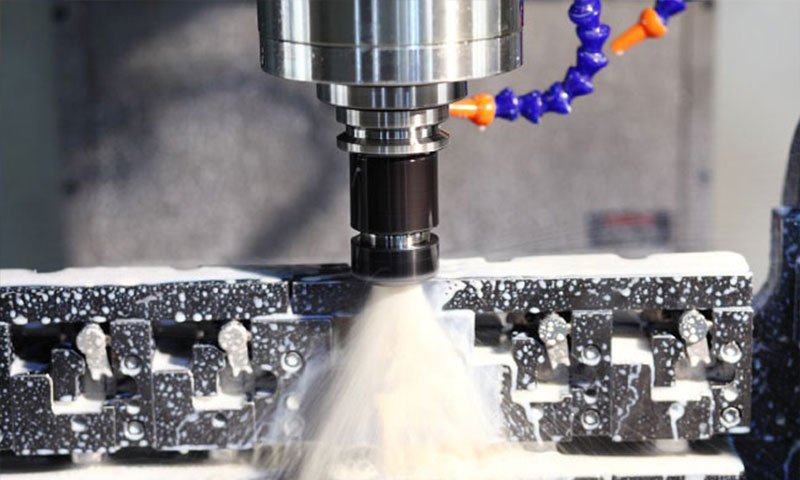
In actual production, the silica sol process uses ultra-fine refractory slurry to coat the wax mold, which perfectly replicates the smooth surface of the wax mold. The integrated forming structure completely avoids hidden dangers such as welding deformation and air leakage. The subsequent CNC precision turning process further controls the end face coaxiality error within 0.02 mm, realizing seamless docking and automatic high-precision welding with front and rear exhaust pipes, and improving the assembly efficiency of the entire vehicle exhaust system by 20%–25%.
4. Quality Inspection Standards and Industry Verification Specifications
As a key airtight component of automotive exhaust systems, stainless steel cast exhaust cones must pass strict non-destructive testing (NDT) and performance verification before leaving the factory. According to automotive parts industry quality standards (ISO/TS 16949), all exhaust cone products need to complete two core inspections: internal defect detection and airtightness verification.
X-ray flaw detection is used to inspect internal casting defects such as shrinkage cavities, pores and inclusions, with a defect elimination rate of 100% for finished products. The water pressure and air tightness test adopts 1.5 times the standard exhaust working pressure for 30-minute constant pressure detection, ensuring no air leakage and no abnormal noise during the whole service cycle.
Industry data shows that investment-cast exhaust cones have a zero failure rate in airtightness tests, far exceeding the 92% pass rate of traditional stamped and welded products, which effectively avoids exhaust gas leakage and abnormal vibration noise during vehicle operation.
5. Conclusion
Although the exhaust cone is a small auxiliary component in the automotive system, it integrates fluid mechanics optimization, high-temperature and corrosion-resistant material science, and precision investment casting technology, becoming a typical representative of high-precision manufacturing of automotive basic parts.
Supported by industry data, silica sol investment casting technology has obvious comprehensive advantages in surface finish, dimensional accuracy, structural stability and service life, and has become the mainstream manufacturing process for high-quality exhaust cones.
With the continuous upgrading of automotive emission standards and lightweight requirements, optimized stainless steel formulas and investment casting processes will further reduce exhaust backpressure and improve component durability, supporting automotive engine energy conservation, emission reduction and performance enhancement.
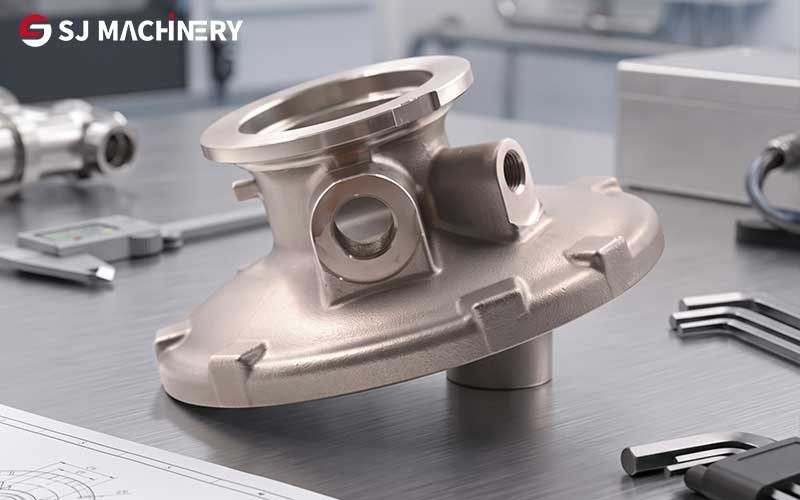
To meet the growing demand for high-precision automotive exhaust components, professional manufacturing support is essential. Suijin Machinery specializes in precision casting and CNC machining, offering a full range of high-quality cast components for global automotive manufacturers. Equipped with mature lost wax casting workflows and advanced CNC finishing technologies, the company delivers standardized, durable stainless steel parts including automotive exhaust cones. Complying with strict ISO and automotive industry quality criteria, Suijin Machinery provides reliable, cost-effective one-stop manufacturing solutions and serves as a trustworthy long-term partner for global automotive OEMs and tier suppliers.