Sourcing Alloy Cast Auto Parts Terminals Through Advanced Investment Casting. For critical structural and electrical connections, alloy auto parts terminals must meet unforgiving standards. When sourcing these vital components, automotive procurement engineers are turning to advanced investment casting. But casting alone isn’t enough—it requires a seamless integration of collaborative engineering, precision machining, and rigorous quality inspection to deliver parts that perform flawlessly on the assembly line.
1. Collaborative Engineering & Advanced DFM: Engineering Success Before the Pour
The most successful automotive components are optimized long before the metal is melted. A reliable manufacturing partner acts as an extension of your engineering team, providing comprehensive Design for Manufacturability (DFM) support the moment a 3D CAD model (STEP/IGES) is received.
Instead of blindly cutting tooling, experienced engineers utilize advanced solidification and mold flow simulation software. This allows the team to digitally visualize the molten metal’s behavior inside the shell.
By strategically designing the gating and risering systems, Suijin Machinery can predict and eliminate turbulence, cold shuts, and internal shrinkage porosity before a single physical prototype is made.
Furthermore, this early involvement is critical for determining exact shrinkage allowances and optimizing the machining allowance. By calculating the precise dimensional changes that occur during the lost-wax investment casting process, we ensure there is just enough material left for the CNC centers to achieve that critical Ra1.6 surface finish, without wasting material or increasing machining cycle times. The tooling for the wax patterns is then precision-machined from high-grade aluminum, guaranteeing that the dimensional stability starts from the very first wax injection.
2. The Power of Near-Net Shape Manufacturing
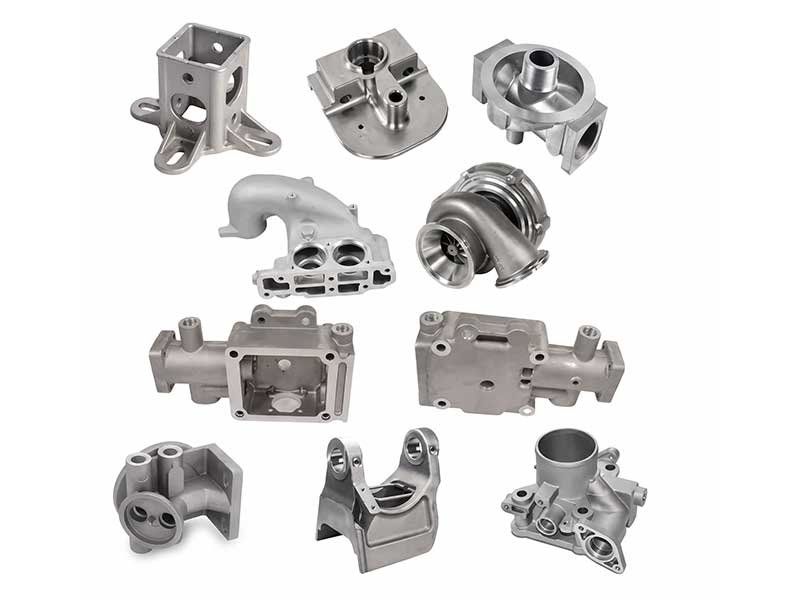
Investment casting (lost-wax casting) is the optimal solution for complex automotive terminals. Unlike traditional forging or sand casting, investment casting allows for intricate geometries, thin walls, and complex internal cavities. This “near-net shape” capability significantly reduces material waste and minimizes the heavy stock removal usually required in the subsequent machining stages, keeping your overall unit costs highly competitive.
3. Tailored Alloy Selection & Strict Metallurgical Control
Auto parts terminals operate in highly demanding environments—often subjected to constant vibration, extreme thermal cycling, and exposure to harsh chemicals. Material integrity is the foundation of component safety.
Depending on the specific automotive application, the alloy choice is critical. For components exposed to highly corrosive environments (such as exhaust sensor fittings or fluid handling systems), precision 316 stainless steel is frequently utilized for its exceptional oxidation and corrosion resistance. Conversely, structural load-bearing terminals might require high-tensile carbon steels or specific low-alloy steels that offer superior yield strength and fatigue resistance.
However, selecting the right material on paper is only the first step; controlling the melt is where true expertise lies. Premium investment casting facilities implement rigorous metallurgical controls during the melting phase. This includes comprehensive melt degassing and precise temperature control to prevent gas entrapment.
Crucially, before the molten metal is ever poured into the ceramic shell, a sample must be analyzed using Optical Emission Spectrometry (OES). This real-time chemical analysis ensures that the precise percentages of carbon, chromium, nickel, and trace elements strictly adhere to international automotive material standards (such as ASTM or EN 10204 3.1). Only when the chemistry is mathematically perfect is the pour authorized.
4. Achieving Flawless Mating Surfaces (Ra1.6 Tolerances)
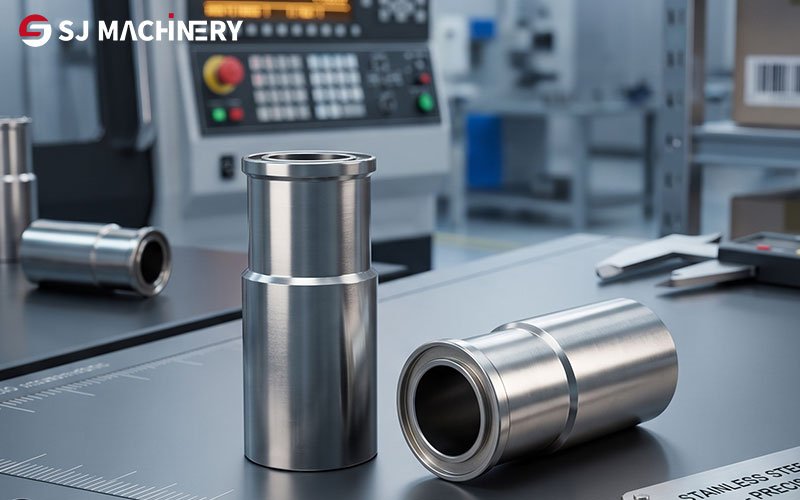
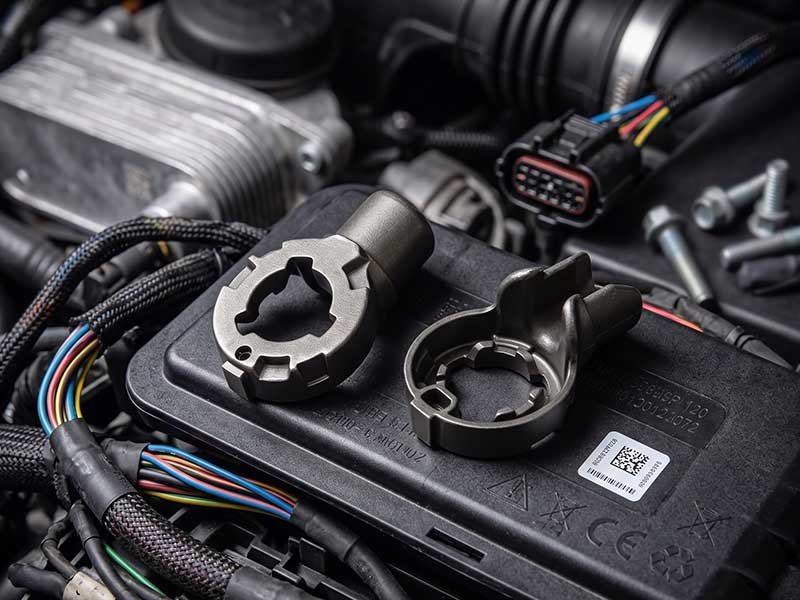
For auto parts terminals, the connection interfaces are critical. A microscopic deviation can lead to assembly failures or compromised structural integrity. That is why professional suppliers don’t just cast; they provide comprehensive in-house CNC machining services.
To meet strict automotive assembly requirements, post-casting CNC processes must consistently achieve exacting surface finishes. By optimizing cutting parameters and tool paths, we ensure critical mating surfaces routinely achieve a surface roughness of Ra1.6, guaranteeing a perfect fit and extending the component’s lifecycle.
5. Value-Added Surface Treatments and Heat Processing
To further enhance mechanical properties, cast alloy terminals often require specialized post-processing. From precise heat treatments (like T6 for aluminum or annealing for steel) to improve yield strength and hardness, to surface treatments like passivation, zinc plating, or anodizing for superior corrosion resistance—having these capabilities managed by a single supplier streamlines the supply chain and guarantees consistency.
6. Uncompromising Quality: The Role of Advanced CMM Inspection
Automotive Tier 1 and Tier 2 buyers require absolute certainty—trust is built on verifiable data. Quality assurance cannot be an afterthought; it must be engineered into the workflow.
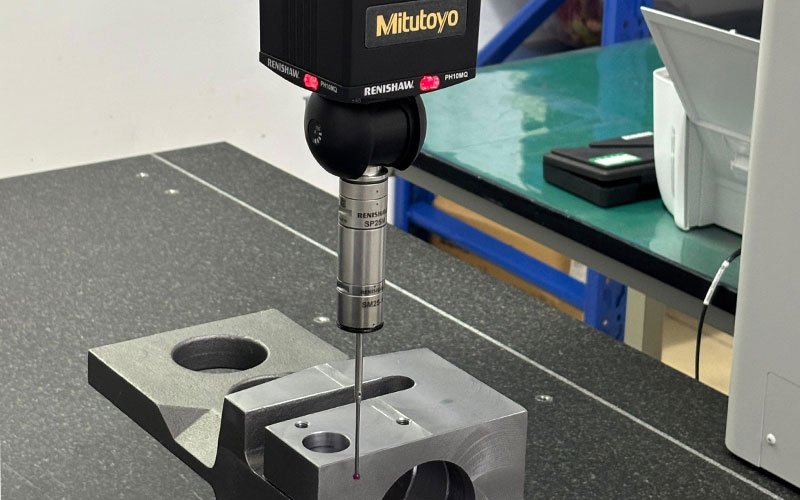
To guarantee dimensional accuracy, advanced metrology is non-negotiable. Leading facilities utilize state-of-the-art Coordinate Measuring Machines (CMM). For instance, employing Mitutoyo CMM systems equipped with ultra-precise RENISHAW probes allows for meticulous verification of complex geometries, tight positional tolerances, and exact profiles. From the First Article Inspection (FAI) to full-scale production runs, this level of inspection provides the comprehensive PPAP documentation automotive buyers demand.
7. Secure Packaging for Automated Assembly Lines
Manufacturing the perfect terminal is only half the battle; delivering it flawlessly is the other. Automotive assembly lines rely on robotic automation and zero-defect workflows. Parts must arrive free of transport damage and corrosion.
Professional suppliers utilize VCI (Volatile Corrosion Inhibitor) packaging and custom-designed blister trays or durable dividers. This not only protects the precision-machined surfaces (preserving that Ra1.6 finish) but also allows for direct integration into the buyer’s automated pick-and-place assembly processes.
Conclusion
Sourcing alloy auto parts terminals shouldn’t involve managing disconnected casting foundries, machine shops, and testing labs. By partnering with a facility that integrates collaborative DFM, precision investment casting, advanced CNC machining, and Mitutoyo/Renishaw CMM inspection under one roof, you mitigate supply chain risks, accelerate lead times, and guarantee uncompromising quality from the first prototype to high-volume production.
Looking to optimize the manufacturing process for your next automotive terminal project? Contact Suijin Machinery engineering team today for a comprehensive DFM review and a competitive quote.