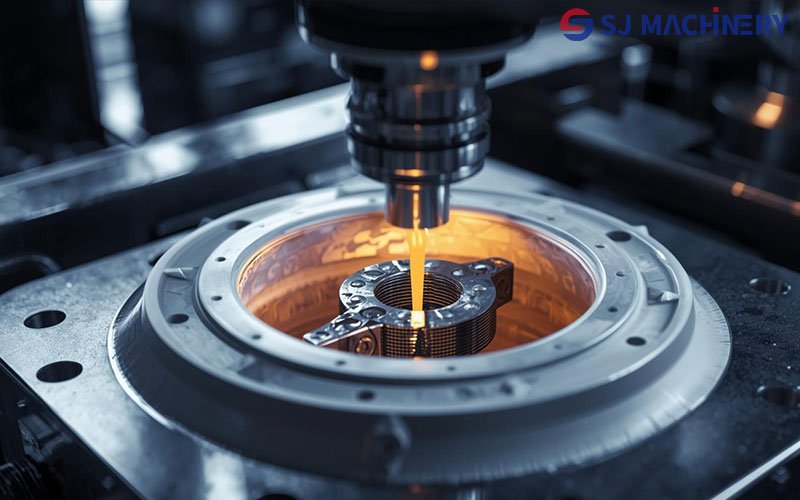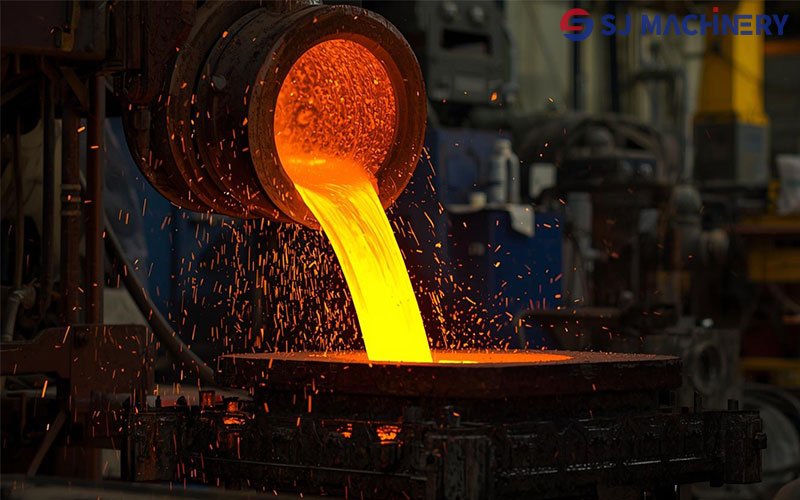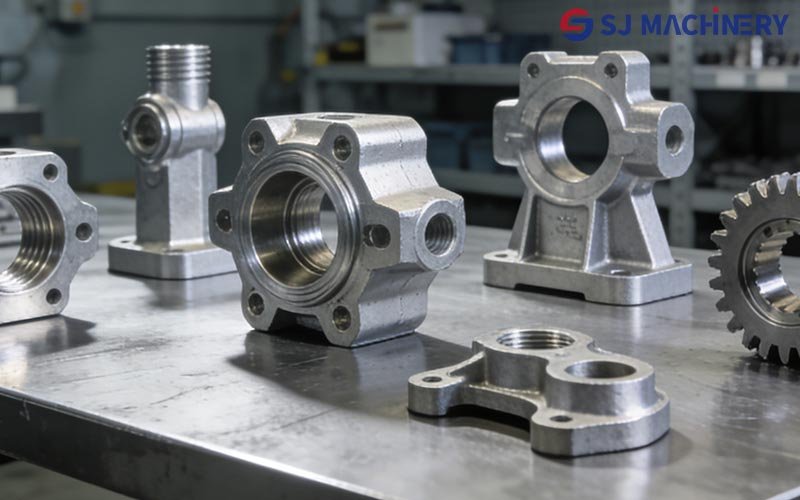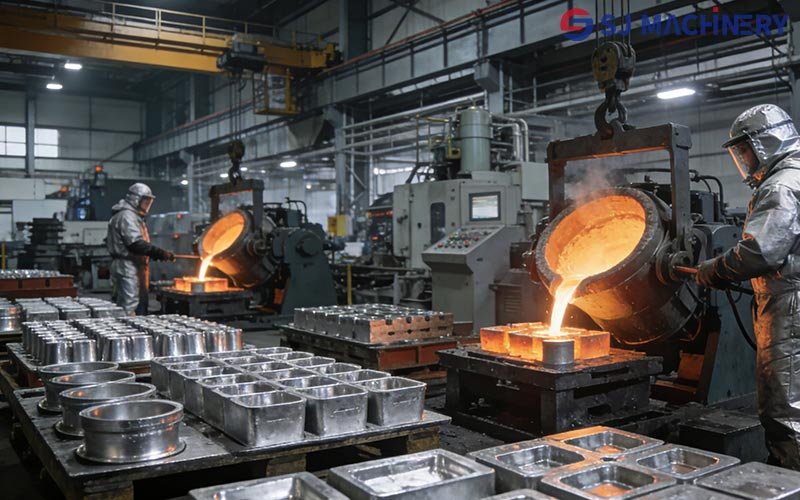
Expendable casting is a widespread casting process in which the mold used to form metal parts is destroyed, or “consumed,” after each casting cycle. This differs from permanent mold casting, in which the mold can be reused. The basic principle of expendable casting is to create a cavity that matches the shape of the desired metal part, pour molten metal into the cavity, and allow it to solidify. After the metal solidifies, the mold is removed to remove the casting.
There are several common types of expendable casting processes:
Sand casting:
This is one of the most widely used expendable casting methods. In sand casting, the mold is made of sand mixed with a binder. A pattern (a replica of the part to be cast) is used to create the cavity in the sand mold. Molten metal is then poured into the cavity, and after solidification, the sand mold is broken to remove the casting. Sand casting is suitable for parts of various sizes and is cost-effective for low to medium production runs. It is suitable for a variety of metals, including aluminum, iron, and steel. For example, large engine blocks for trucks and heavy machinery are often produced using sand casting.
Investment Casting:
Also known as lost wax casting, investment casting begins by creating a wax pattern of the desired part. A ceramic shell is then coated over the wax pattern, and the wax is melted, leaving a cavity within the ceramic shell. Molten metal is poured into this cavity, and after solidification, the ceramic shell is peeled away. Investment casting offers high precision, enabling the production of parts with complex geometries and fine details. It is commonly used in industries such as aerospace, where components like turbine blades require tight tolerances, and in the medical field, where surgical instruments and prosthetics are produced. Compared to other expendable mold casting methods, investment casting can achieve higher surface finishes and dimensional accuracy, but it is generally more expensive and has longer lead times for complex parts.
Shell Casting:
Similar to sand casting, shell casting uses a sand-resin mixture. However, instead of creating a solid sand mold, shell casting forms a thin shell of the sand-resin mixture around a heated pattern. This shell is then assembled to form the cavity. Compared to traditional sand casting, shell casting offers higher dimensional accuracy and surface finish and is commonly used to produce small and medium-sized parts, such as automotive engine components and valve bodies.
Plaster mold casting: In this process, a mold is made of a gypsum-based material. A plaster mixture is poured around the pattern to form the mold cavity. Plaster mold casting is suitable for non-ferrous metals and can produce parts with a fine surface finish. It is often used to produce decorative items, jewelry, and small mechanical components.

Consumable casting offers many advantages.
- First, it offers a high degree of design flexibility, allowing the production of parts with complex shapes and internal features.
- Second, because the mold is destroyed after each use, there is no concern for mold wear, which can affect the quality of permanent mold cast parts.
- Furthermore, the consumable casting process is suitable for a wide range of metals, from common aluminum and steel to more specialized alloys. However, one of its major disadvantages is the need to create a mold for each casting cycle, which increases production time and cost, especially in high-volume production.
In summary, expendable casting is a versatile group of casting processes that play a vital role in modern manufacturing, producing a wide range of metal components for numerous industries.