In modern manufacturing, investment casting has become a highly precise and versatile method for manufacturing complex, high-quality metal parts. This ancient technique, also known as lost-wax casting, has been refined over many years to meet the needs of various industries, from aerospace and defense to automotive and medical.
Investment Casting Process
The investment casting process begins with the creation of wax models. High-temperature wax is poured into a metal investment casting mold designed based on a master mold that precisely matches the final product, taking into account any shrinkage that may occur in subsequent steps. Cores can be added at this stage to create highly complex parts with internal cavities or channels.
Once complete, the individual wax models are assembled onto a gating system, forming a tree-like structure. This gating system is crucial because it allows molten metal to flow freely into every part of the casting. For small final products, a single gating system can hold multiple wax models, while for very large parts, a single gating system may hold only one.
The next step is to create a ceramic shell. The wax models are repeatedly immersed in a ceramic slurry, which can also be made using granular refractory mortar. Each layer of ceramic slurry must be allowed to harden before the next layer is applied. The thickness of the ceramic shell depends on several factors, such as the size and shape of the final product and the temperature of the molten metal poured later. Ultimately, the dried ceramic shell becomes hard enough to hold the molten metal.
After the ceramic shell is formed, the wax layer needs to be removed. The ceramic shell undergoes a special treatment to melt and remove the wax, leaving a cavity that perfectly matches the shape of the desired part. This step is commonly called dewaxing.
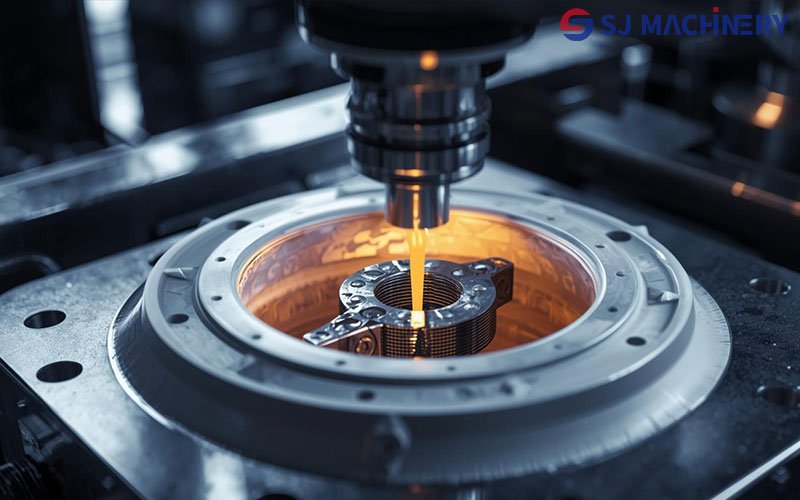
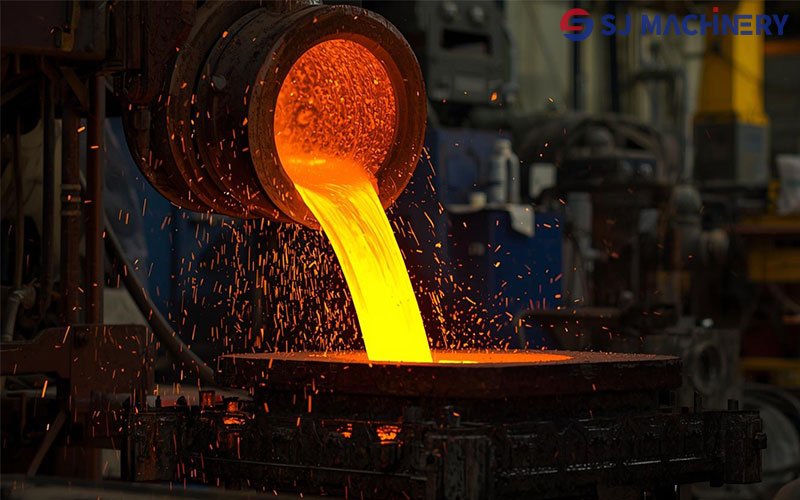
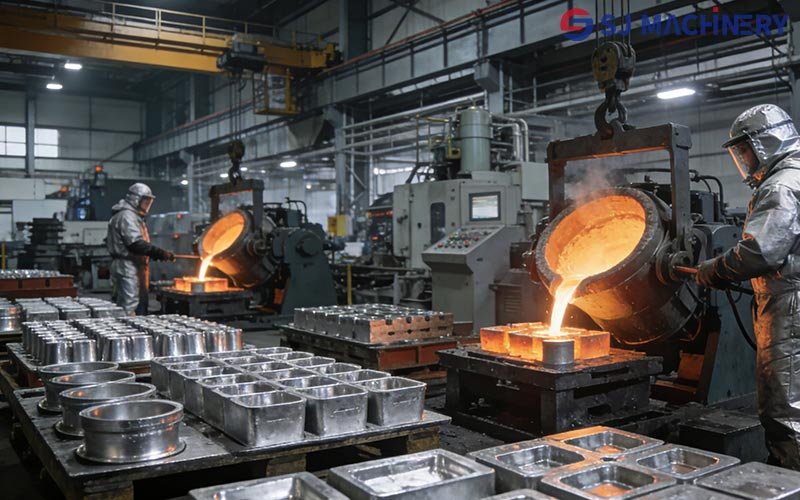
After the wax is removed, the ceramic shell is heated to a suitable temperature, typically between 1000 and 2000 degrees Fahrenheit. At this high temperature, the strength of the ceramic shell is further enhanced, any remaining wax is completely melted, and moisture within the shell evaporates. The molten metal, typically at a temperature much higher than the mold temperature, is then poured into the preheated ceramic shell. The high temperature of the metal ensures that it flows into every corner of the ceramic shell before solidification.
After pouring, the ceramic shell cools naturally as the metal solidifies. The cooling rate can be controlled by factors such as the thickness of the ceramic shell and the ambient temperature. The solidification process can take anywhere from a few minutes to several hours.
After the metal solidifies, the ceramic coating is removed through a demolding process. Simultaneously, the gates and runners that guide the metal into the ceramic shell are also removed. The metal casting then undergoes finishing processes, including sandblasting to remove residual ceramic material, heat treatment to modify the metal’s properties, or fine-tuning to achieve the final dimensions.
Finally, the parts are inspected to ensure they meet all specifications. Inspection methods may include visual inspection, dimensional checks, or more advanced non-destructive testing methods.

Advantages of Investment Casting
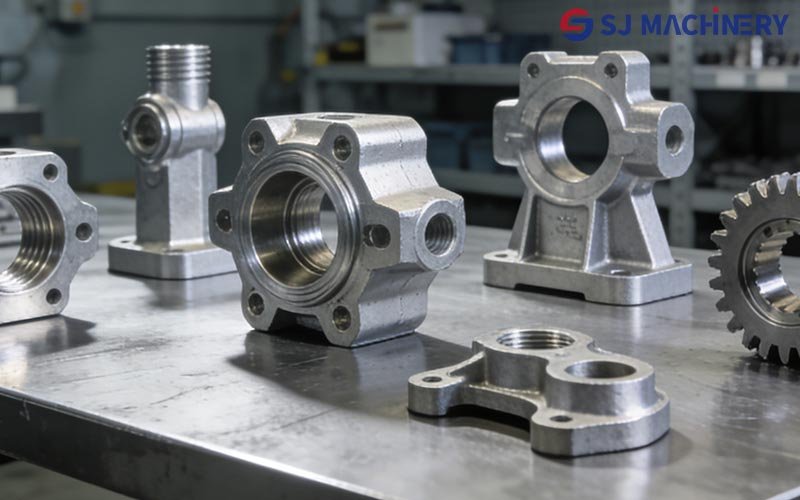
One of the key advantages of investment casting is its ability to produce parts with extremely high precision and repeatability. This process typically eliminates the need for secondary machining, thus reducing overall production costs. Furthermore, it grants manufacturers a high degree of design freedom, enabling them to create complex and delicate parts that are difficult or impossible to produce using other casting methods. Investment casting has a wide range of applications and can be used with a variety of materials, including stainless steel, aluminum, cobalt, carbon steel, brass, bronze, and various high-temperature alloys.
In the aerospace industry, investment casting is used to produce critical components such as turbine blades that need to withstand extreme temperatures and pressures. By creating complex internal cooling channels in these blades through investment casting, their efficiency and lifespan can be improved. In the medical field, investment casting is used to manufacture high-precision, smooth-surfaced prostheses and surgical instruments. The automotive industry also benefits from investment casting, using it to produce engine components, transmission parts, and other complex parts requiring tight tolerances.
With continuous technological advancements, the investment casting market continues to grow steadily. The investment casting process itself is also expected to see further improvements. For example, the application of advanced materials, more precise computer-aided design and simulation tools, and innovative manufacturing technologies may further improve the efficiency and quality of investment casting, thus opening up new prospects for its application in more industries.
About Suijin Casting