Why Investment Casting Became the Supply Chain Bottleneck for Gas Turbines
A modern heavy-duty or aeroderivative gas turbine relies on dozens of precision cast parts. Hot-section components operate above 1300°C, requiring nickel-based superalloys, vacuum melting, ceramic shell moulds, controlled solidification and rigorous non-destructive testing (NDT). Single-crystal and directionally solidified blades are among the most complex mass-produced metal components in industrial manufacturing.
1. The bottleneck is multi-layered:
- 1. Very few qualified foundries: The global pool of suppliers certified for power-grade superalloy investment castings is small. Most capacity is locked into long-term OEM framework agreements.
- 2. Slow capacity expansion: Building and qualifying a high-temperature casting line takes years. You cannot simply purchase extra melting furnaces and ramp output in months. Tooling, wax patterns, ceramic core production and process validation all require lengthy cycles.
- 3. Aerospace competition: The same foundries that produce power turbine castings also serve jet engine programmes. When aerospace demand is strong, power generation orders face further slot competition.
- 4. Long qualification gates: Material batch validation, heat treatment, dimensional inspection, X-ray/UT/MPI and performance sampling must be completed before serial release. Qualification of a new vendor can take 12–24 months even after successful prototype casting.
The result: OEM backlogs surge while casting lead times stretch to unprecedented lengths. The following table summarises major OEM gas turbine backlog status driven largely by data centre and electrification demand.
2. Critical Gas Turbine Cast Components & Material Requirements
Not all castings carry equal risk. Cold-section structural castings have simpler requirements, while hot-path components demand premium superalloys and vacuum investment casting. Material selection directly impacts manufacturability, inspection requirements and supplier qualification scope.
Key Investment Cast Components for Power Generation Gas Turbines
| Component | Main Alloy Grade | Core Process | Typical Inspection | Operating Zone |
|---|---|---|---|---|
| Turbine rotating blades | IN738LC, GTD-111, MAR247 | Vacuum investment casting, single crystal / DS | X-ray, UT, MPI, dimensional CMM, coating inspection | Hot gas path, highest thermal load |
| Nozzle guide vanes / stators | IN713LC, IN792 | Vacuum lost wax casting | Radiography, grain structure check, surface defect inspection | Combustor outlet, steady high heat |
| Combustor housings & transition pieces | IN625, Hastelloy series | Vacuum investment casting | Pressure test, wall thickness mapping, NDT | Combustion zone, thermal cycling |
| Turbine casings & structural frames | Fe-Ni superalloys, stainless cast alloys | Air or vacuum investment casting | Macro grain check, ultrasonic testing | Cold / warm section, structural load |
The table makes clear: sourcing hot-section blades and vanes is far more complex than structural castings. A supplier capable of producing stainless steel castings is not automatically qualified for single-crystal nickel superalloy blades. Many procurement mistakes come from treating all “investment casting” as equivalent.
3. Lead-Time Comparison: Conventional vs Optimised Investment Casting Workflows
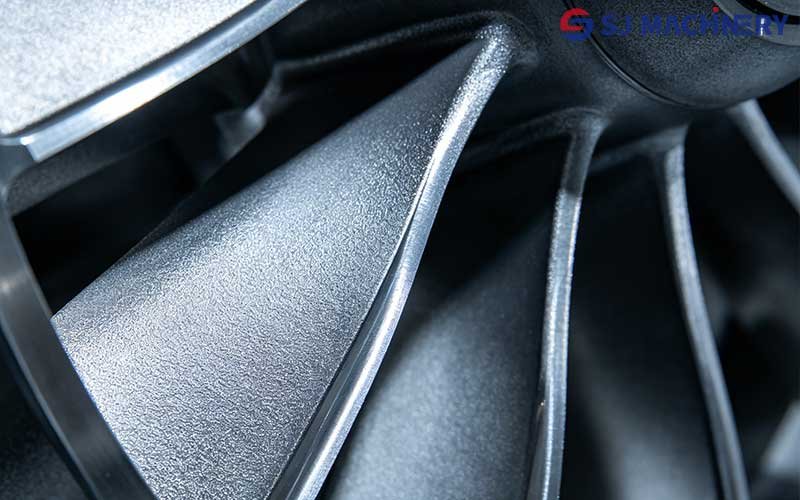
Lead time is the biggest pain point for buyers. Traditional investment casting follows a long sequence: tooling fabrication → wax pattern production → ceramic shell build → dewax → vacuum melt & pour → heat treatment → machining → multi-stage NDT. For single-crystal blades, the full cycle can reach 60–90 weeks.
Lead Time & Yield Comparison of Casting Routes for Gas Turbine Parts
| Process Route | Typical Lead Time | Main Limitation | Typical First-Pass Yield | Best Fit Use Case |
|---|---|---|---|---|
| Conventional vacuum investment casting (single crystal blades) | 60–90 weeks | Tooling, ceramic core manufacture, solidification control | 40–60% | Heavy-duty gas turbine hot-section rotating blades |
| Directionally solidified investment casting (vanes) | 40–60 weeks | Shell integrity and grain boundary control | 50–70% | Nozzle guide vanes, combustor components |
| Optimised investment casting with digital shell / rapid tooling | 16–32 weeks | Limited track record on fully qualified power OEM serial parts | 70–90% | Prototyping, replacement spare parts, non-critical hot-path castings |
| Non-superalloy investment casting (structural casings) | 8–16 weeks | Alloy grade and temperature ceiling | 80–95% | Cold-section housings, brackets, support frames |
This table is essential for procurement planning. If your project timeline requires delivery inside 40 weeks, conventional single-crystal blade casting from legacy foundries is unlikely to work. Many buyers are now splitting sourcing strategies: legacy OEM-qualified foundries for critical long-lot hot-section parts, and pre-qualified alternative investment casting suppliers for spare parts, casings and non-critical hot-path components.
4. How B-Buyers & OEMs Can Source Reliable Alternative Casting Suppliers
Given the gas turbine casting bottleneck, procurement teams need a structured vendor qualification process rather than simple price-and-lead-time RFQ comparison. Here is our recommended workflow:
1. Segment your bill of materials by risk level
Separate single-crystal rotating blades (highest risk, longest qualification) from static vanes, combustor castings and structural housings. Use alternative suppliers first on medium-risk static and structural castings to build audit and qualification confidence.
2. Audit core capabilities before quotation
Verify vacuum melting capacity, ceramic shell line, heat treatment furnaces, NDT lab accreditation and CMM dimensional inspection. Check alloy traceability, batch documentation and material test report (MTR) control. Many foundries advertise superalloy casting but lack in-house vacuum melting or certified NDT.
3. Run prototype + pre-production sampling
Start with prototype castings, then sample batches with full metallurgical testing, grain inspection and non-destructive checks. Capture failure modes early before committing to large serial orders.
4. Negotiate capacity reservation and slot locks
The bottleneck is available furnace slots, not just theoretical annual tonnage. Contractual slot reservation is becoming standard for power turbine component buyers. Clarify priority, rework allocation and penalty clauses for delayed casting batches.
5. Build dual-sourcing maps by component family
Do not rely on one foundry for all your investment casting requirements. Diversify across geographic regions while maintaining identical material specs and acceptance criteria.
5. Conclusion
The gigawatt boom driven by AI data centres is not just a power grid story. It is a precision manufacturing supply chain story. Gas turbine OEMs hold record order books, but the real constraint is gas turbine casting bottleneck in investment casting of superalloy hot-section components.
For procurement leaders, the path forward is clear: treat power generation turbine components manufacturer selection as a long-cycle qualification programme, segment components by risk, validate metallurgy and inspection rigorously, and secure reserved production capacity with trusted alternative foundry partners.
The companies that win in this market are not only those who can build turbines, but those who can secure a stable, qualified supply chain of investment casting components before the casting queue extends further.