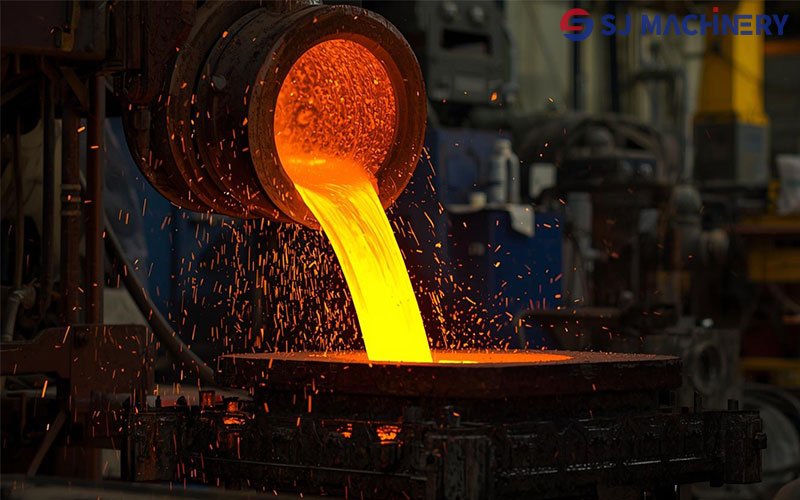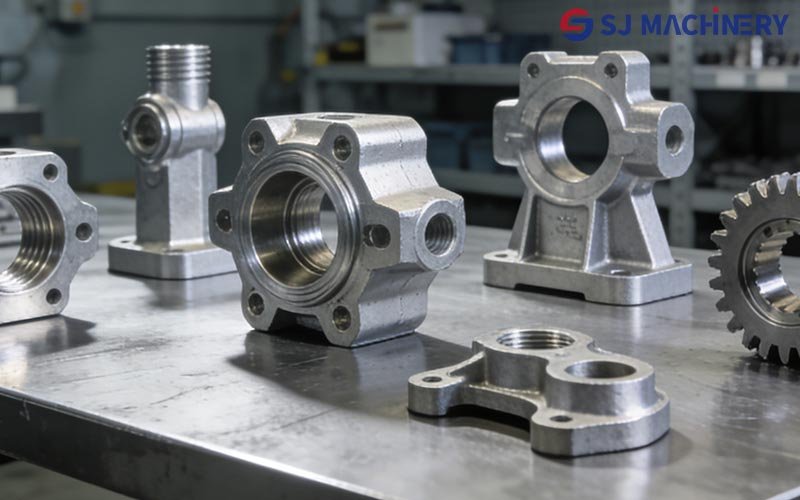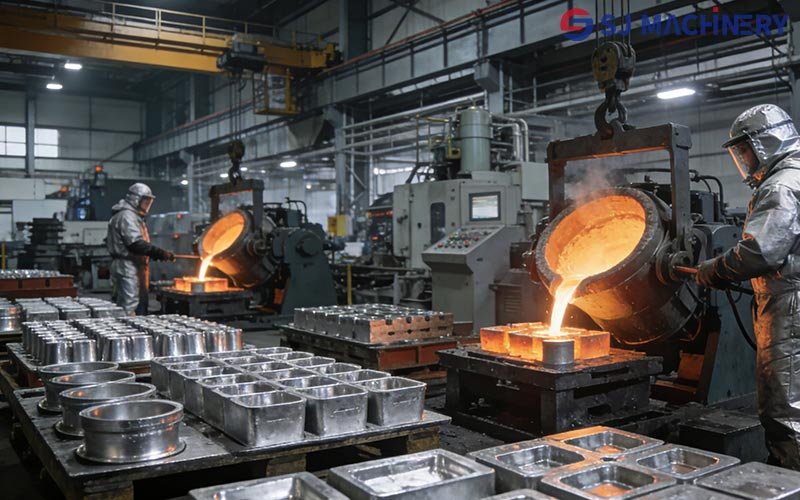
The integration of 3D Printing Investment Casting technology has revolutionized this time-honored process, driving unprecedented innovations that are redefining the boundaries of precision manufacturing, enhancing efficiency, and unlocking new possibilities across industries.
The Limitations of Traditional Investment Casting: A Catalyst for Innovation
Traditional investment casting relies on the creation of wax patterns using injection molding, a process that requires expensive metal tooling and specialized equipment. This tooling is often fabricated via CNC machining, which adds significant costs and extends lead times—often taking weeks or even months to produce, particularly for complex parts. For example, creating an axial turbine blisk mold using traditional wax injection tooling can take at least five weeks and cost upwards of $20,000 from start to finish. Additionally, traditional wax patterns are limited in design complexity; intricate internal structures, such as micro-channels or lattice geometries, are either impossible to produce or require costly and labor-intensive assembly of multiple wax components.
Low-volume production further exacerbates these issues, as the high fixed costs of tooling cannot be amortized over large production runs, making traditional investment casting economically unfeasible for custom or prototype parts. These limitations created a critical need for innovation—one that 3D Printing Investment Casting, or additive manufacturing, was uniquely positioned to address.
Core Innovations: How 3D Printing Transforms Investment Casting
The integration of 3D printing into investment casting has introduced three foundational innovations that address the shortcomings of traditional methods: direct pattern 3D printing, advanced material development, and process digitization. Together, these advancements have streamlined the casting workflow, reduced costs, and expanded design capabilities.
1. Direct Pattern 3D Printing: Eliminating Tooling and Accelerating Lead Times
The most impactful innovation is the replacement of traditional wax injection molding with 3D-printed patterns. Technologies such as Stereolithography (SLA), Digital Light Processing (DLP), and Material Jetting (MJP) now enable the direct 3D printing of sacrificial patterns—eliminating the need for expensive metal tooling entirely. Unlike traditional methods, which require weeks to produce tooling and patterns, 3D Printing Fundición a la cera perdida can create complex casting patterns overnight, reducing lead times by up to 75% compared to CNC-machined wax molds.
This innovation is particularly transformative for low-volume production and custom parts. 3D Printing Investment Casting allows for on-demand pattern production, meaning manufacturers can produce small batches or one-off prototypes without incurring tooling costs. Moreover, 3D printing enables the creation of monolithic patterns with intricate internal geometries—such as the complex cooling channels in turbine blades—that were previously unachievable with traditional wax assembly methods.
2. Advanced Material Innovations: Enhancing Pattern Performance and Casting Quality
The development of specialized 3D printing materials tailored for investment casting has been a key enabler of this transformation. Early 3D-printed patterns suffered from issues such as poor surface finish, inconsistent burnout (leading to ash residue in the ceramic mold), and inadequate mechanical strength for handling and shipping.
These materials are designed to mimic the properties of traditional wax, with high dimensional accuracy, smooth surface finishes (down to 0.1 μm Ra), and complete burnout with minimal ash residue—critical for producing high-quality metal castings, especially for specialty alloys used in aerospace and medical applications. Additionally, ceramic 3D printing materials enable the direct 3D printing of ceramic cores and molds, further streamlining the process and improving precision for complex components like turbine blades.
3. Process Digitization: Improving Precision and Reducing Waste
3D Printing Investment Casting has digitized the entire investment casting workflow, from design to pattern production to mold creation. Computer-Aided Design (CAD) models are directly used to 3D print patterns, eliminating the need for physical master patterns and reducing human error associated with traditional pattern replication.
Digitization also enables real-time design iteration: engineers can modify CAD models and 3D print new patterns in hours, rather than weeks, accelerating product development cycles. Furthermore, 3D printing’s additive nature minimizes material waste—unlike subtractive processes like CNC machining, which remove significant amounts of material, 3D printing only uses the material needed to build the pattern. This not only reduces material costs but also aligns with the growing focus on sustainable manufacturing practices.
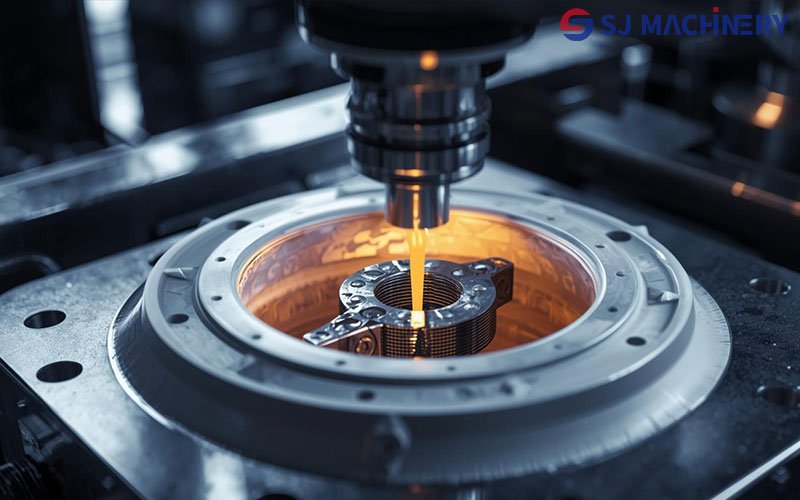
Industry Applications: Where Innovation Drives Impact
The innovations in 3D printing investment casting have found widespread adoption across industries that demand precision, complexity, and efficiency. In aerospace, for example, companies use 3D-printed patterns to produce turbine blades, engine components, and structural parts with intricate cooling channels—improving fuel efficiency and performance while reducing production time and costs. The ability to rapidly iterate designs has also accelerated aerospace R&D, allowing manufacturers to test new component geometries without the burden of tooling costs.
In the medical industry, 3D printing investment casting enables the production of custom orthopedic implants, dental restorations, and surgical instruments tailored to individual patients. The precision of 3D-printed patterns ensures a perfect fit, improving patient outcomes, while the elimination of tooling makes low-volume production of custom implants economically viable. In the automotive sector, manufacturers use the technology to produce high-performance engine parts, custom gears, and prototype components, reducing time-to-market for new vehicle models.
Other industries, including jewelry, energy, and defense, have also benefited. Jewelry makers use 3D-printed patterns to create intricate designs that would be impossible with traditional wax carving, while energy companies leverage the technology to produce complex components for renewable energy systems and power generation equipment.
Current Challenges and Future Outlook
Despite its transformative impact, 3D printing investment casting still faces challenges. High-volume production remains a limitation, as 3D printing is slower than traditional wax injection molding for large batches. Additionally, the cost of 3D printing materials and equipment can be prohibitive for small and medium-sized foundries, though these costs are steadily decreasing as the technology matures.
Looking ahead, the future of 3D printing investment casting is marked by continued innovation. Advances in 3D printing speed will make the technology more viable for high-volume production. The development of new materials, including bio-based resins and high-temperature ceramics, will expand application possibilities, particularly in extreme environments like aerospace and energy. Furthermore, the integration of artificial intelligence (AI) and machine learning will optimize the 3D printing and casting processes, predicting and preventing defects, and further improving precision and efficiency.
The growing trend of sustainability will also drive innovation, with a focus on developing recyclable 3D printing materials and reducing energy consumption in the casting process. Additionally, the rise of hybrid manufacturing—combining 3D printing with traditional casting techniques—will enable manufacturers to leverage the strengths of both methods, further enhancing flexibility and cost-effectiveness.
Conclusion
3D Printing Investment Casting has redefined investment casting, turning an ancient manufacturing technique into a modern, innovative process that addresses the limitations of traditional methods. The core innovations—direct pattern 3D Printing Investment Casting, advanced material development, and process digitization—have reduced lead times, lowered costs, expanded design freedom, and improved casting quality. These advancements have made investment casting more accessible, efficient, and versatile, driving impact across aerospace, medical, automotive, and other critical industries.
As technology continues to evolve, 3D Printing Investment Casting will likely become even more integral to precision manufacturing, enabling new designs, accelerating innovation, and supporting sustainable practices. For manufacturers, embracing these innovations is no longer an option but a necessity to remain competitive in an increasingly demanding global market. The fusion of 3D printing and investment casting is not just a technological advancement—it is a paradigm shift that is reshaping the future of how we design and produce metal parts.