
Präzisionsguss aus Edelstahl
Präzisionsguss aus Edelstahl kann bis zu einem gewissen Grad eine gute Fließfähigkeit der Schmelze während des Einspritzvorgangs gewährleisten. Die Temperaturwahl für den Präzisionsguss aus Edelstahl sollte auf der Grundlage von Faktoren wie Entfernung und Prozess des Einspritzens, der Kühlung und der Durchflussrate effektiv festgelegt werden.
Präzisionsguss aus Edelstahl von einem Hersteller für Präzisionsguss aus Silicasol weist aufgrund seiner geringen Übergangsbereichsgröße gute mechanische Eigenschaften auf, die seine Fließfähigkeit gewährleisten und die Bildung heller Kristalle bis zu einem gewissen Grad verhindern. Die allgemeine Temperatur liegt bei 715–740 °C. Flache Barren aus Edelstahl-Präzisionsguss neigen stark zu Heißrissen, und die Präzisionsgusstemperatur von Edelstahl ist relativ niedrig und liegt im Allgemeinen zwischen 680 und 735 °C.
Die Rissbildungsneigung von Präzisionsguss-Rundblöcken aus Edelstahl ist relativ gering, wodurch in gewissem Maße eine gute Entlüftungs- und Schrumpfungseigenschaft der Legierung gewährleistet, günstige Bedingungen für ihre Ordnung geschaffen und die Dichte verbessert werden können. Die Gießtemperatur ist im Allgemeinen höher, und die Gießtemperatur für Blöcke mit einem Durchmesser von über 350 mm liegt in der Regel bei 730-750 ℃.
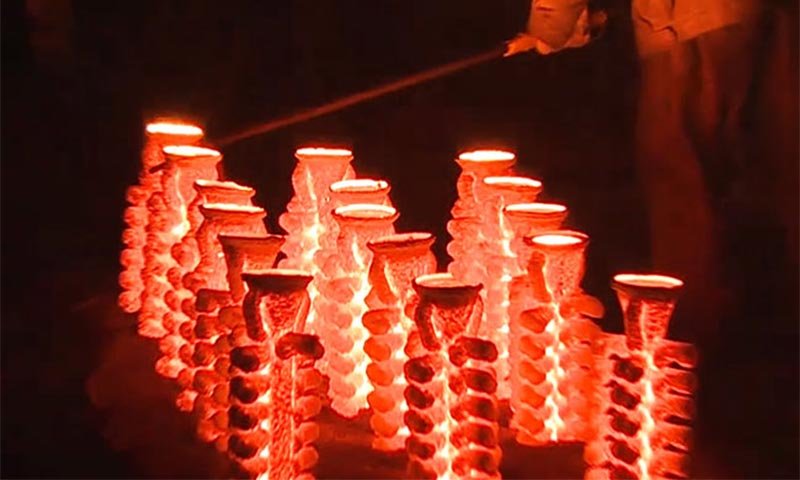
Wichtige Punkte für die Temperaturregelung beim Feinguss von Edelstahl
Beim Feingussverfahren für Edelstahl ist die Temperaturregelung ein entscheidender Faktor für die Gussqualität, da sie sich direkt auf die Fließfähigkeit der Metallschmelze, die Stabilität der Formschale und die mechanischen Eigenschaften des Gussteils auswirkt. Unter Berücksichtigung der Eigenschaften des Feingussverfahrens lauten die wichtigsten Temperaturparameter und Regelungslogik für den Feinguss von Edelstahl wie folgt:
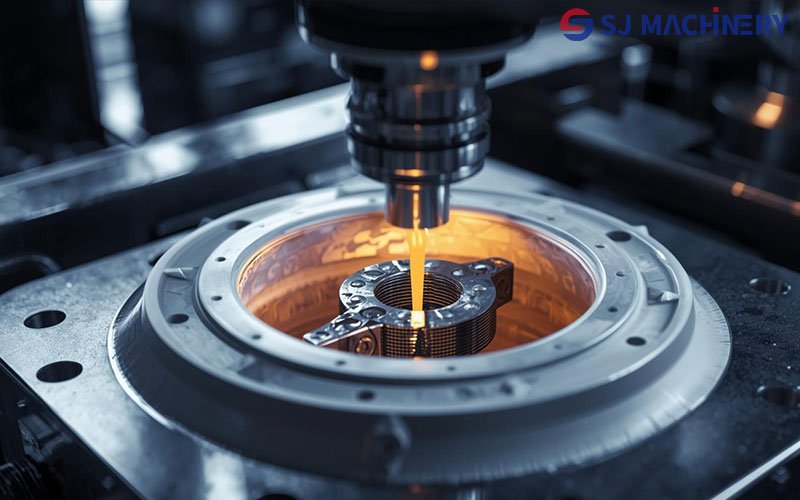
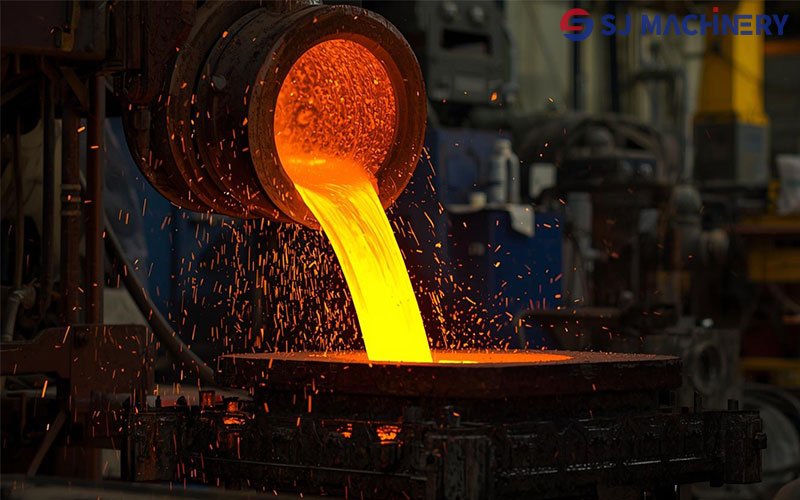
Die Schmelztemperatur des Metalls ist der wichtigste Kontrollpunkt beim Feinguss von Edelstahl. Verschiedene Edelstahlsorten (wie 304, 316 und 17-4PH) haben aufgrund ihrer Legierungszusammensetzung deutlich unterschiedliche Schmelztemperaturen. Die Schmelztemperatur von gewöhnlichem austenitischem Edelstahl (wie 304) liegt typischerweise zwischen 1500 °C und 1560 °C, während Edelstahl 316, der höhere Mengen an Molybdän und Nickel enthält, eine Temperatur von 1520 °C bis 1580 °C erfordert, um eine ausreichende Auflösung der Legierungselemente zu gewährleisten und die Ausfällung von Phasen mit niedrigem Schmelzpunkt zu verhindern. Martensitischer Edelstahl (wie 17-4PH) erfordert eine strenge Kontrolle zwischen 1480 °C und 1540 °C, um eine Vergröberung der Körner aufgrund überhöhter Temperaturen zu verhindern. Die Abstimmung der Vorwärmtemperatur der Formschale und der Gießtemperatur der Schmelze wirkt sich direkt auf die Füllqualität und die innere Qualität des Gussteils aus. Bei dünnwandigen, komplexen Edelstahlgussteilen muss die Formschale auf 800 °C bis 1000 °C vorgewärmt werden. Zu diesem Zeitpunkt kann die Gießtemperatur der Schmelze entsprechend gesenkt werden (20 °C bis 50 °C unterhalb der Schmelztemperatur). Dadurch wird die Restwärme der Formschale genutzt, um die Fließfähigkeit der Schmelze aufrechtzuerhalten und Fehler wie Kaltstellen und Unterfüllungen zu vermeiden. Bei dickeren Gussteilen wird die Vorwärmtemperatur der Formschale in der Regel zwischen 400 °C und 600 °C geregelt. Dadurch wird der Temperaturunterschied zwischen dem geschmolzenen Metall und der Formschale minimiert, was die inneren Spannungen im Gussteil verringert.
Die Lösungsglühtemperatur ist ein wichtiger Folgeprozess zur Verbesserung der Korrosionsbeständigkeit von Edelstahlgussteilen. Austenitischer Edelstahl erfordert eine Lösungsglühung bei 1050 °C bis 1100 °C, um Karbide vollständig aufzulösen und gleichmäßig in der Matrix zu verteilen, gefolgt von einer schnellen Wasserkühlung, um eine einphasige Austenitstruktur zu erreichen. Martensitischer Edelstahl hingegen muss auf 1020 °C bis 1060 °C erhitzt werden, gefolgt von einer Ölkühlung, einer Abschreckung zur Bildung von Martensit und einer Temperierung bei 200 °C bis 450 °C, um die Härte und Zähigkeit anzupassen.
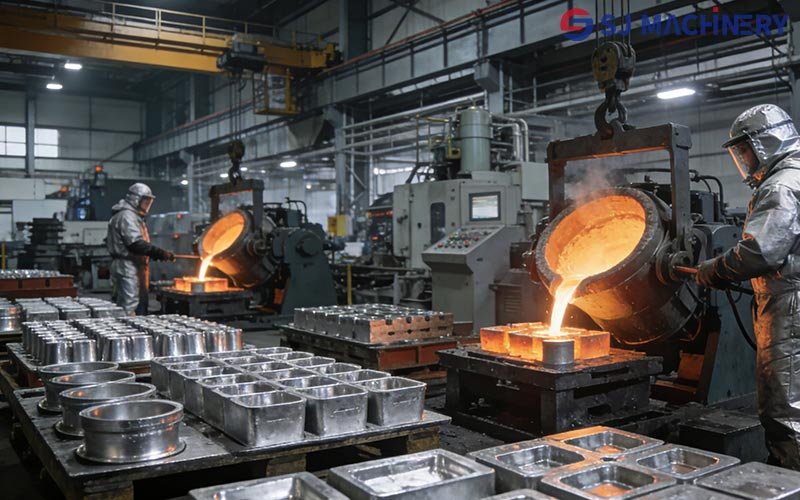
Die Temperaturregelung erfordert eine extrem hohe Präzision, wobei die Schwankungen der Schmelztemperatur in der Regel innerhalb von ±10 °C und die Schwankungen der Vorwärmtemperatur der Form innerhalb von ±20 °C gehalten werden müssen. Derzeit verwendet die Industrie in der Regel Mittelfrequenz-Induktionsöfen in Verbindung mit Infrarot-Temperaturmesssystemen zur Echtzeitüberwachung der Schmelztemperaturen, während für die Vorwärmung der Formen vollautomatische Elektroöfen für eine präzise Temperaturregelung eingesetzt werden. Diese Technologie entspricht der intelligenten Temperaturregelungstechnologie, die von Ningbo Suijin Machinery Technology Co, Ltd. in seiner digitalen Feinguss-Produktionslinie, wodurch die hohe Qualität der Präzisionsgussteile aus Edelstahl zuverlässig gewährleistet wird.