Among the various metals employed in this precision casting process, aluminum stands out as a preferred choice for a wide range of industries, from aerospace and automotive to consumer electronics and medical devices. This article explores the unique advantages of aluminum in investment casting, the key processes involved, typical applications, challenges, and emerging trends shaping its use.
I. Why Aluminum for Investment Casting?
Aluminum’s inherent properties make it particularly well-suited for investment casting, addressing the demanding requirements of modern manufacturing. One of the most significant advantages is its lightweight nature; with a density of 2.7 g/cm³, aluminum is approximately 35% lighter than steel. This characteristic is critical for industries focused on weight reduction, such as aerospace and automotive, where lighter components contribute to improved fuel efficiency, reduced emissions, and enhanced overall performance.
Another key benefit is aluminum’s excellent castability. Aluminum alloys exhibit low melting points (typically between 580°C and 660°C, depending on the alloy) compared to other metals like steel or titanium, which simplifies the melting and pouring processes. Additionally, aluminum flows easily into intricate mold cavities, ensuring that even complex geometries—such as thin walls, sharp edges, and internal channels—are accurately replicated. This castability is further enhanced by the Feinguss process itself, which uses a wax pattern to create highly detailed molds, making it ideal for capturing the fine features of aluminum components.
Aluminum also offers superior corrosion resistance, especially when alloyed with elements like magnesium, zinc, or copper. This resistance eliminates the need for additional protective coatings in many applications, reducing production costs and extending the service life of components. Furthermore, aluminum has excellent thermal and electrical conductivity, making it suitable for parts that require heat dissipation or electrical performance, such as engine components, heat exchangers, and electronic enclosures.
From an economic perspective, aluminum is abundant and cost-effective compared to precious metals or high-performance alloys like titanium. The Feingussverfahren for aluminum also tends to have lower energy requirements due to its lower melting point, further reducing production costs. Combined with its recyclability—aluminum can be recycled repeatedly without losing its properties—this makes aluminum Feinguss an environmentally sustainable and cost-efficient manufacturing solution.
II. Key Processes of Aluminum Investment Casting
Die Feinguss process for aluminum follows the same core steps as other metals, but with specific considerations tailored to aluminum’s properties. The primary stages are as follows:
1. Wax Pattern Creation
The process begins with the fabrication of a wax pattern that replicates the desired aluminum component. Wax is injected into a metal die (mold) that matches the component’s shape. For complex parts, multiple wax patterns may be assembled onto a wax sprue (a channel that allows molten metal to flow into the mold). This step requires precision, as any defects in the wax pattern will be replicated in the final aluminum component.
2. Mold Shell Formation
Once the wax pattern is complete, it is dipped into a ceramic slurry composed of fine refractory materials (such as silica or alumina), binders, and solvents. After dipping, the pattern is coated with ceramic sand (stucco) to reinforce the shell. This dipping and stuccoing process is repeated multiple times to build up a shell of sufficient thickness (typically 5–15 mm) to withstand the pressure of molten aluminum. The shell is then dried to remove moisture, which is critical to prevent cracking during the next stage.
3. Dewaxing
The dried ceramic shell is heated to a temperature between 100°C and 160°C to melt and remove the wax pattern—hence the term “lost-wax casting.” The wax is drained or vaporized, leaving a hollow ceramic mold cavity that exactly matches the shape of the desired component. For aluminum casting, the dewaxing temperature is carefully controlled to avoid damaging the ceramic shell and to ensure complete wax removal.
4. Melting and Pouring
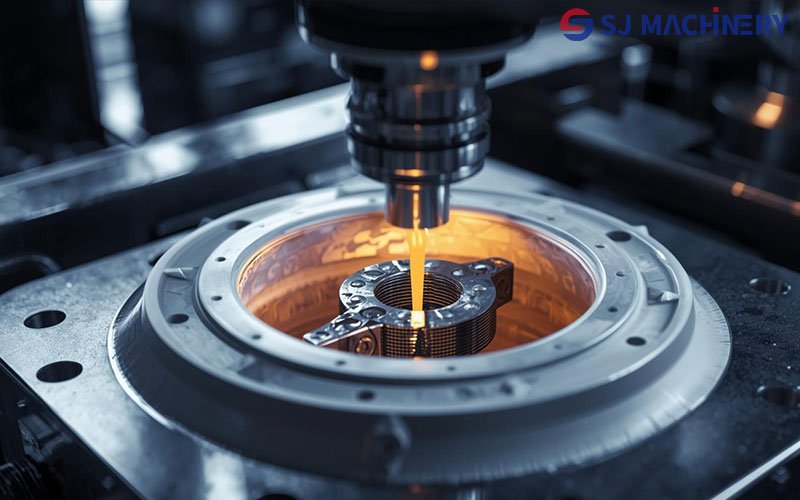
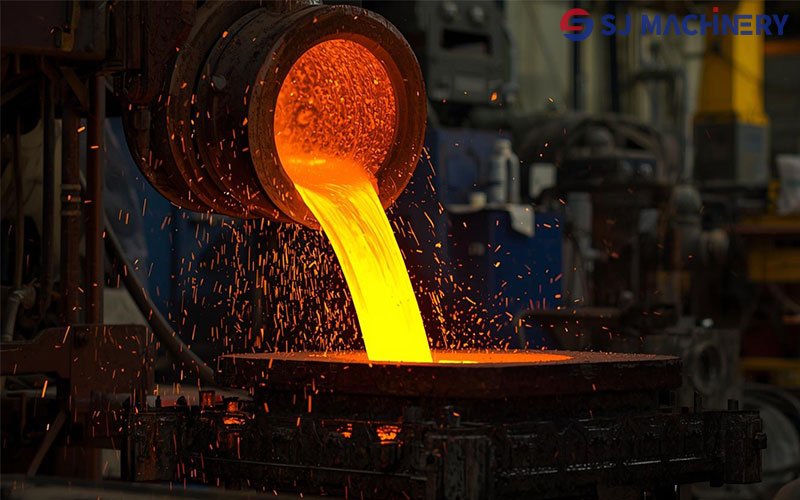
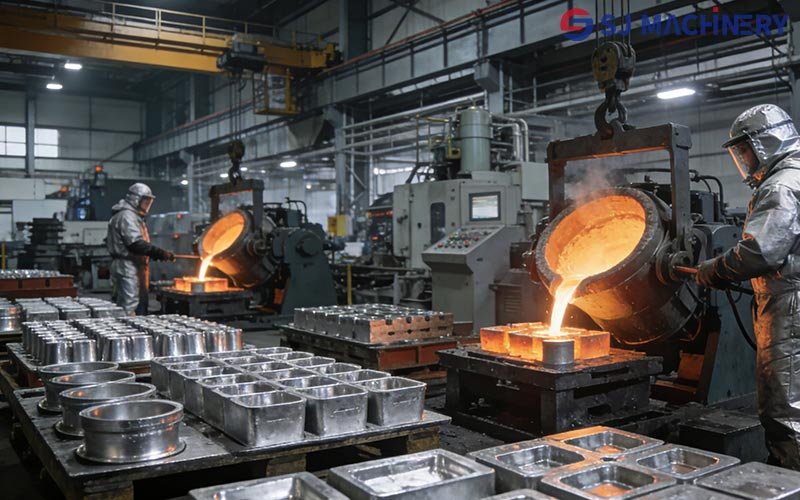
Aluminum alloy is melted in a furnace at temperatures ranging from 700°C to 750°C (slightly above its melting point to ensure fluidity). The molten aluminum is then poured into the ceramic shell mold under gravity or, for more complex parts, under pressure (pressure-assisted investment casting) to ensure full cavity filling. Due to aluminum’s low density, special care is taken to minimize turbulence during pouring, which can introduce defects like porosity or inclusions.
5. Solidification and Shell Removal
The molten aluminum in the ceramic shell is allowed to cool and solidify. The solidification time depends on the size and complexity of the component, as well as the aluminum alloy used. Once solidified, the ceramic shell is broken away (either manually or using mechanical methods like sandblasting) to reveal the raw aluminum casting. Any excess material, such as the sprue or risers (reservoirs of molten metal that supply additional metal during solidification), is removed using cutting or grinding tools.
6. Finishing and Quality Control
The raw aluminum casting undergoes finishing processes to achieve the desired surface finish and dimensional accuracy. This may include grinding, polishing, machining, or heat treatment (such as solution annealing or aging) to enhance the mechanical properties of the alloy. Quality control is a critical final step, involving non-destructive testing (NDT) methods like X-ray inspection, ultrasonic testing, or liquid penetrant testing to detect defects such as porosity, cracks, or inclusions. Dimensional inspections using coordinate measuring machines (CMMs) ensure the component meets the required specifications.
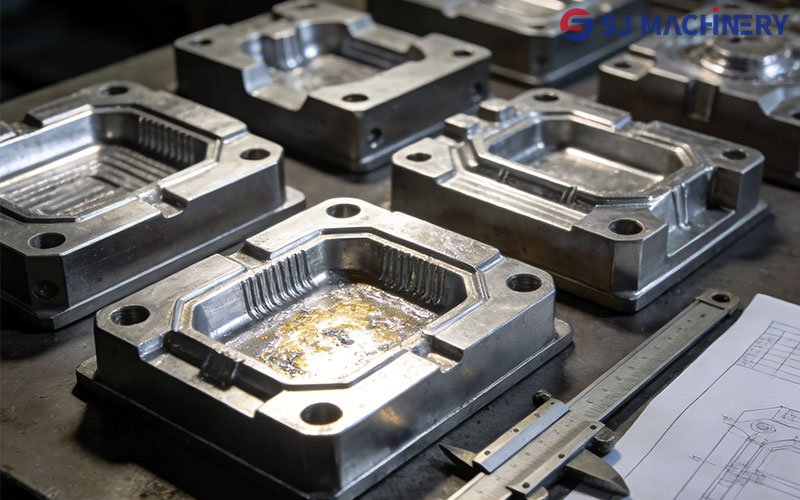
III. Typical Applications of Aluminum Investment Castings
The combination of precision, lightweight, and corrosion resistance makes aluminum investment castings suitable for a diverse range of applications across multiple industries:
Aerospace Industry
In aerospace, weight reduction is paramount to improve fuel efficiency and payload capacity. Aluminum investment castings are used to produce components such as engine blades, turbine casings, hydraulic fittings, and structural parts for aircraft and spacecraft. Alloys like A356 (aluminum-silicon-magnesium) and A357 are commonly used in this industry due to their high strength-to-weight ratio and excellent castability.
Automotive Industry
The automotive industry relies heavily on aluminum investment castings to reduce vehicle weight and meet stringent emission standards. Applications include engine components (cylinder heads, pistons, intake manifolds), transmission parts, suspension components, and brake calipers. Aluminum castings not only reduce weight but also improve heat dissipation, enhancing engine performance and durability.
Consumer Electronics and Appliances
For consumer products, aluminum investment castings offer a balance of aesthetics, functionality, and cost-effectiveness. Examples include laptop and smartphone casings, camera bodies, heat sinks for electronic devices, and components for household appliances (such as air conditioner compressors and refrigerator parts). The ability to produce complex shapes with a smooth surface finish makes aluminum ideal for these applications.
Medical Devices
The medical industry requires components with high precision, biocompatibility, and corrosion resistance. Aluminum investment castings are used to produce surgical instruments, medical device housings, and components for diagnostic equipment. Alloys like 6061 aluminum are often used due to their biocompatibility and ease of sterilization.
Industrial Machinery
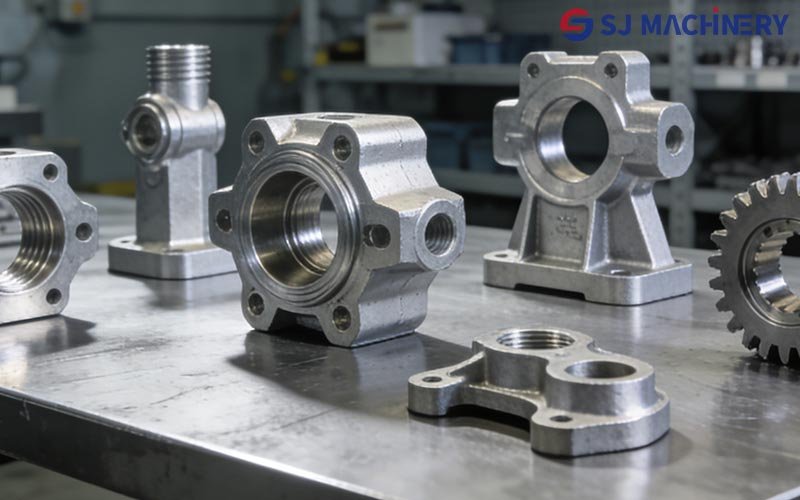
In industrial settings, aluminum investment castings are used for components such as pump housings, valve bodies, gears, and tooling. Their corrosion resistance and durability make them suitable for harsh industrial environments, while their lightweight nature simplifies installation and reduces operational costs.
IV. Challenges in Aluminum Investment Casting
Despite its many advantages, aluminum investment casting faces several challenges that must be addressed to ensure high-quality components:
1. Porosity
Porosity (small voids or holes) is a common defect in aluminum castings, caused by the release of gases (such as hydrogen) during solidification. Hydrogen can dissolve in molten aluminum and form bubbles as the metal cools. To mitigate this, foundries use techniques like degassing (adding chemicals to remove hydrogen), fluxing (to remove impurities), and vacuum casting (to reduce gas pressure in the mold).
2. Shrinkage Defects
Aluminum undergoes significant shrinkage during solidification (approximately 6–8% volume shrinkage), which can lead to defects like shrinkage cavities or cracks. To address this, foundries design molds with risers (additional reservoirs of molten metal) that supply metal to the casting as it shrinks. Proper gating (the system of channels that guide molten metal into the mold) and mold design are also critical to ensure uniform solidification.
3. Ceramic Shell Compatibility
The ceramic shell used in investment casting must be compatible with molten aluminum to avoid reactions that could contaminate the casting. Refractory materials like alumina or silica are preferred, as they are chemically inert at aluminum’s melting temperature. However, improper shell composition or drying can lead to shell cracking or contamination of the aluminum, affecting the component’s quality.
4. Alloy Selection
Not all aluminum alloys are suitable for investment casting. Alloys with high silicon content (such as A356, A357, and 319) are preferred due to their excellent castability, while alloys with high copper content may be more prone to cracking during solidification. Selecting the right alloy for the application is critical to ensure the final component meets the required mechanical properties.
V. Emerging Trends in Aluminum Investment Casting
Advancements in technology and growing demand for sustainable, high-performance components are driving several key trends in aluminum investment casting:
1. Additive Manufacturing (AM) Integration
Additive manufacturing, or 3D printing, is revolutionizing the wax pattern creation stage of investment casting. 3D-printed wax patterns offer greater design flexibility, allowing for the production of complex geometries that are difficult or impossible to achieve with traditional injection molding. This integration also reduces lead times, as 3D printing eliminates the need for expensive metal dies for wax pattern production. Additionally, 3D printing can be used to create ceramic shells directly, further streamlining the process.
2. Advanced Alloy Development
Research is ongoing to develop new aluminum alloys tailored for investment casting, with improved strength, corrosion resistance, and thermal performance. For example, high-strength aluminum-lithium alloys are being explored for aerospace applications, as they offer even greater weight reduction compared to traditional aluminum alloys. These advanced alloys are enabling the production of components for next-generation aircraft and electric vehicles.
3. Sustainable Manufacturing Practices
Sustainability is a growing focus in the manufacturing industry, and aluminum investment casting is no exception. Foundries are adopting eco-friendly practices such as using recycled aluminum, reducing energy consumption in melting and casting processes, and implementing water-based ceramic slurries to minimize environmental impact. The recyclability of aluminum also makes it a more sustainable choice compared to non-recyclable materials.
4. Digitalization and Automation
Digitalization and automation are improving the efficiency and quality of aluminum investment casting. Advanced software tools are used for mold design, simulation of the casting process (to predict and prevent defects), and quality control. Automation of processes like wax injection, shell dipping, and pouring reduces human error, increases production consistency, and improves safety. Real-time monitoring of furnace temperatures, shell thickness, and solidification rates also allows for better process control.
VI. Conclusion
Aluminum metal’s unique combination of lightweight, excellent castability, corrosion resistance, and cost-effectiveness makes it an ideal material for investment casting. From aerospace and automotive to consumer electronics and medical devices, aluminum investment castings play a critical role in producing high-precision, complex components that meet the demands of modern industries. While challenges such as porosity and shrinkage exist, advancements in technology—including additive manufacturing, advanced alloys, and digitalization—are addressing these issues and driving the continued growth of aluminum investment casting. As industries continue to prioritize weight reduction, sustainability, and performance, aluminum investment casting will remain a vital manufacturing process for years to come.