In the energy industry’s continuous pursuit of efficiency, reliability, and innovation, precision casting, with its unique advantages, has become a key force driving energy technology advancement. From traditional fossil fuels to the booming new energy sector, precision casting plays an irreplaceable role.
Precision Casting Process: The Cornerstone of Precision Manufacturing
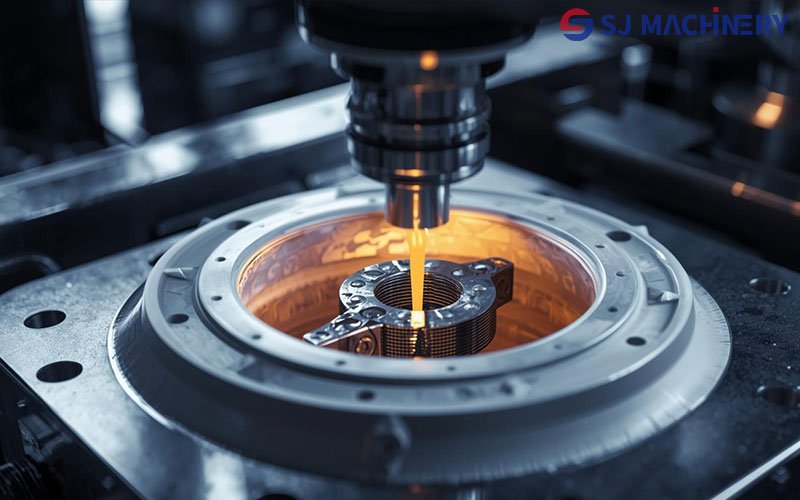
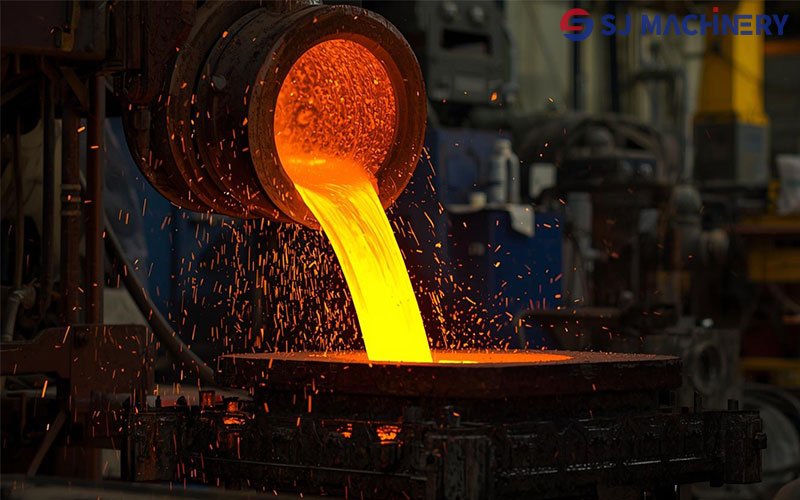
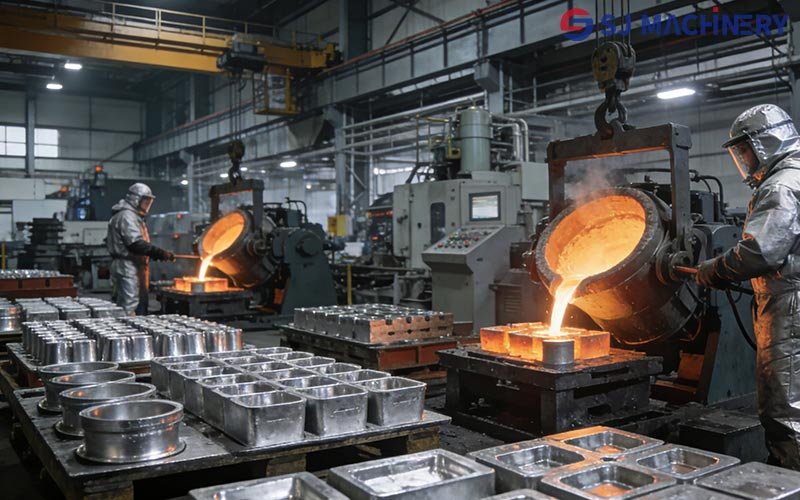
Precision casting, also known as investment casting, is an advanced near-net-shape forming process. Its main process flow includes: first, pressing wax material into a carefully designed mold cavity, cooling it, and then removing it to form a precision wax model; then, cleverly welding multiple wax models onto a gating system to form a tree-like structure; next, shell mold making is carried out, first uniformly immersing the surface of the wax model in a pre-prepared silica sol coating, then sprinkling refractory sand, and finally drying and hardening it under specific temperature and humidity conditions. Repeat this step 5-6 times to ultimately form a silica sol shell with a certain strength and refractoriness. After the shell is formed, the wax in the shell is melted and removed using high-temperature steam to achieve dewaxing, resulting in a mold shell for casting. The mold shell is then baked to remove residual wax and moisture, achieving a red-shell state (usually baked at around 1000℃ for 1-2 hours). Afterwards, various raw materials are precisely proportioned according to the product material composition, molten steel is melted, slag is removed, and its composition is verified to be up to standard using spectral analysis. Then, strictly following the process card requirements, the red-shell molten steel is poured into the mold shell, allowing it to gradually solidify into a billet. Finally, after the billet has completely cooled, the mold shell is separated from the billet using manual hammering or a vibratory descrambling machine. The casting and gating system are then cut apart to obtain the finished casting. Polishing, machining, and other fine finishing can be performed as needed. This process has many significant advantages. On the one hand, it can manufacture extremely complex parts. Compared to die casting, sand casting, and lost foam casting, Feinguss can produce the most complex parts. Utilizing this characteristic, multiple parts that would otherwise require other processing methods can be combined into a single part, greatly simplifying product structure, eliminating cumbersome assembly steps, and thus reducing costs and increasing efficiency. Furthermore, Feinguss is not limited by metal materials. It encompasses a wide range of materials, including carbon steel, alloy steel, heat-resistant alloys, rostfreier Stahl, precision alloys, permanent magnet alloys, bearing alloys, copper alloys, aluminum alloys, titanium alloys, and ductile iron, making its applications extremely broad. In addition, due to its high dimensional accuracy and excellent surface finish, it can reduce or even eliminate machining processes. Even if machining is required, the workload is far less than other casting processes. Multiple Applications of Investment Casting in the Energy Industry
Traditional Energy Sector
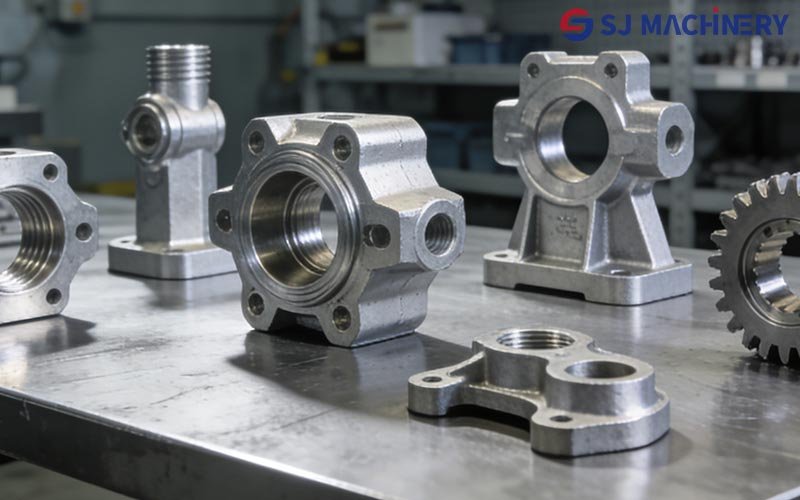
In the oil and gas extraction industry, Feinguss is widely used in various critical equipment. For example, valves and pump bodies in mining equipment are typically manufactured using Feinguss. These components require excellent corrosion resistance and sealing performance to withstand the complex and harsh mining environment. Feinguss can precisely mold complex internal flow channel structures, ensuring efficient medium transport within the equipment while guaranteeing the overall strength and durability of components, thereby reducing equipment failure rates and improving mining efficiency. In the field of thermal power generation, gas turbines are core power generation equipment, and many of their key components rely on investment casting. Gas turbine blades are a typical example. Blades operate under extreme conditions such as high temperature, high pressure, and high-speed rotation, requiring extremely high material properties and manufacturing precision. The Feingussverfahren can precisely control the shape and size of the blades, thus ensuring their aerodynamic performance. Simultaneously, the selection of high-temperature alloy materials gives the blades excellent high-temperature resistance, oxidation resistance, and thermal fatigue resistance, enabling the gas turbine to operate efficiently and stably, and improving power generation efficiency. 
In the new energy sector
precision casting plays a crucial role in the wind power industry. Wind turbine hubs and gearbox components have stringent requirements for precision and strength. As a key component connecting the blades and the main shaft, the quality of the hub directly affects the operational stability and safety of the wind turbine. Precision casting can produce hubs with complex shapes and compact structures, meeting their high strength and lightweight design requirements, ensuring reliable operation under long-term, complex alternating loads. Precision gears and shaft components in gearboxes also frequently employ precision casting processes to ensure gear tooth profile accuracy and surface quality, reduce transmission noise, improve transmission efficiency, and extend the gearbox’s service life. In the nuclear power sector, nuclear power valves are critical components ensuring the safe and stable operation of nuclear power plants. These valves require extremely high reliability and sealing performance to withstand special environments such as high temperature, high pressure, and strong radiation. Precision casting processes can produce nuclear power valves with complex internal structures and high dimensional accuracy, meeting their stringent technical requirements and ensuring that the valves can function quickly and accurately in emergency situations, safeguarding the safety of the nuclear power plant.
Challenges and Countermeasures
While precision casting technology has been widely applied and achieved significant results in the energy industry, it also faces a series of challenges. On the one hand, raw material prices fluctuate wildly. For example, the prices of key raw materials such as casting-grade nickel-based alloys often fluctuate dramatically, putting enormous pressure on companies’ cost control. On the other hand, with the rapid development of energy industry technology, the performance and quality requirements for precision castings are constantly increasing. For example, under extreme working conditions such as high temperature, high pressure, and strong corrosion, the requirements for reliability and durability are becoming increasingly stringent. At the same time, increasingly stringent environmental regulations put investment casting companies under tremendous pressure to reduce energy consumption and pollutant emissions. To cope with raw material price fluctuations, companies can address these issues by establishing long-term and stable cooperative relationships with suppliers, expanding raw material supply channels, strengthening inventory management, and actively developing recycled materials. In terms of improving product performance and quality, companies need to continuously increase R&D investment, collaborate with research institutions to conduct technical research, utilize advanced simulation technology to optimize casting processes, introduce automated intelligent production equipment, and improve the precision control level of the production process. To meet environmental protection requirements, enterprises should actively explore green casting processes, such as using low-emission shell materials, optimizing smelting processes to reduce energy consumption, and installing efficient waste gas treatment equipment.
Future Development Trends of Investment Casting
In the future, the energy industry’s demand for investment casting will continue to grow and upgrade. With the booming development of global clean energy, new energy fields such as wind power and nuclear power will usher in broader development space, and the demand for high-performance precision castings will also experience explosive growth. At the same time, digital and intelligent technologies will be deeply integrated into the precision casting production process, achieving precise control of the production process, quality traceability, and intelligent optimization, further improving production efficiency and product quality. Furthermore, green casting will become the mainstream direction of industry development, achieving sustainable development of the precision casting industry by adopting environmentally friendly materials, optimizing processes, and reducing energy consumption. In terms of technological innovation, the integration of new materials and precision casting technology will continuously expand the application boundaries of castings, such as developing high-performance high-temperature alloys and composite materials to meet the increasingly stringent technical requirements of the energy industry. Ningbo Suijin Machinery Technology Co, Ltd. ist auf die Herstellung verschiedener Präzisionsgussteile und maschinell bearbeiteter Teile spezialisiert, darunter Kohlenstoffstahl, legierter Stahl und Edelstahl, und kann Verbundwerkstoffe nach Zeichnung bearbeiten. https://youtu.be/2HpQwOFwzV0?si=NngS0khNzlGLm9OG