The article will focus on the core advantages, workflow, application scenarios and development prospects of 3D Printed Resin Investment Casting.
1. What is 3D Printed Resin Investment Casting?
Investment casting, also known as lost-wax casting, has long been a cornerstone of manufacturing for producing high-precision metal parts with intricate geometries—from aerospace components to delicate jewelry. However, traditional Feinguss relies on wax patterns created via metal tooling, a process plagued by high costs, long lead times, and limited design flexibility. The advent of 3D printed resin investment casting has transformed this age-old technique, merging additive manufacturing’s digital agility with the reliability of traditional casting to unlock new possibilities for industries worldwide.
2. The Core of 3D Printing Resin Investment Casting
At its core, 3D printed resin investment casting replaces conventional wax patterns with 3D-printed resin patterns, primarily using stereolithography (SLA) or digital light processing (DLP) technologies. This shift eliminates the need for expensive and time-consuming metal tooling, enabling a more streamlined and flexible production workflow. Unlike traditional wax patterns, resin patterns can be designed with complex internal structures—such as lattices or cooling channels—that were previously unachievable, expanding the boundaries of part design and functionality.
3. The workflow of 3D Printing Resin Investment Casting
The workflow of 3D printed resin investment casting is both efficient and adaptable to existing foundry processes. It typically begins with computer-aided design (CAD) modeling, where engineers or designers create a detailed digital model of the desired part. The CAD file is then optimized for 3D printing, often with lattice structures to reduce material usage and ensure uniform burnout. Next, the resin pattern is 3D printed using specialized casting resins, which are formulated for low ash content, clean burnout, and high dimensional accuracy. After printing, the pattern undergoes post-processing—including washing in isopropyl alcohol to remove uncured resin and drying—before being attached to a casting tree.
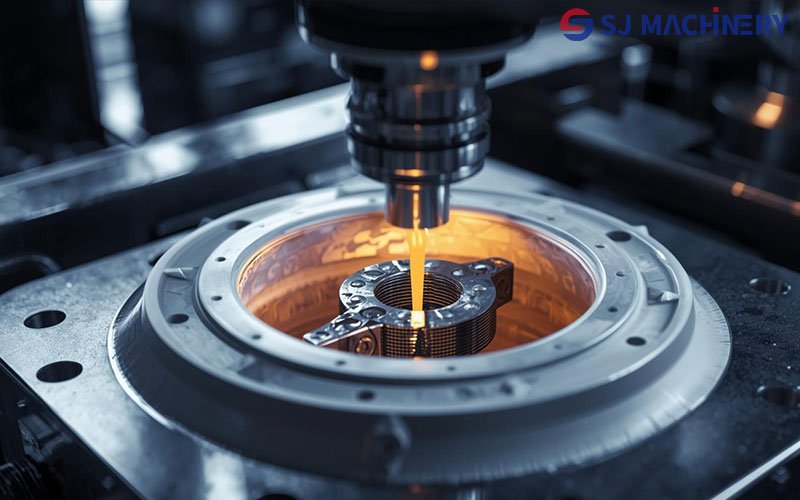
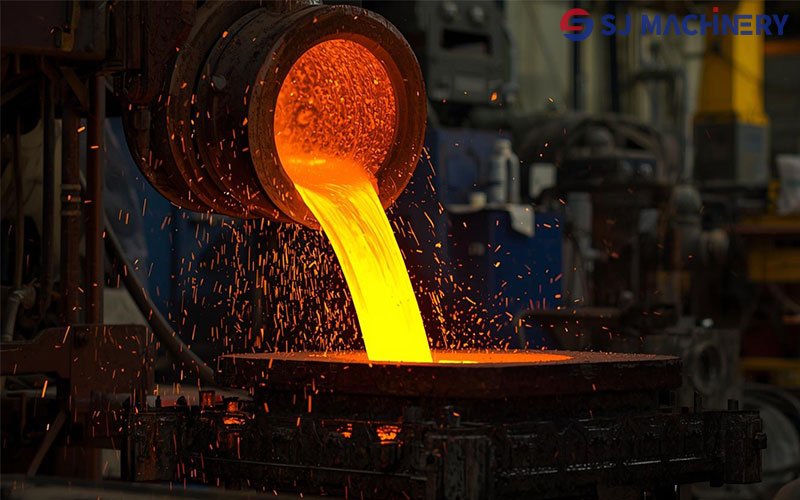
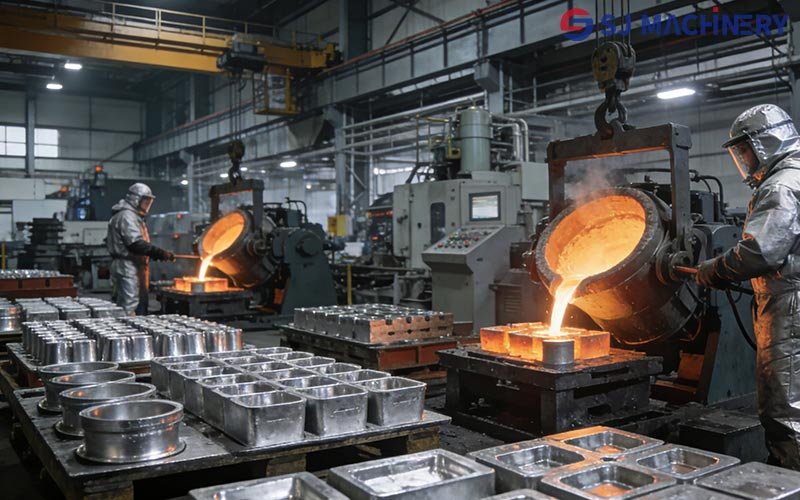
The subsequent steps align with traditional Feinguss: the resin pattern is coated in a ceramic slurry to form a mold, which is then dried and subjected to a burnout process. During burnout, the resin pattern is heated to 700–900°C, vaporizing completely with minimal ash residue (often less than 0.20%) and leaving a precise cavity matching the original design. Molten metal—ranging from precious metals for jewelry to high-performance superalloys for aerospace—is then poured into the ceramic mold, cooling and solidifying to form the final part. A key advantage of this workflow is its compatibility with existing foundry equipment, allowing manufacturers to adopt the technology without significant process overhauls.
4. The benefits of 3D Printed Resin Investment Casting
The benefits of 3D printed resin investment casting are multifaceted, addressing critical pain points of traditional casting.
Cost reduction is a primary driver: eliminating metal tooling can save tens of thousands of dollars, making low-volume production economically viable.
Lead times are drastically shortened, with patterns producible in 24 hours or less compared to the weeks or months required for tooling fabrication.
Design freedom is another major advantage—intricate geometries like undercuts, hollow structures, and custom details are easily achievable, enabling personalized products (such as custom jewelry) and high-performance parts (like aerospace turbine blades with integrated cooling channels).
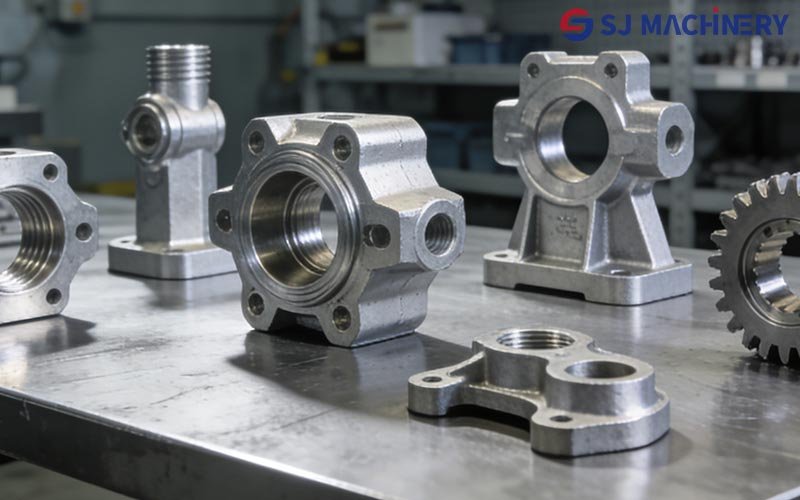
This technology has found applications across a diverse range of industries. In aerospace, it is used to produce single-crystal turbine blades and airfoils, leveraging resins like 3D’s SiCast 405 that can withstand extreme thermal gradients during casting. The jewelry industry has embraced 3D printed resin casting for its ability to create complex filigree designs and personalized pieces, reducing labor costs and production time while maintaining precision. Automotive manufacturers use the process for low-volume production of lightweight components, while art foundries rely on it to replicate intricate sculptures with minimal manual labor.
As the technology evolves, advancements in resin materials and 3D printing hardware continue to enhance its capabilities. New resins offer improved thermal stability, lower ash content, and compatibility with a wider range of metals, including nickel- and cobalt-based superalloys. Large-format printers enable the production of larger patterns, expanding the technology’s applicability to industrial-scale parts. Additionally, the integration of digital tools like lattice optimization software further improves material efficiency and burnout performance.
5. Challenges facing 3D printing in resin Feinguss
Despite its advantages, 3D printed resin investment casting is not without challenges. The cost of specialized casting resins and 3D printers may be a barrier for small foundries, though the availability of desktop printers has made the technology more accessible. Quality control remains critical, as variations in printing parameters or post-processing can affect pattern accuracy. However, these challenges are being addressed through ongoing material development and process standardization.
In conclusion, 3D printed resin investment casting represents a significant advancement in precision metal fabrication, bridging the gap between digital design and traditional manufacturing. By combining the flexibility of 3D printing with the reliability of Feinguss, it offers cost savings, shorter lead times, and unprecedented design freedom across industries. As materials and technologies continue to improve, this process is poised to become a standard in manufacturing, enabling innovation and efficiency in the production of complex metal parts.