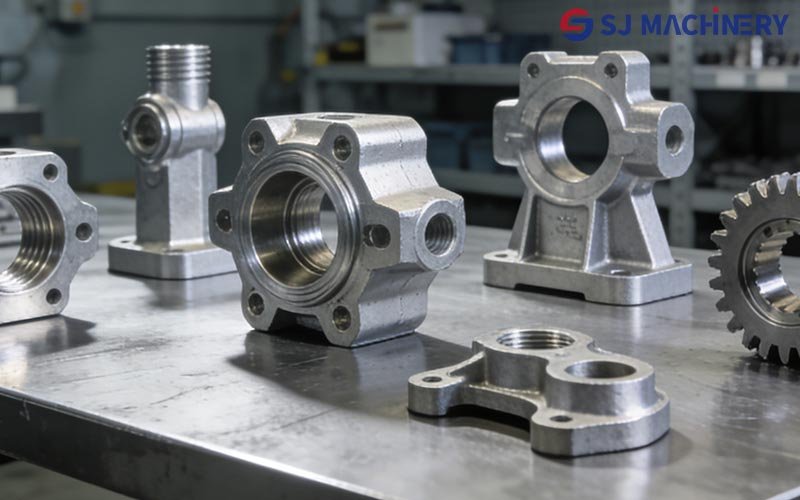
Aluminum investment castings, also known as lost-wax aluminum castings, represent a high-precision, versatile manufacturing technology that caters to the growing demand for complex, lightweight, and high-performance components across diverse industries. This solution plan outlines the core concepts, advantages, implementation processes, quality control measures, and application scenarios of aluminum investment castings, aiming to provide a systematic guide for enterprises seeking to adopt this advanced casting technology to optimize production efficiency, reduce costs, and enhance product competitiveness.
1. Overview of Aluminum Investment Castings Solution
The aluminum investment casting solution is a precision manufacturing process that utilizes a wax pattern to replicate the exact shape of the desired aluminum component, followed by coating the pattern with a refractory material to form a mold. Once the mold is hardened, the wax is melted and removed (lost-wax process), and molten aluminum alloy is poured into the hollow mold cavity. After solidification and mold removal, a high-precision aluminum component with intricate details and excellent surface finish is obtained. This solution is tailored to produce components with complex geometries, tight tolerances, and superior mechanical properties, addressing the limitations of traditional casting methods such as sand casting, which often struggle with precision and surface quality.
Our solution integrates advanced equipment, optimized process parameters, and professional technical support to meet the customized needs of different industries, including automotive, aerospace, electronics, medical, and industrial machinery. Whether for small-batch high-precision parts or large-scale mass production, the aluminum investment casting solution can achieve efficient, stable, and cost-effective manufacturing.
2. Core Advantages of Aluminum Investment Castings
Compared with other casting technologies and alternative materials, aluminum investment castings offer unique advantages that make them an ideal choice for high-demand applications, which are the core highlights of our solution:
2.1 High Precision and Excellent Surface Finish
The lost-wax process eliminates the need for parting lines and cores in many cases, ensuring that the cast aluminum components have precise dimensions and intricate details. The typical dimensional tolerance can reach ISO 8062 CT4-CT7, and the surface roughness (Ra) can be as low as 1.6-6.3 μm, reducing or even eliminating the need for post-processing such as machining, thereby saving time and production costs.
2.2 Complex Geometric Capability
Aluminum investment castings can produce components with complex internal and external structures, such as thin walls (minimum wall thickness up to 0.8-1.5 mm), curved surfaces, hollow cavities, and fine holes, which are difficult or impossible to achieve with traditional casting or machining methods. This flexibility allows designers to optimize component structures, reduce weight, and improve overall performance.
2.3 Lightweight and High Mechanical Properties
Aluminum alloys have a low density (2.7 g/cm³, about 1/3 of steel), making investment cast aluminum components significantly lighter than steel castings, which is crucial for industries such as automotive and aerospace that pursue energy efficiency and weight reduction. Meanwhile, through reasonable alloy selection (e.g., 6061, 7075, A356, A380) and heat treatment processes (e.g., T6, T7), the cast components can achieve high strength, hardness, corrosion resistance, and impact resistance, meeting the strict performance requirements of critical applications.
2.4 Material Utilization and Cost Efficiency
The precision of aluminum investment castings minimizes material waste, as the cast parts are close to the final product shape (near-net-shape manufacturing). This reduces raw material consumption and post-processing costs. For small-batch production, the solution avoids the high mold costs of die casting; for large-scale production, optimized process parameters and automated equipment can further improve production efficiency and reduce unit costs.
2.5 Environmental Friendliness
Aluminum is 100% recyclable with minimal loss of properties, and the Feinguss process uses environmentally friendly refractory materials and waxes that can be recycled and reused. Compared with sand casting, it generates less waste and pollution, aligning with the global trend of green manufacturing and sustainable development.
3. Implementation Process of Aluminum Investment Castings Solution
Our solution adopts a standardized, step-by-step implementation process to ensure stable product quality and efficient production. The key steps are as follows:
3.1 Design and Pattern Making
First, our engineering team conducts in-depth communication with the customer to clarify the component’s design requirements, including dimensions, tolerances, mechanical properties, and application scenarios. Based on this, we use 3D modeling software (e.g., CAD, SolidWorks) to design the component and the wax pattern. The wax pattern is then manufactured using high-precision injection molding equipment, with strict control of pattern dimensions and surface quality—this is the foundation of ensuring the final casting’s precision.
3.2 Mold Shell Preparation
The wax patterns are assembled into clusters (if multiple small parts are produced simultaneously) and coated with a refractory slurry. The first coat (primary coat) uses fine-grained refractory materials (e.g., zircon sand, alumina) to ensure surface finish; subsequent coats (backup coats) use coarse-grained materials to enhance mold shell strength. After each coating, the mold shell is dried in a controlled environment to remove moisture. This process is repeated 4-8 times until the mold shell reaches the required thickness (usually 5-15 mm).
3.3 Dewaxing
The dried mold shell is placed in a dewaxing furnace, where it is heated to 120-180°C (or subjected to high-pressure steam) to melt the wax, which is then drained and recycled. This leaves a hollow mold cavity with the exact shape of the desired component. After dewaxing, the mold shell is preheated to 800-1200°C to remove residual wax, moisture, and organic impurities, and to improve its high-temperature stability—this step prevents mold shell cracking during molten aluminum pouring.
3.4 Melting and Pouring
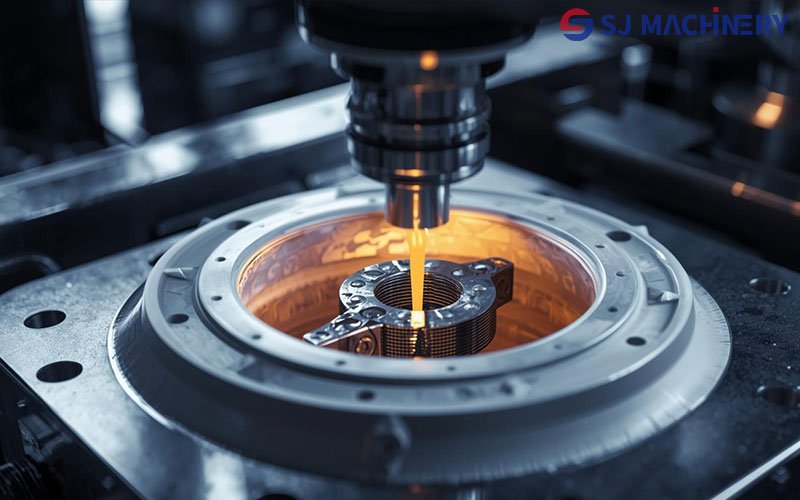
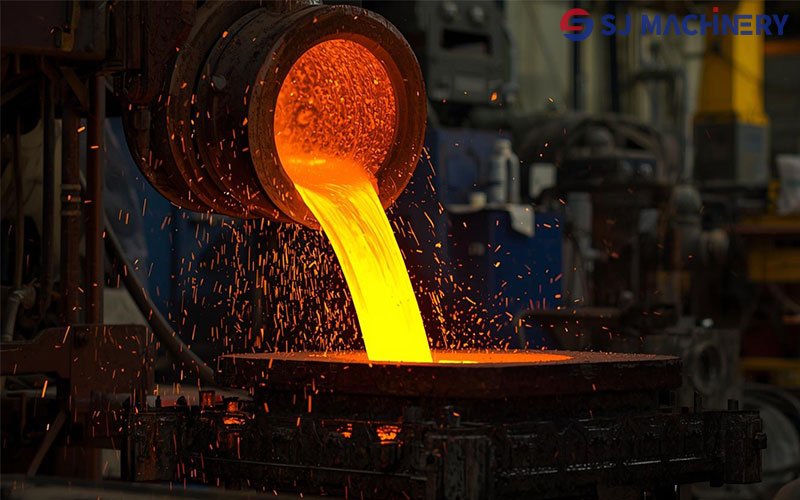
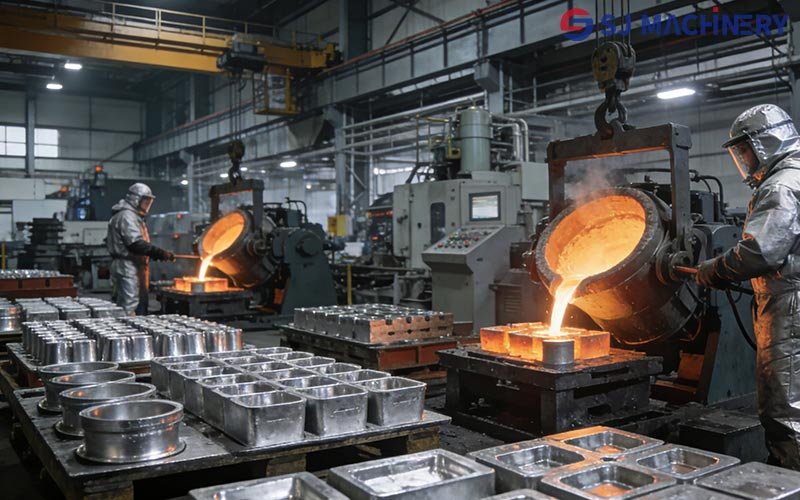
The selected aluminum alloy is melted in an induction furnace or resistance furnace, with strict control of melting temperature (usually 700-780°C) and alloy composition. Before pouring, the molten aluminum is purified (e.g., using argon or nitrogen degassing, flux purification) to remove impurities and gas, ensuring the casting’s internal quality. The molten aluminum is then poured into the preheated mold shell under gravity or pressure (for complex or thin-walled parts) to ensure full filling of the cavity.
3.5 Solidification and Mold Shell Removal
The molten aluminum in the mold shell is allowed to solidify naturally or under controlled cooling conditions to avoid internal defects such as shrinkage holes and cracks. After solidification (usually 1-4 hours, depending on the component size), the mold shell is removed by mechanical vibration, sandblasting, or water jetting. The casting clusters are then cut into individual components using cutting equipment.
3.6 Post-Processing and Heat Treatment
The individual castings undergo post-processing to remove burrs, gates, and risers. For components requiring higher precision or surface quality, additional machining (e.g., turning, milling, drilling) is performed. Heat treatment is then carried out according to the alloy type and performance requirements—common processes include solution treatment, quenching, and aging, which enhance the casting’s strength, hardness, and toughness.
4. Quality Control Measures
Quality is the core of our aluminum investment casting solution. We implement strict quality control throughout the entire production process, from raw materials to finished products, to ensure that each component meets customer requirements:
4.1 Raw Material Inspection
We only use high-quality aluminum ingots, alloys, refractory materials, and waxes from certified suppliers. Each batch of raw materials is inspected for chemical composition, purity, and performance using advanced testing equipment (e.g., spectral analyzer, tensile testing machine) to eliminate unqualified raw materials.
4.2 In-Process Quality Control
– Pattern inspection: Check the dimensions, surface roughness, and integrity of wax patterns using coordinate measuring machines (CMM) and visual inspection tools.
– Mold shell inspection: Monitor the thickness, drying degree, and strength of the mold shell during coating and drying; conduct preheating temperature inspection before dewaxing and pouring.
– Pouring inspection: Control the melting temperature, pouring speed, and pouring temperature of molten aluminum; monitor the filling process to avoid defects such as misrun and cold shut.
4.3 Finished Product Inspection
– Dimensional inspection: Use CMM, calipers, and gauges to check the dimensions and tolerances of finished castings, ensuring compliance with design drawings.
– Surface inspection: Conduct visual inspection and surface roughness testing to check for defects such as scratches, pores, and cracks.
– Internal quality inspection: Use non-destructive testing (NDT) methods such as X-ray testing, ultrasonic testing, and liquid penetrant testing to detect internal defects such as shrinkage holes, inclusions, and cracks.
– Mechanical performance testing: Randomly sample finished castings for tensile strength, yield strength, hardness, and impact resistance testing to ensure they meet the required mechanical properties.
5. Application Scenarios
Due to their unique advantages, aluminum investment castings are widely used in various industries, and our solution can be customized to meet the specific needs of each industry:
5.1 Automotive Industry
Used in the production of engine components (e.g., cylinder heads, pistons, intake manifolds), transmission components, suspension components, and lightweight body parts. The lightweight and high-strength characteristics of aluminum investment castings help reduce vehicle weight, improve fuel efficiency, and reduce emissions.
5.2 Aerospace Industry
Applied to the manufacturing of aircraft engine components, hydraulic system components, structural parts, and satellite components. The high precision, lightweight, and corrosion resistance of aluminum investment castings meet the strict requirements of the aerospace industry for component performance and reliability.
5.3 Electronics Industry
Used in the production of heat sinks, electronic enclosures, and precision connectors. The excellent thermal conductivity and electrical conductivity of aluminum, combined with the high precision of Feinguss, ensure the stable operation of electronic equipment.
5.4 Medical Industry
Applied to the manufacturing of medical devices and equipment components, such as surgical instruments, medical imaging equipment parts, and orthopedic implants. The high biocompatibility (of specific aluminum alloys) and precision of aluminum investment castings meet the strict hygiene and performance requirements of the medical industry.
5.5 Industrial Machinery
Used in the production of pump and valve components, gearboxes, hydraulic components, and tooling fixtures. The high strength, wear resistance, and corrosion resistance of aluminum investment castings ensure the durability and reliability of industrial machinery.
6. Conclusion
The aluminum investment casting solution is a high-precision, efficient, and cost-effective manufacturing technology that addresses the growing demand for complex, lightweight, and high-performance components across industries. Our comprehensive solution integrates professional design, standardized production processes, strict quality control, and customized technical support, helping enterprises optimize production efficiency, reduce costs, and enhance product competitiveness.
Whether you are looking to replace traditional casting methods, reduce component weight, improve precision, or meet the specific requirements of critical applications, our aluminum investment casting solution can provide a reliable and tailored solution to help you achieve your production goals. We are committed to continuously optimizing our technology and services, working with customers to create greater value through advanced aluminum investment casting technology.