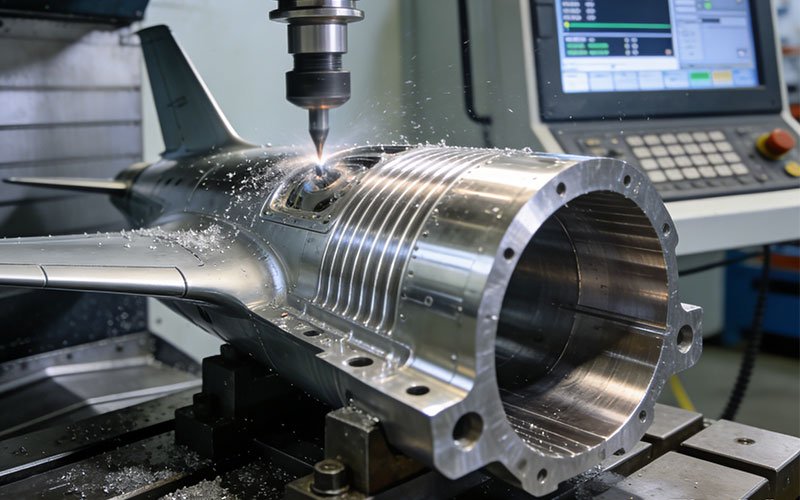
In der modernen Luft- und Raumfahrtindustrie wird die Technologie der Präzisionsbearbeitung von Flugzeugteilen als “die Perle auf der Krone der Industrie” bezeichnet. Von den Turbinenschaufeln der Triebwerke bis zu den tragenden Strukturen des Fahrwerks, von den integrierten Rumpfhäuten bis zu den zentralen Schnittstellen der Avioniksysteme - die Fertigungspräzision jedes Schlüsselteils entscheidet direkt über die Flugsicherheit, die Gesamtleistung und die Lebensdauer eines Flugzeugs. Mit der kontinuierlichen Weiterentwicklung der Luftfahrtausrüstung in Richtung Leichtbau, hohes Schubkraft-Gewichts-Verhältnis und lange Lebensdauer ist die Präzisionsbearbeitungstechnologie zu einem zentralen Wettbewerbsfaktor in der Luft- und Raumfahrtindustrie geworden. In diesem Beitrag werden die wichtigsten technischen Wege, die bestehenden Herausforderungen der Branche und die künftigen Entwicklungstrends in diesem Bereich systematisch analysiert.
Die Herstellung wichtiger Flugzeugkomponenten ist eine hochkomplexe Systemtechnik, deren Qualitätsstandards extrem strenge Anforderungen für den sicheren Betrieb des gesamten Flugzeugs stellen. Jede Präzisionsabweichung oder jeder Leistungsfehler von Komponenten kann Systemausfälle verursachen und sogar zu schweren Flugunfällen führen. Daher ist die Präzisionsbearbeitungstechnik zu einem unverzichtbaren Kernprozess bei der Herstellung von Flugzeugteilen geworden.
Diese Technologie stützt sich auf verschiedene Arten von High-End-Ausrüstung zur Herstellung von Luftfahrtkomponenten mit geringen Toleranzbereichen, hoher Maßgenauigkeit und ausgezeichneter Oberflächenqualität. Als typisches subtraktives Fertigungsverfahren erreicht die Präzisionsbearbeitung die geplante Größe und die Leistungsstandards von Bauteilen durch präzises Abtragen von Werkstückmaterialien. Zur Kernausrüstung gehören CNC-Werkzeugmaschinen, Hochpräzisionsschleifmaschinen, Honmaschinen, Bearbeitungszentren, professionelle Entgratungsanlagen und Wärmebehandlungsanlagen.
Die Präzisionsfertigung von Flugzeugteilen ist der zentrale Eckpfeiler der Luft- und Raumfahrtindustrie, und ihre Bedeutung zieht sich durch den gesamten Prozess der Flugzeugentwicklung, -produktion, -wartung und sogar des gesamten Lebenszyklusmanagements. Von der Gewährleistung der Flugsicherheit über die kontinuierliche Leistungsoptimierung bis hin zum wirtschaftlichen Wettbewerb in der Industrie ist diese Technologie nicht nur die “Lebensader” der modernen Luft- und Raumfahrtindustrie, sondern auch ein wichtiges Symbol für die Stärke eines Landes in der High-End-Fertigung.
Im Folgenden werden die unersetzlichen Schlüsselrollen der Präzisionsbearbeitungstechnologie für Flugzeugteile anhand von fünf Dimensionen eingehend analysiert:
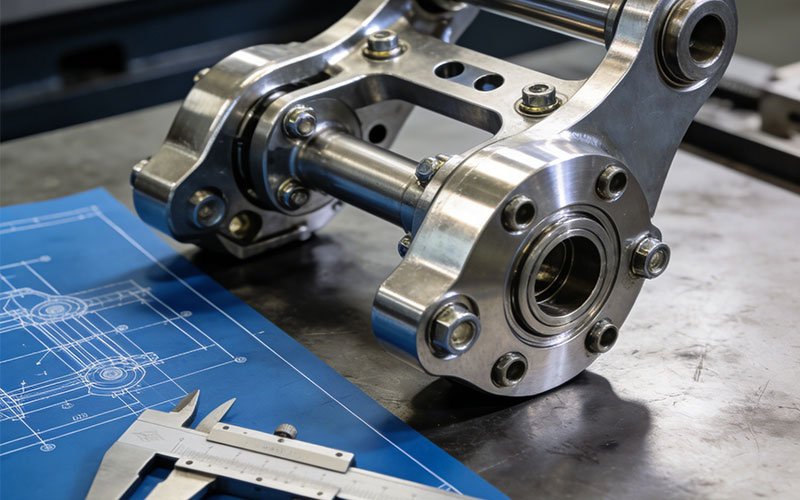
1. Gewährleistung der Sicherheit: Der wichtigste Eckpfeiler der Luftfahrt
Anforderungen an die Null-Fehler-Produktion
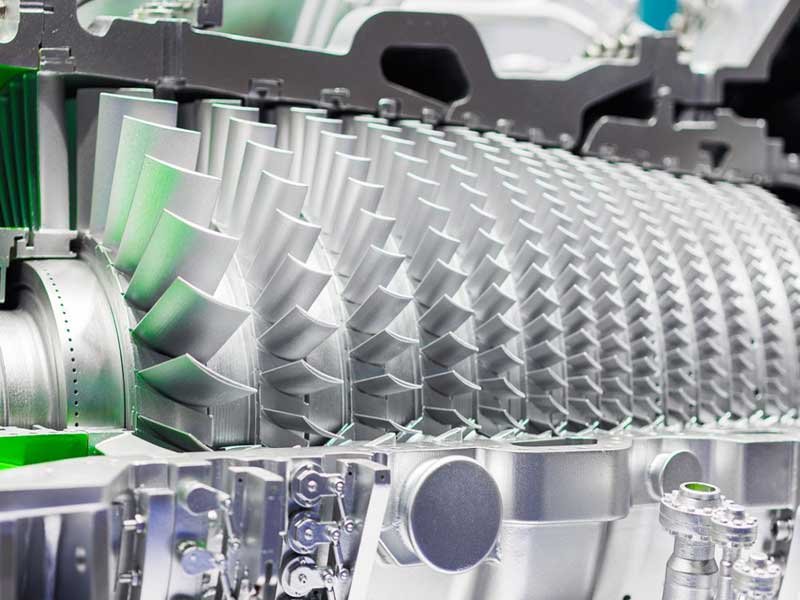
Winzige Defekte (z. B. 0,1 mm große Mikrorisse) an wichtigen Flugzeugteilen (wie Triebwerksschaufeln und Fahrwerkslagern) können in der extremen Arbeitsumgebung mit großer Höhe, hohem Druck und hoher Temperatur katastrophale Folgen haben. Durch Präzisionskontrolle im Mikrometerbereich (z. B. Turbinenschaufelspitzenfehler ≤ 0,05 mm) kann die Präzisionsbearbeitungstechnologie die Wahrscheinlichkeit eines Bauteilversagens auf 10-⁹ reduzieren und so einen sicheren Flugzyklus von mehr als 30 Jahren gewährleisten.
Anpassungsfähigkeit an extreme Umweltbedingungen
Komponenten für die Luft- und Raumfahrt müssen enormen Temperaturunterschieden von -55℃ (im Reiseflug in großer Höhe) bis 1500℃ (im Brennraum des Motors) standhalten. Der Präzisionsbearbeitungsprozess kann die Einheitlichkeit der Mikrostruktur des Materials gewährleisten (z. B. beträgt der Kristallorientierungsfehler bei einkristallinen Superlegierungen weniger als 3°), wodurch ein durch thermische Spannungskonzentration verursachter Ermüdungsbruch des Teils wirksam vermieden wird.
2. Leistungsverbesserung: Förderung der sprunghaften Entwicklung der Luftfahrtausrüstung
Revolution in der Leichtbautechnologie
Durch Technologien wie Präzisionsfräsen (z. B. 30% Gewichtsreduzierung von Integralrahmen aus Titanlegierung), automatisiertes Legen von Verbundwerkstoffen (20% Gewichtsreduzierung von Boeing 787-Rümpfen) und 3D-Druck-Topologieoptimierung (25% Gewichtsreduzierung von GE Aviation-Kraftstoffdüsen) konnten das Schub-Gewicht-Verhältnis und die Treibstoffeffizienz von Flugzeugen erheblich verbessert werden. Schätzungen zufolge können mit jeder Tonne Gewichtsreduzierung beim Airbus A350 jährlich 700 Tonnen Treibstoff eingespart werden.
Signifikanter Sprung in der aerodynamischen Effizienz
Die Oberflächenrauheit der durch Fünf-Achsen-Simultanbearbeitung hergestellten Flügelvorderkante kann Ra0,4μm erreichen, wodurch die Grenzschicht der Luftströmung stabiler wird und der Gesamtwiderstand des Flugzeugs um 15% verringert wird; die Maßgenauigkeit der Triebwerkskompressorschaufeln wird auf IT4-Niveau verbessert, und die Verdichtungseffizienz wird um 8% erhöht.
3. Wirtschaftlicher Nutzen: Das Kernstück der Kostenkontrolle in der gesamten Industriekette
Optimierung der Herstellungskosten
Nachdem die elektrochemische Präzisionsbearbeitung (PECM) das herkömmliche EDM-Verfahren ersetzt hat, wird die Verarbeitungseffizienz von Treibstoffdüsen aus der Legierung Inconel 718 um das Fünffache erhöht und die Stückkosten werden um 40% gesenkt; die Hochgeschwindigkeitsfrästechnologie kann die Verarbeitungszyklus von Teilen aus Titanlegierungen von 60%.
Innovation bei den Wartungskosten
Die Reparaturtechnologie der additiven Fertigung (z. B. Laserauftragschweißen) kann die Wartungskosten für Triebwerksschaufeln auf 20% der Kosten für neue Teile senken und die Lebensdauer der Teile um das Dreifache verlängern. Pratt & Whitney spart durch die digitale Aufarbeitungstechnologie jedes Jahr mehr als 1,2 Milliarden US-Dollar an Wartungskosten.
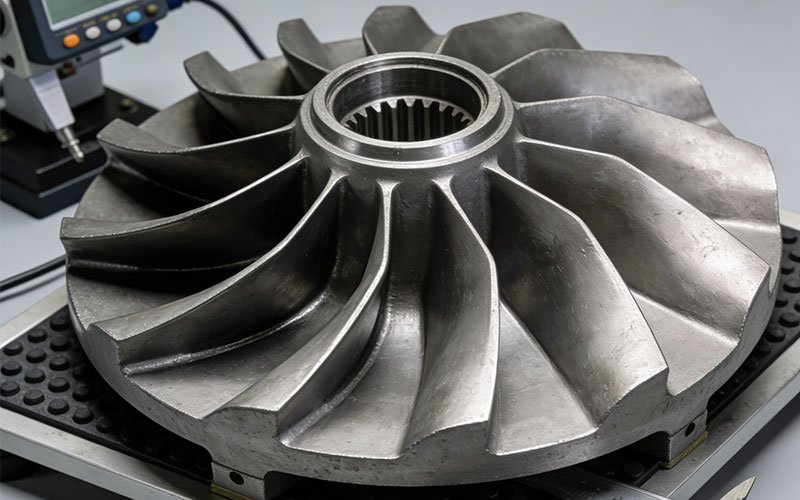
4. Technische Hemmnisse: Der “Burggraben” der nationalen High-End-Produktionsindustrie
Durchbruch in der Material-Prozess-Kooperation
Derzeit beherrschen nur 5 Länder weltweit die unterstützende Verarbeitungstechnologie von Superlegierungen (wie CMSX-4) und superharten Werkzeugen (PCD/PCBN); die Positioniergenauigkeit (±0,1 mm) und die Verlegegeschwindigkeit (1 m/s) von automatischen Wickelmaschinen für Verbundwerkstoffe stellen die wichtigsten technischen Hindernisse in diesem Bereich dar.
Unabhängige Kontrollierbarkeit der Kernausrüstung
Die Schlüsseltechnologien des RTCP-Algorithmus (Rotation Tool Center Point) von Fünf-Achsen-Simultan-CNC-Werkzeugmaschinen und Online-Messsystemen wurden lange Zeit von europäischen und amerikanischen Ländern monopolisiert. Der in China unabhängig entwickelte Standard zur Erkennung von S-förmigen Prüfstücken hat die technische Blockade des Westens im Bereich der Zertifizierung der Genauigkeit von fünfachsigen Werkzeugmaschinen erfolgreich durchbrochen.
5. Strategischer Wert: Die Höhepunkte des künftigen Wettbewerbs in der Luftfahrt
Kampfflugzeuge der sechsten Generation und neue Energieflugzeuge
Adaptive Zyklustriebwerke erfordern eine Präzisionsverbindungstechnik für 2000℃ hochtemperaturbeständige Keramikmatrix-Verbundwerkstoffe (CMC); die Anforderungen an die Genauigkeit der Kohlenstofffaser-Wicklung von Wasserstoff-Flugzeug-Wasserstoffspeichern erreichen 0,01 mm, was direkt über die kommerzielle Durchführbarkeit entscheidet.
Weltraumwirtschaft und Hyperschallflug
Die Technologie zur Bearbeitung von Mikrolöchern (Öffnungstoleranz ±0,005 mm) in C/C-Verbundwerkstoffen für Wärmeschutzsysteme (TPS) von Raumfahrzeugen und die Herstellung aktiver Kühlkanäle an der Vorderkante von Hyperschallfahrzeugen sind in hohem Maße von hochpräzisen Bearbeitungsmöglichkeiten abhängig.
Die Technologie der Präzisionsbearbeitung von Flugzeugkomponenten ist das Ergebnis einer tiefgreifenden Integration der Werkstoffkunde, Maschinenbau und Informationstechnologie. Mit der Entwicklung der Luftfahrtausrüstung in Richtung der sechsten intelligenten Generation wird die Bearbeitungsgenauigkeit von der Mikron- auf die Submikron-Ebene steigen, und die Prozesskette wird sich ebenfalls in Richtung vollständige Digitalisierung und Vernetzung entwickeln. In diesem Kernbereich der nationalen strategischen Wettbewerbsfähigkeit kann nur kontinuierliche technologische Innovation den ewigen Traum der Menschen vom Fliegen im blauen Himmel unterstützen.
Wenn Sie mehr über die Technologie der Präzisionsbearbeitung von Flugzeugkomponenten erfahren möchten, nehmen Sie bitte Kontakt mit uns auf.