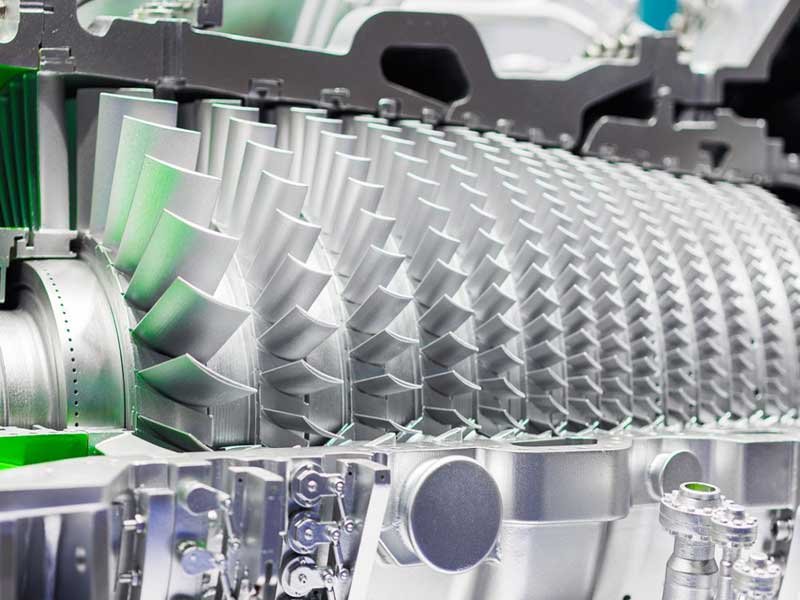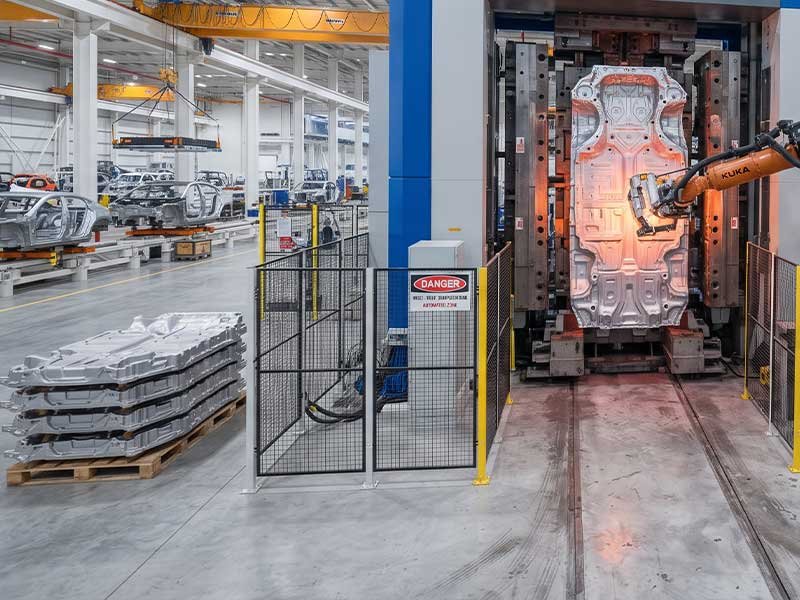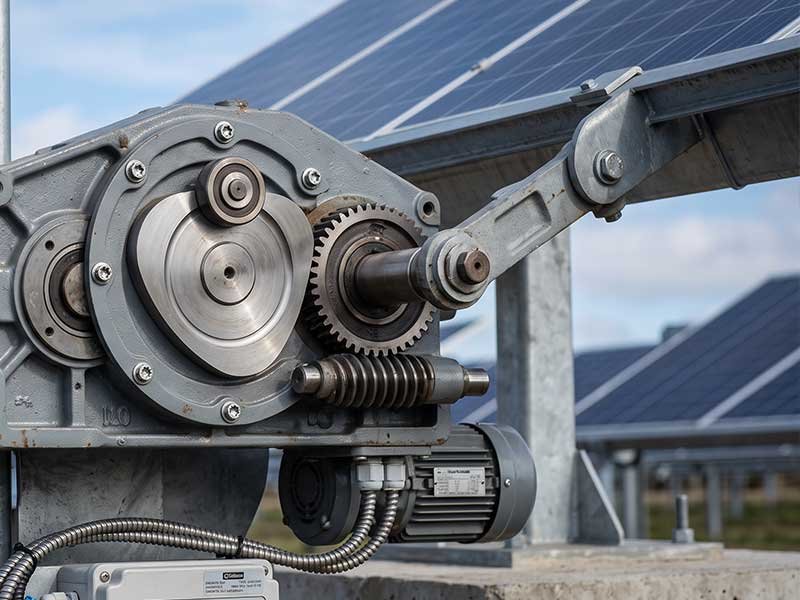

Eisenmetalle sind dunkle Metalle, vor allem Eisen, Stahl und Gusseisen. Diese Metalle sind meist silberweiß oder dunkelgrau, haben eine gute elektrische und thermische Leitfähigkeit und Duktilität und werden häufig in der Fertigung und im Bauwesen verwendet. Nichteisenmetalle sind alle Metalle außer Eisenmetallen, wie Kupfer, Aluminium, Zink, Blei, Nickel und Zinn. Diese Metalle weisen in der Regel eine Vielzahl von Farben auf, besitzen eine hohe Korrosionsbeständigkeit sowie elektrische und thermische Leitfähigkeit und werden häufig in der Industrie, Elektronik und Chemie eingesetzt.
1. Eisen ist der Schlüssel zu Eisenmetallen
Eisenmetalle enthalten Eisen, Nichteisenmetalle hingegen nicht. Durch das Vorhandensein von Eisen weist das Metall eine höhere elektrische Leitfähigkeit auf. Das Metall verfügt außerdem über eine gute Zugfestigkeit, sodass es hohen Belastungen standhält, ohne zu brechen. Dank ihrer überlegenen mechanischen Eigenschaften, Festigkeit und Haltbarkeit können Eisenmetalle zur Herstellung von Bauteilen für elektrische und hochbelastbare Anwendungen verwendet werden.
Es ist wichtig zu beachten, dass viele Eisenmetalle aufgrund ihres Eisengehalts anfällig für Korrosion sind. Bei Anwendungen, bei denen große Mengen an Wasser, Feuchtigkeit, Lösungsmitteln, Ölen und anderen korrosiven Substanzen zum Einsatz kommen, können Teile verschleißen und schließlich versagen. Um dieses Problem zu beheben, können während des Schmelzprozesses von Eisenmetallen Additive wie Chrom hinzugefügt werden, um ihre Korrosionsbeständigkeit zu verbessern. Durch die Verbesserung der Eigenschaften dieser Legierungen können Hersteller Präzisionsgussteile für solche rauen Umgebungen geeignet.
Zu den Eisenmetallen zählen Stahl, Gusseisen, Edelstahl und Kohlenstoffstahl. Im Allgemeinen sind Eisenmetalle kostengünstiger als Nichteisenmetalle, da sie in einer Vielzahl von Bereichen, darunter auch in der Luft- und Raumfahrt, weit verbreitet sind.
2. Allgemeine Korrosionsbeständigkeit von Nichteisenmetallen
Viele Nichteisenmetalle korrodieren oder rosten aufgrund ihres geringen Eisengehalts nicht so leicht. Diese Metalle sind sehr duktil und leicht, haben jedoch eine geringere Zugfestigkeit. Sie können magnetisch oder nicht magnetisch sein und bieten je nach Anwendung mehr Optionen.
Der Hauptvorteil von Nichteisenmetallen liegt in ihrer thermischen und elektrischen Leitfähigkeit. Wenn Metalle diese Eigenschaften besitzen, können Strom und Wärme mit minimalem Widerstand leicht durch sie hindurchfließen. Bei Gussteilen, die in elektrischen oder elektronischen Systemen verwendet werden, lassen leitfähige Metalle den Strom durchfließen und absorbieren und leiten gleichzeitig die durch den Strom erzeugte Wärme ab. Diese Eigenschaft verhindert eine Überhitzung des Systems und beugt so Leistungsminderungen und Fehlfunktionen vor.
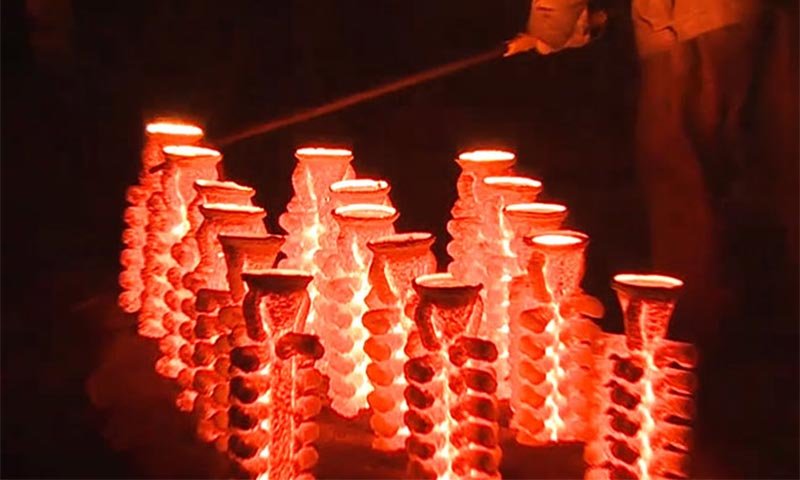
3. Wesentliche Unterschiede bei Feingussverfahren
Der Kernprozess von Feinguss ist “Wachsmodellherstellung → Schalenbeschichtung → Entwachsen → Brennen → Gießen → Reinigen”. Die Parameterauswahl und die betrieblichen Anforderungen für jede Stufe unterscheiden sich erheblich zwischen Eisen- und Nichteisenmetallen, wie folgt:
3.1. Wachsmodell- und Modulherstellung: Unterschiedliche Festigkeitsanforderungen
Das Wachsmodell ist der “Prototyp” in Feinguss, und seine Festigkeit muss den Anforderungen der anschließenden Schalenbeschichtung und Handhabung entsprechen. Aufgrund der unterschiedlichen Gewichte und Abmessungen der Gussteile nach dem Gießen unterscheiden sich die Anforderungen an Wachsmodelle für die beiden Metallarten:
- Eisenmetalle: Feingussteile sind in der Regel dicker (≥3 mm) und schwerer (von mehreren Kilogramm bis zu mehreren Dutzend Kilogramm). Daher muss das Wachsmodell eine höhere Raumtemperaturfestigkeit und Hochtemperaturstabilität aufweisen (um Verformungen während der Schalenbeschichtung zu vermeiden). Oft wird ein “Paraffin-Stearinsäure”-Verbundwachs (mit einem höheren Anteil an Stearinsäure, was zu einer höheren Härte führt) verwendet oder es werden Verstärkungskomponenten wie Polyethylen hinzugefügt.
- Nichteisenmetalle: Feingussteile sind meist dünnwandige Teile (weniger als 1 mm, z. B. Aluminiumlegierungskomponenten für die Luft- und Raumfahrt) und leicht. Bei Wachsmodellen stehen Fließfähigkeit und Formgenauigkeit im Vordergrund (Nachbildung komplexer Details, wie Präzisionszahnräder und dekorative Muster). Häufig werden reines Paraffinwachs oder Verbundwachse mit einem geringen Stearinsäureanteil verwendet. Für einige Präzisionsteile wird sogar “Niedertemperaturwachs” verwendet (Schmelzpunkt 40–60 °C, leicht zu entwachsen und ergibt eine feine Oberfläche).
3.2. Vorbereitung der Schale: Unterschiede bei feuerfesten Materialien und Beschichtungsschichten
Die Schale ist die “Form” für Feinguss, und es muss der Hochtemperaturerosion und chemischen Korrosion durch geschmolzenes Metall standhalten. Daher müssen die Auswahl der feuerfesten Materialien und die Anzahl der Beschichtungsschichten auf den Schmelzpunkt des Metalls abgestimmt sein:
| Prozessschritte:
|
Eisenmetalle (am Beispiel von Edelstahl):
|
Nichteisenmetalle (am Beispiel von Aluminiumlegierungen):
|
| Feuerfeste Materialien
|
Innere Schicht (in direktem Kontakt mit geschmolzenem Metall): Materialien mit hohem Schmelzpunkt, wie Korund (Al₂O₃) und Mullit (3Al₂O₃・2SiO₂) (beständig gegen Temperaturen über 1600 °C und Korrosion durch geschmolzenen Stahl); Äußere Schicht: Kostengünstiger Quarzsand + Silicasol (für strukturelle Festigkeit).
|
Innere Schicht: Materialien mit niedrigem bis mittlerem Schmelzpunkt, wie Quarzpulver und Zirkonpulver (beständig gegen Temperaturen unter 1000 °C, kostengünstig); Äußere Schicht: Quarzsand + Wasserglas (gute Fließfähigkeit, leicht zu beschichten). Titanlegierungen sind etwas Besonderes: Es wird hochreines Korund benötigt (um eine Reaktion zwischen Titan und Silizium zu vermeiden). |
| Anzahl der Beschichtungsschichten
|
6–10 Schichten (Aufgrund der hohen Temperatur und der Einwirkung des geschmolzenen Metalls ist eine dicke Hülle erforderlich, um Risse zu vermeiden.)
|
3–6 Schichten (Niedrige Schmelztemperatur des Metalls, dünnwandige Teile erfordern eine dünne Hülle, um die Wärmeableitung zu gewährleisten und Schrumpfhohlräume im Feinguss)
|
| Schimmel-Trocknung
|
Lange Trocknungszeit (8–12 Stunden pro Schicht), erfordert strenge Feuchtigkeitskontrolle (Silicasol-Schalen sind feuchtigkeitsempfindlich, um eine Verringerung der Festigkeit zu vermeiden)
|
Kurze Trocknungszeit (4–8 Stunden pro Schicht), Wasserglas-Schalen können natürlich trocknen, was zu einer höheren Effizienz führt.
|
3.3. Entparaffinierung und Brennen: Unterschiede in der Temperaturregelung
Durch das Entwachsen wird das Wachsmodell entfernt, um den Hohlraum zu bilden, während durch das Brennen Restwachs entfernt und die Schalenfestigkeit verbessert wird. Die Temperaturen für beide Verfahren müssen auf den Schmelzpunkt des Wachsmodells und die Eigenschaften des Metalls abgestimmt sein.
Entwachsungsmethoden:
- Eisenmetalle: Meistens wird “Dampfentwachsung” verwendet (100–120 °C gesättigter Dampf, schmilzt das Wachsmodell schnell, geeignet für hochfeste Wachsmodelle); bei einigen großen Teilen wird “Heißwasserentwachsung” verwendet (80–90 °C, geringe Kosten).
- Nichteisenmetalle: Niedertemperaturwachs wird mit heißem Wasser entwachst (60–80 °C, um ein Erweichen und Verformen des Wachsmodells zu vermeiden); Hochtemperaturwachs (z. B. Wachs für Kupferlegierungen) wird weiterhin mit Dampf entwachst.
Brenntemperatur:
- Eisenmetalle: 800–1100 °C (zum vollständigen Verbrennen von Wachsresten, um eine dichte Sinterhülle und Beständigkeit gegen Erosion durch geschmolzenen Stahl zu gewährleisten), Brenndauer 2–4 Stunden.
- Nichteisenmetalle: Aluminiumlegierungen/Magnesiumlegierungen: 400–600 °C (um ein Übersintern der Hülle zu vermeiden, was die Durchlässigkeit verringern und Porosität im Gussstück verursachen könnte); Kupferlegierungen: 600–800 °C; Titanlegierungen: 1000–1200 °C (erfordert Hochvakuumbrennen, um Oxidation zu verhindern).
3.4. Gießverfahren: Temperatur-, Atmosphären- und Fließfähigkeitssteuerung
Feinguss ist der zentrale Schritt beim Einfüllen von geschmolzenem Metall in die Form. Aufgrund der Unterschiede im Schmelzpunkt und in den Oxidationseigenschaften unterscheiden sich die Feingussparameter zwischen den beiden Metallarten erheblich:
Gießtemperatur:
- Eisenmetalle: Deutlich höher als ihr Schmelzpunkt (z. B. Schmelzpunkt von Kohlenstoffstahl 1450 °C, Gießtemperatur 1550–1650 °C). Eine erhöhte Fließfähigkeit ist erforderlich, um dickwandige Gussteile zu füllen und Kaltstellen zu vermeiden.
- Nichteisenmetalle: Nahe ihrem Schmelzpunkt (z. B. Schmelzpunkt von Aluminiumlegierungen 660 °C, Gießtemperatur 700–750 °C). Überhöhte Temperaturen können leicht zu Oxidation und Schrumpfhohlräumen im Gussstück führen. Titanlegierungen sind ein Sonderfall (Schmelzpunkt 1668 °C), da sie bei 1800–1900 °C gegossen werden müssen und einen Vakuum- oder Inertgasschutz erfordern (Titan reagiert bei hohen Temperaturen leicht mit O und N).
Casting-Atmosphäre:
- Eisenmetalle: Können unter atmosphärischen Bedingungen gegossen werden (Oxidation von Stahl und Gusseisen kann durch anschließende Reinigung entfernt werden, und Oxidation hat nur minimale Auswirkungen auf dickwandige Teile).
- Nichteisenmetalle: Aluminium- und Magnesiumlegierungen erfordern eine Entgasungsbehandlung (Argon oder Hexachlorethan wird verwendet, um vor dem Gießen Wasserstoff aus der Metallschmelze zu entfernen und Porosität zu verhindern); Kupferlegierungen können unter atmosphärischen Bedingungen gegossen werden, müssen jedoch mit Flussmittel bedeckt werden, um Oxidation zu verhindern; Titanlegierungen müssen Vakuumguss (absolutes Vakuum < 10⁻³ Pa).
Gießverfahren:
- Eisenmetalle: Bei großen Teilen wird das “Boden-Gießen” verwendet (die Metallschmelze füllt die Form gleichmäßig aus, wodurch eine Erosion der Formschale vermieden wird); bei kleinen Teilen wird das “Oben-Gießen” verwendet (um die Füllgeschwindigkeit zu erhöhen).
- Nichteisenmetalle: Für dünnwandige Teile wird das “Druckgussverfahren” verwendet (z. B. Niederdruck-Feinguss, bei dem die geschmolzene Metallmasse in den Formhohlraum gepresst wird, wodurch Fehler reduziert werden); für Präzisionsteile wird das “Vakuumgussverfahren” verwendet (um die Dichte zu erhöhen).
3.5. Nachbehandlung: Unterschiede zwischen Reinigung und Wärmebehandlung
Die Nachbehandlung bestimmt die endgültige Leistungsfähigkeit und das Aussehen des Feingusses. Aufgrund unterschiedlicher Oberflächeneigenschaften und Leistungsanforderungen unterscheiden sich die Verfahren für die beiden Metallarten erheblich:
Oberflächenreinigung:
- Eisenmetalle: Aufgrund der hohen Härte der Formschale müssen Restschalen durch Sandstrahlen (Korundsand) oder Kugelstrahlen (Stahlkugeln) entfernt werden; Oxidschichten werden durch Beizen (Salzsäure + Salpetersäure) entfernt.
- Nichteisenmetalle: Die Formschale lässt sich leicht ablösen; sie kann durch Sandstrahlen (Quarzsand, um Beschädigungen der Feingussoberfläche zu vermeiden) oder chemisches Entzundern (z. B. Auflösen von Quarz in NaOH-Lösung für Aluminiumlegierungen) entfernt werden; Kupferlegierungen können gebeizt werden (Schwefelsäure + Wasserstoffperoxid).
Wärmebehandlung:
- Eisenmetalle: Erfordern Normalisieren + Anlassen (zur Einstellung der Härte und Beseitigung innerer Spannungen); Edelstahl erfordert eine Lösungsglühbehandlung (zur Verbesserung der Korrosionsbeständigkeit).
- Nichteisenmetalle: Aluminiumlegierungen erfordern eine Alterungsbehandlung (zur Verbesserung der Festigkeit); Magnesiumlegierungen erfordern eine Glühbehandlung (zur Beseitigung von Spannungen und zur Verhinderung von Verformungen); Kupferlegierungen erfordern eine Abschreckung + Tempern (zur Verbesserung der Zähigkeit).
4. Entwicklungstrends
Eisenmetalle: Entwicklung von Legierungen mit geringer Schrumpfung (z. B. hochlegierter Stahl) in Kombination mit der 3D-Druck-Wachsausschmelzgusstechnologie.
Nichteisenmetalle: Die weit verbreitete Einführung von Vakuumschmelzverfahren für Magnesium-/Titanlegierungen treibt die Entwicklung der Leichtbauweise in der Luft- und Raumfahrt voran.
Durch geeignete Materialauswahl und Prozessoptimierung kann Feinguss die Anforderungen verschiedener Bereiche erfüllen, von Mikroschmuck bis hin zu großen Turbinenschaufeln.