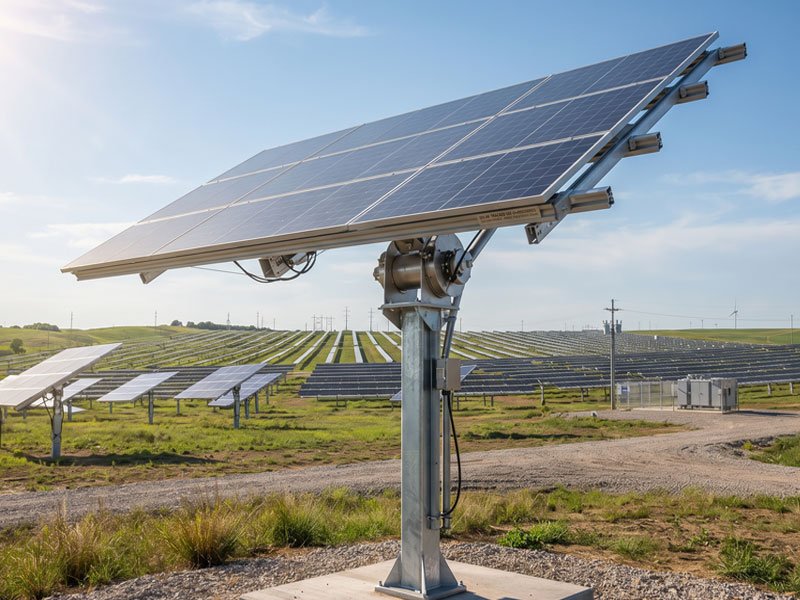
The global solar tracker total system market reached USD 10.79 billion in 2025, and is projected to hit USD 40.70 billion by 2034 at a CAGR of 15.56%. Solar trackers boost energy yield by 15–25% compared with fixed photovoltaic mounting structures, continuously lifting their market penetration in global large-scale PV projects.
As a critical upstream segment of the solar tracker industry, solar casting solutions cover high-reliability structural and motion components for PV bracket systems, solar tracking equipment, and concentrated solar power (CSP) facilities, delivering durable mechanical support for renewable assets under harsh desert, coastal, and industrial environments.
Cast structural and motion components typically account for 8–12% of total solar tracker system cost; the global solar casting market (including PV tracker castings and CSP thermal castings) was estimated at USD 0.86–1.29 billion in 2025, and is forecast to grow to USD 1.8–2.6 billion by 2030 with a CAGR of 14–18%.
Within this booming niche, high-end stainless steel precision castings stand out as a high-growth submarket, occupying 12–18% of the total solar casting demand and reaching a market value of USD 103M–232M in 2025.
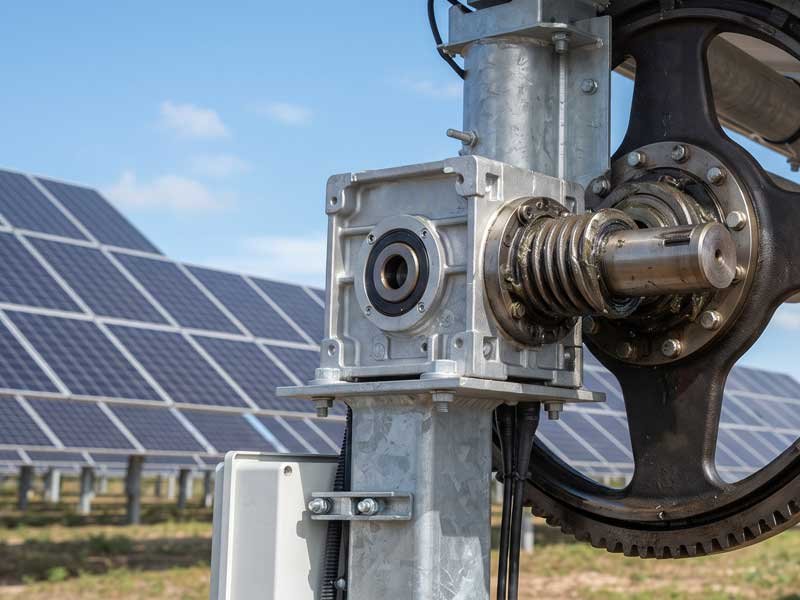
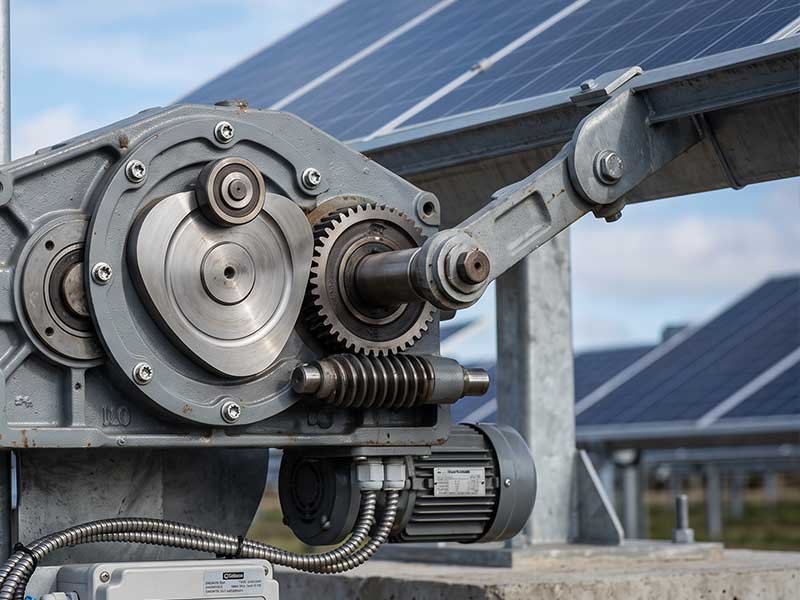
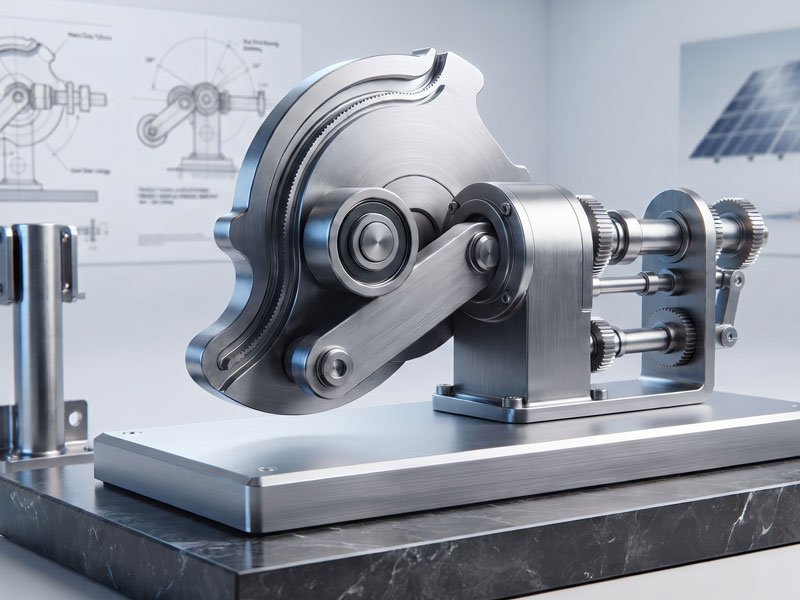
Among these core components, the stainless steel solar tracker cam acts as a pivotal limiting and angle adjustment part for tracker transmission assemblies, directly determining the positioning accuracy, operational stability and 25-year long-term service life of solar tracking systems.
Our professional solar casting services provide customized OEM & ODM precision castings tailored for global solar EPC contractors and system integrators, fully adapting to diverse extreme application scenarios worldwide.
1. Core Product Portfolio for Solar Casting
Ningbo Suijin Machinery comprehensive solar casting product line covers three major categories, fully meeting the structural and functional component demands of PV power generation and solar thermal equipment:
- – Solar tracker motion components: stainless steel adjustment cams, limit blocks, hinge brackets, link joints
- – Structural connection parts: high-strength steel connectors, slewing drive support bases, foundation anchor castings
- – PV equipment components: heat-resistant structural castings for silicon ingot casting and production machinery
2. Manufacturing Process Selection for Stainless Steel Solar Tracker Cam
We adopt differentiated manufacturing processes based on component geometry complexity, precision requirements and project batch volume to balance product quality, dimensional accuracy and production cost.
Investment casting (lost wax casting) is the optimal process for the stainless steel solar tracker cam, enabling near-net-shape forming for complex curved profiles and special grooves, which greatly reduces subsequent CNC machining allowance and ensures consistent structural accuracy of finished products.
For large, heavy-duty tracker base castings with relatively low precision requirements, sand casting and coated sand casting are applied to lower tooling costs. Professional precision CNC post-processing is adopted for all key mating surfaces and friction surfaces to meet strict assembly tolerance and surface finish standards.
|
Process
|
Suitable Parts
|
Key Advantages
|
Typical Application
|
|---|---|---|---|
|
Investment Casting (Lost Wax)
|
Small & medium complex precision castings
|
Near-net-shape, high dimensional accuracy, good surface finish
|
Stainless steel solar tracker cam, hinge joints, limit blocks
|
|
Coated Sand / Sand Casting
|
Large heavy structural castings
|
Low tooling cost, broad material compatibility
|
Tracker support base, foundation anchor parts
|
|
Precision CNC Machining
|
Mating & friction surfaces
|
Fine tolerance control, customizable surface roughness
|
Cam working profile, mounting holes, Ra1.6 finish
|
3. Material Selection & Corrosion Resistance Guide
Material selection is the core guarantee for solar tracker components to achieve 25-year outdoor service life. Different stainless steel grades are matched according to regional environmental characteristics, solving corrosion, aging and structural failure risks caused by salt spray, high humidity, wind sand and industrial pollution.
|
Material Grade
|
Application Scenario
|
Core Performance
|
|---|---|---|
|
304 / 304L Stainless Steel
|
Inland dry PV plants
|
Good general corrosion resistance, excellent machinability & weldability
|
|
316 / 316L Stainless Steel
|
Coastal high salt-spray, high humidity sites
|
Molybdenum alloy addition, superior resistance to pitting and crevice corrosion
|
|
17-4 PH Stainless Steel
|
Extreme wear & high-load custom projects
|
High tensile strength, good hardness after heat treatment
|
4. Key Machining Notes for Stainless Steel Solar Tracker Cam
Austenitic stainless steel is a typical difficult-to-machine material with high toughness, serious work hardening tendency and easy built-up edge formation. To ensure the stainless steel solar tracker cam stably reaches Ra1.6 ultra-smooth surface roughness on working curves and mating surfaces, we adopt standardized precision machining specifications:
- – Professional Tooling Selection: Adopt ultra-fine grain carbide tools with high-performance PVD coatings (TiAlN or AlCrN) to effectively resist tool wear, inhibit built-up edge and extend service life.
- – Optimized Milling Strategy: Implement high-efficiency milling mode with low cutting speed, moderate feed per tooth and small axial/radial depth of cut, which controls cutting heat and avoids workpiece deformation and work hardening.
- – Strict Cooling & Lubrication: Use sufficient EP water-soluble cutting fluid for continuous cooling and lubrication to prevent surface burning, micro-tearing and tool vibration lines.
5. Design, FEA & Quality Assurance for Long-Term Outdoor Reliability
Solar trackers operate under long-term alternating wind load and mechanical vibration, so structural reliability design is essential. We conduct finite element analysis (FEA) in the early design stage to optimize structural details, eliminate stress concentration risks at sharp corners and variable cross-sections, and prevent fatigue fracture of the stainless steel solar tracker cam under long-term alternating loads.
For desert and coastal extreme environments, we can also customize surface hardening treatment, dust sealing structure and long-term lubrication design to enhance wear resistance and environmental adaptability.
To meet the strict quality compliance requirements of global overseas projects, we implement a full-process quality control system:
- – Metallurgical Verification: Provide complete Material Test Reports (MTR) and third-party spectrometer analysis reports for each batch of products to ensure full compliance with ASTM/AISI international standards.
- – High-Precision Dimensional Inspection: Use CMM coordinate measuring machine to scan and detect the full contour and key hole positions of the cam, strictly controlling form and position tolerances.
- – Non-Destructive Testing: Conduct fluorescent penetrant testing (PT) on key load-bearing components to eliminate invisible surface microcracks, porosity and shrinkage defects.
6. Market Growth Drivers & Regional Distribution
The rapid expansion of the global solar casting market is driven by multiple industry trends. The continuous improvement of solar tracker penetration in utility-scale PV projects, coupled with the 25-year long-life design standard of power stations, pushes downstream manufacturers to replace traditional welded parts with high-stability precision castings.
The increasing number of coastal salt-spray and desert PV projects further boosts market demand for corrosion-resistant 316L stainless steel castings. Meanwhile, more and more tracker OEMs and EPCs choose to outsource complex precision motion components to professional foundries, greatly stimulating the customized production demand for the stainless steel solar tracker cam.
In terms of regional market distribution,
- Asia Pacific dominates the global solar casting market with a 48–50% share, and China is the world’s largest exporter of solar precision castings.
- The North American market grows rapidly driven by local IRA energy incentives, with high demand for high-corrosion-resistant tracker components.
- The European market features strict material certification and carbon footprint requirements,
- While the Middle East and Latin American markets have strong demand for wind-sand resistant solar castings for large-scale desert photovoltaic bases.
7. OEM / ODM Customization & Commercial FAQ for Global Buyers
Suijin Machinery provides full-cycle OEM & ODM customized services for global solar system integrators, EPC contractors and factory purchasers. Our engineering team delivers professional DFM (Design for Manufacturability) evaluation before mold development to optimize product structure, reduce production risks and shorten project cycles.
Q: What is your sample and mass production lead time?
A: Mold development and prototype sample production take 10–30 days, including complete dimensional inspection reports and sample delivery services. The mass production cycle is 15–45 days, adjusted according to order quantity and production schedule.
Q: What packaging and shipping terms do you support for export?
A: We adopt export-grade professional packaging: single-piece anti-rust treatment, EPE foam anti-collision protection, and fumigated wooden cases or reinforced cartons for outer packaging to avoid rust and deformation during long-distance sea and air transportation. We support mainstream international trade terms such as FOB, CIF and DDP, with stable shipping channels via Ningbo Port and Shanghai Port to global markets.
Q: What is your MOQ policy?
A: We adopt a flexible MOQ policy to support customers’ early-stage project verification and small-batch trial production. The specific minimum order quantity is determined according to product structure complexity and mold development cost, fully meeting the diversified procurement needs of new projects.
Conclusion
With the continuous expansion of global solar photovoltaic installed capacity and the continuous upgrading of tracker system performance standards, high-precision and long-life solar casting components represented by the stainless steel solar tracker cam have become indispensable core parts of high-quality PV tracking systems.
Suijin Machinery integrated solutions covering mold development, precision casting, CNC finishing and strict quality testing can provide reliable customized casting products for global new energy projects, helping customers reduce operation and maintenance costs and improve long-term project revenue. Contact our professional engineering team now to get tailored product solutions and competitive quotations.